Diplomatic walkouts during high-stakes international forums operate as calculated signals rather than spontaneous emotional reactions. When a state representative stands up and departs from the United Nations General Assembly floor during an adversary address, the action functions as a compressed communication protocol designed for multiple concurrent audiences. This behavior can be understood through the lens of signaling theory in international relations, where state actors deploy costly signals to demonstrate resolve, appease domestic constituencies, and impose reputational costs on targeted nations without resorting to kinetic escalation.
The anatomy of a diplomatic boycott at the General Assembly relies on three distinct variables: audience segmentation, opportunity cost, and systemic signaling limits. Understanding how these variables interact transforms an ephemeral media moment into a predictable manifestation of geopolitical friction.
The Architecture of Diplomatic Signaling
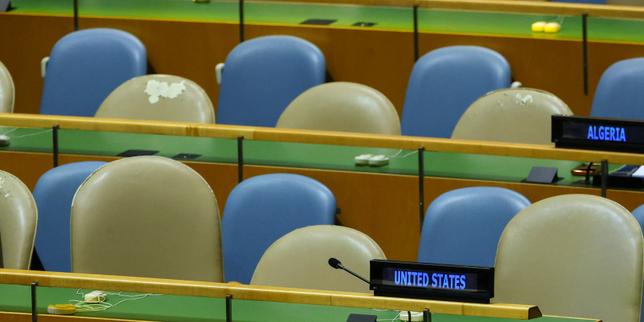
To decode why a delegate leaves the assembly hall rather than remaining to mount a verbal rebuttal, one must evaluate the mechanics of international attention. The General Assembly functions as a global amphitheater. Remaining seated during a contentious speech is frequently misinterpreted by domestic critics as tacit endorsement or diplomatic weakness. Conversely, an empty chair is a loud, visual indictment that bypasses language barriers and translates immediately across global media feeds.
This dynamic introduces a strict cost-benefit calculation. The cost to the boycotting state is minimal—loss of listening time to an adversary whose positions are already well-documented. The potential gain, however, is substantial: consolidation of domestic political alignment and visible solidarity with allied nations.
When the United States representative exits during an address by the Iranian president, the action leverages institutional norms of diplomatic courtesy to weaponize breach of etiquette. Protocol dictates a baseline level of decorum within the hall. By puncturing that decorum, the walking delegate signals that the speaker has crossed a threshold where standard diplomatic engagement is no longer deemed credible or productive.
Audience Segmentation and Domestic Resonance
International broadcasts are rarely consumed solely by foreign policy elites. State representatives perform for three distinct audiences simultaneously:
- Domestic Constituencies: Voters and political factions demand visible proof that their government is actively opposing adversarial regimes. A physical walkout provides an unambiguous visual asset for domestic news cycles.
- Allied Coalitions: Allies observe the gesture to gauge commitment levels. A synchronized walkout by allied delegations signals cohesion and shared threat perception.
- The Adversary: The targeted state must process the walkout as a quantifiable downgrade in diplomatic status, signaling that channels of persuasion are currently closed.
The absence of the delegate alters the room's psychological equilibrium. It shifts the burden of normalization entirely onto the speaker, who must deliver a message to a visibly depleted audience. This undermines the propaganda value of the platform for the host of the controversial speech.
The Limits and Diminishing Returns of Symbolic Boycotts
Despite their immediate utility, walkouts suffer from a structural vulnerability: habituation. As symbolic protests become frequent, their marginal impact decays. If delegations routinely walk out during specific speeches, the act ceases to be a sharp rebuke and degrades into routine theater.
Furthermore, physical absence forfeits the right of immediate reply from the floor. While written rebuttals can be submitted later, the loss of immediate, synchronous counter-narration allows the original speaker to dominate the live news cycle unopposed within the room. State departments must therefore weigh the immediate propaganda win of the exit against the strategic disadvantage of ceding physical control of the assembly space.
Strategic Outlook
Future diplomatic confrontations at multilateral institutions will likely see increased choreography around these symbolic exits. As digital media accelerates the demand for immediate, high-contrast imagery, state delegations will continue to optimize physical presence and absence as primary instruments of diplomatic communication. The effectiveness of these gestures will depend entirely on their scarcity and the degree of alignment among regional partners willing to execute coordinated departures.