The map of the world is drawn in ink, but it is felt in bone.
Look closely at the deserts bordering the Mediterranean, at the jagged coastline of the Levant, and then let your gaze drift southward, sweeping across the vast expanse of the Sahel, down through the savannahs of Central Africa, toward the Horn. Distance is supposed to create safety. Geography is supposed to act as a buffer. Yet, in the quiet corridors of diplomatic outposts from Addis Ababa to Dakar, a heavy conversation unfolds behind closed doors.
Armies from nations thousands of miles away are being quietly whispered into the calculus of the Middle East.
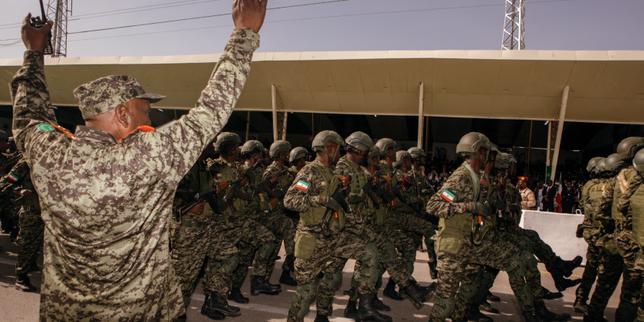
Let us be entirely honest about what is happening here. When politicians in sterile European capitals or fractured Middle Eastern war rooms look for solutions to stabilize a shattered Gaza Strip post-conflict, they do not simply look at their own populations. Domestic fatigue is a relentless master. Sending young men and women from Western democracies into the smoldering ruins of an urban combat zone is a political guillotine. So, eyes turn elsewhere. They turn toward African troop-contributing nations—veterans of long, grinding counter-insurgency campaigns from Somalia to Mali—hoping to find a fresh reserve of boots for an international stabilization force.
It sounds clinical on paper. Multinational security architecture. Regional burden-sharing. peacekeeping mandates.
It feels entirely different when you are sitting in a barracks in Niamey or Nairobi, watching the news flicker across a static-heavy television screen while wondering why your government is entertaining the idea of sending its sons to police a crisis born of an entirely different hemisphere, while your own villages face internal security threats that stretch your resources to a breaking point.
To understand this improbable convergence, we have to look past the official communiques. We have to look at the anatomy of modern intervention.
For decades, African militaries—operating under the banners of the African Union or the United Nations—have absorbed the shockwaves of modern conflict. From the dense jungles of the Democratic Republic of Congo to the arid expanses where Boko Haram prowls, soldiers from nations like Ghana, Rwanda, Ethiopia, and South Africa have learned the brutal art of keeping the peace where there is no peace to keep. They know what it means to patrol hostile alleys, to build fragile truces with distrustful local populations, and to bury their own when improvised devices tear through armored personnel carriers.
They possess something that Western forces often lack: resilience forged in scarcity, and a hard-earned fluency in asymmetric warfare.
That experience makes them an attractive asset for international architects looking to construct a post-war Gaza force. The logic goes like this: an international coalition needs legitimacy that goes beyond Western involvement, which carries heavy historical baggage in the region. Troops from the Global South offer a different diplomatic optics profile. They can present themselves as neutral arbiters, as peacekeepers rather than occupying forces.
But this logic contains a profound friction.
Imagine a young sergeant in an East African army. He has spent the last three years rotating through frontline outposts, hunting militants who strike from the shadows before vanishing into the bush. He knows the weight of flak jackets in fifty-degree heat. He knows the hollow ache of losing a squadmate to an unseen enemy. Now, imagine him sitting around a briefing table being told that his next deployment might not be protecting his neighbor, but standing between warring factions in the Gaza Strip—a geopolitical labyrinth defined by decades of intractable trauma, underground tunnels, and global media scrutiny that magnifies every single tactical misstep into an international crisis.
Why? The question hangs in the humid air of the command tent. Why are we there when our own house needs watching?
The answer is rarely simple. It is written in the invisible ledger of international relations, foreign aid dependencies, diplomatic leverage, and the desperate quest for international prestige or institutional backing. When global powers whisper suggestions, developing nations often find it difficult to turn a deaf ear, especially when their military budgets, intelligence-sharing agreements, and economic lifelines are tethered to the goodwill of capitals in Washington, Paris, or Brussels.
Participation in international peacekeeping is currency. It buys influence. It secures training programs, modern equipment, and a seat at high-level diplomatic tables where the rules of the international order are written.
Yet, the currency is paid in blood and strain.
When we examine the proposal for African armies to form the backbone—or even a significant component—of an international stabilization force in Gaza, we must confront the stark asymmetry of the arrangement. The strategic blueprints are drawn by leaders who will never send their own children to walk those streets. The political dividends are collected far away. The physical and psychological risks are absorbed by soldiers whose institutions are already stretched to their absolute limits.
Consider the operational reality on the ground in Gaza. This is not a traditional peacekeeping mission where opposing armies agree to separate along a defined green line. This is a densely populated urban environment laced with unexploded ordnance, structural instability, deep-seated civilian hostility, and the constant threat of renewed violence. Stabilizing such a zone requires an immense concentration of force, flawless intelligence, and a level of political consensus among local actors that currently does not exist.
If African troops are deployed into this crucible without robust logistical backing, without clear rules of engagement, and without a genuine, inclusive political horizon for the Palestinian people, they risk becoming stranded in the middle of someone else’s unresolved history. They become the shock absorbers for a political failure that began decades before their boots touched the tarmac.
We have seen this script before. Time and again, multinational forces are deployed to freeze a conflict rather than solve it, turning active battlefields into protracted, low-intensity holding patterns where the peacekeepers are resented by all sides for doing too much or too little.
The soldiers know this. Their commanders know this.
That is why the murmurs of recruitment meet such profound hesitation behind closed doors. It is not a rejection of duty; it is a recognition of the impossible math of intervention. When you take armies already engaged in existential struggles against domestic terror and stretch them across the globe to manage a geopolitical wound that refuses to heal, you risk fracturing the very institutions you rely upon for domestic stability.
The maps in the boardrooms remain clean, inked with neat arrows pointing across continents, designating units like chess pieces on a board. But the reality is messy, human, and fragile.
As the diplomatic maneuvers continue behind closed doors, the real weight of this decision will not be felt by the architects of the coalitions. It will be felt by the private in the trench, holding a rifle, looking out over a landscape that is not his own, wondering how he came to stand in the crossfire of a world that keeps expanding its wars faster than it can find the courage to end them.