A standard map of Pakistan shows a vast, sun-baked expanse swallowing up the entire southwestern half of the country. It is called Balochistan. To a casual observer looking at a globe, it appears to be nothing more than empty space—miles of jagged, beige mountains and unforgiving desert.
But maps lie. They reduce human agony to colored ink.
If you stood on the outskirts of Gwadar, where the desert meets the Arabian Sea, you would feel a heavy, humid heat that sticks to your skin like oil. You would smell the salt, but you would also smell the exhaust from heavy machinery. This land is not empty. It is a treasure chest, and for decades, the people living on top of it have watched outsiders use a crowbar to pry it open.
When news broke that a shadow government of Baloch separatists declared independence, the international community largely blinked and moved on. It sounded like standard geopolitical noise. Another fractional conflict in a distant corner of the world.
For the government in Islamabad, however, that declaration did not feel like noise. It felt like a cardiac arrest.
To understand why this barren expanse matters infinitely more to Pakistan’s survival than the heavily contested, blood-soaked valleys of Kashmir, you have to look past the military press releases. You have to look at the dirt. And you have to look at what lies beneath it.
The Wealth Beneath the Wounds
Imagine owning a house sitting on top of a massive, untapped gold mine. Now imagine you are starving. Every day, corporate trucks roll into your driveway, dig up the earth, haul away the gold, and leave you with nothing but a cloud of toxic dust and a contaminated well.
That is not a metaphor. That is daily life in Balochistan.
Consider a young man we will call Tariq. He is a hypothetical composite of the dozens of young Baloch men who grow up in the shadow of the massive copper and gold mines of Reko Diq. Tariq’s hands are calloused from gathering sparse firewood. He has no electricity in his home. His sister suffers from a chronic stomach ailment because the local water supply is laced with heavy metals.
Yet, just a few miles from his village, billions of dollars in mineral wealth are extracted and shipped away.
Balochistan possesses some of the largest untapped copper and gold deposits on the planet. It holds massive reserves of natural gas, which have kept the factories and kitchens of Pakistan’s wealthy Punjab province running for decades. Yet, Balochistan remains the poorest, least developed province in the nation.
It is a textbook case of the resource curse, magnified by structural neglect.
When the Baloch Liberation Army or various political fronts declare that they no longer recognize Pakistan’s sovereignty, they are leveraging decades of deep, generational resentment. They are looking at the Sui gas fields, which fueled Pakistan’s industrialization while local Baloch villages still burned dried animal dung for heat, and they are saying, no more.
The Chinese Lifeline
Islamabad’s anxiety is not merely about losing territory. It is about national bankruptcy.
Pakistan’s economy has been teetering on the edge of a precipice for years, kept alive only by emergency loans and foreign intervention. The crown jewel of their economic survival plan is the China-Pakistan Economic Corridor, a massive, multi-billion-dollar infrastructure project.
The entire project hinges on a single geographic point: the deep-water port of Gwadar.
Gwadar sits at the southern tip of Balochistan. For Beijing, it is the ultimate shortcut, allowing Chinese goods to bypass the treacherous Malacca Strait and gain direct access to the Arabian Sea. For Islamabad, it is the golden goose.
But the goose is laying its eggs in a war zone.
When separatists target Chinese engineers, bomb pipelines, and declare independence, they are threatening to sever Pakistan’s ultimate economic lifeline. If China pulls out due to security concerns, the Pakistani state faces total financial collapse.
Contrast this with the dispute over Pakistan-administered Kashmir, often called Azad Kashmir or PoK. Kashmir is an emotional, ideological battleground. It is woven into the identity of the Pakistani military state. But Kashmir does not hold the keys to the country's economic future. It does not contain the mineral wealth required to pay off billions in sovereign debt.
Losing political control of Kashmir would be a devastating blow to Pakistan’s pride. Losing Balochistan would be a fatal blow to its existence.
The Iron Fist and the Invisible People
The response from the state has long been one of overwhelming, unyielding force.
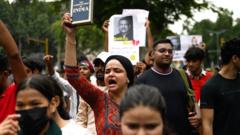
For years, human rights organizations have sounded alarms over the phenomenon of "enforced disappearances" in the province. Activists, students, and journalists go missing. Months later, their bodies are sometimes found dumped in rural areas, bearing signs of torture. The local population calls it the "kill and dump" policy.
This creates an atmosphere of pervasive, suffocating fear.
Parents watch their sons walk to university classes, wondering if it will be the last time they see them. The state argues that it is fighting brutal terrorists who bomb civilian infrastructure and assassinate minorities. The insurgents argue they are fighting an occupying army that is colonizing their homeland.
The tragedy is that the space for moderate, peaceful politics has been completely pulverized between these two forces.
When a population feels that peaceful protest yields nothing but unmarked graves, the radical alternative begins to look inevitable. The declaration of independence is the political manifestation of that despair. It is a sign that the thread holding the federation together has frayed to its final, desperate strand.
The Friction of Borders
The crisis refuses to stay contained within Pakistan's borders.
Balochistan shares a long, porous frontier with Iran and Afghanistan. The Baloch people are split across these frontiers, meaning that instability in southwestern Pakistan instantly bleeds into neighboring territories. Iran faces its own low-intensity Baloch insurgency, leading to cross-border missile strikes and deep diplomatic mistrust between Islamabad and Tehran.
Meanwhile, India watches from across the eastern border. Pakistan consistently accuses New Delhi of funding and arming Baloch separatists to destabilize the country from within. Whether these accusations are entirely accurate or convenient scapegoating, the reality remains: Balochistan has become a playground for regional proxy warfare.
Every explosion in Quetta or Gwadar ripples through the intelligence headquarters of Riyadh, Beijing, New Delhi, and Washington.
The Cost of Silence
We often treat geopolitics as a game of chess played by brilliant strategists in well-lit rooms. We look at map lines and discuss GDP growth, port capacity, and military troop movements.
But the reality of Balochistan is found in the dust.
It is found in the eyes of a mother waiting for a son who will never come home. It is found in the irony of a province that powers the stoves of a nation while its own children shiver in the dark.
Islamabad cannot fix this crisis with more troops, more checkpoints, or more promises of future trickle-down wealth from foreign mega-projects. You cannot build a stable nation when the very ground beneath your feet is crying out for justice.
The declaration of independence by Baloch factions may not result in an immediate, recognized new state on the global map. The Pakistani military is far too powerful, and the international community is far too committed to status-quo borders for that to happen anytime soon.
But the declaration is a symptom of a deeper, terminal illness. Pakistan is discovering that you can hold a territory by force for a long time, but eventually, the weight of the injustice becomes too heavy for even the strongest army to bear.
The trucks will continue to roll out of the mines, laden with gold and copper. The ships will continue to dock at Gwadar. But as long as the people of the land are treated as obstacles rather than citizens, the dust of Balochistan will continue to choke the future of Pakistan.