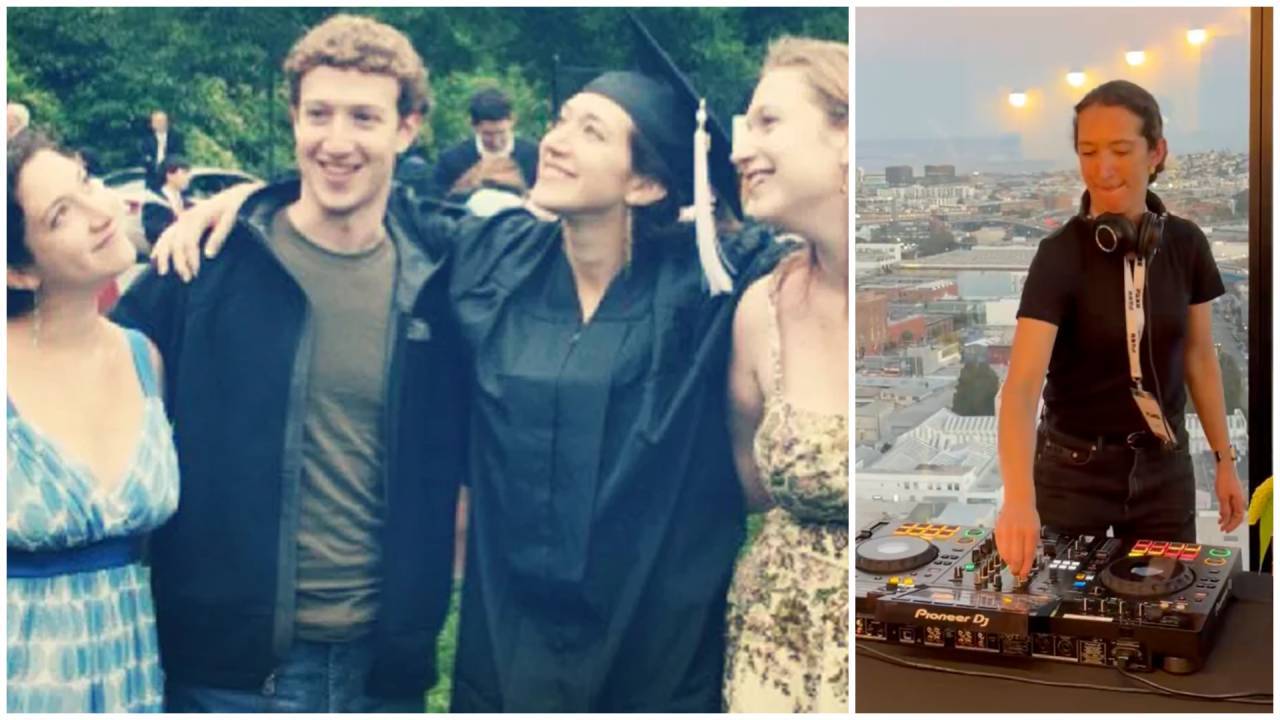
The convergence of elite venture capital and underground electronic music culture offers a clean study in resource allocation, identity compartmentalization, and social signaling. When operational figures from high-net-worth technology networks engage in performance-based creative subcultures, public fascination typically focuses on the novelty of the juxtaposition. A more rigorous approach examines the structural mechanics of how capital accumulation subsidizes artistic pursuits, and how proximity to countercultural spaces functions within elite social strata.
Venture capital operates on strict risk-adjusted returns, compressed feedback loops, and quantitative evaluation of enterprise value. Conversely, underground DJing and club performance function on acoustic resonance, community curation, and ephemeral cultural capital. These two domains require divergent cognitive frameworks. The former demands analytical abstraction, risk mitigation, and market positioning. The latter demands real-time sensory calibration, crowd reading, and stylistic adherence to localized subcultural norms.
The mechanism enabling an individual to maintain a concurrent profile in both spheres relies entirely on financial and temporal independence. Early-stage venture capital partners possess discretionary control over their schedules, allowing for flexible allocation of non-working hours toward music production, hardware acquisition, and touring or festival schedules. The primary bottleneck for traditional artists is capital intensity—purchasing professional monitoring systems, modular synthesizers, and studio time requires sustained baseline income. For individuals embedded in elite financial ecosystems, this capital barrier is neutralized. The marginal cost of failure in a creative venture is near zero when underwritten by primary income streams derived from institutional tech investments or venture distributions.
Beyond economics, public exposure of these dual-track identities triggers predictable sociological responses. Elite networks frequently use creative subcultures as a mechanism for brand diversification. Technology executives and venture capitalists operate under hyper-visible public scrutiny. Engaging in creative outputs that are distinct from corporate mandates introduces a layer of multidimensionality to personal branding. However, this dynamic introduces tension when the subculture in question possesses historical roots in marginalized, working-class, or countercultural movements. Techno and underground dance music traditions grew out of industrial urban centers, functioning as spaces of radical inclusion and outsider identity. When participants from ultra-wealthy backgrounds or elite corporate networks occupy these spaces, observers analyze the transition through the lens of aesthetic extraction—the importation of elite privilege into environments historically defined by socioeconomic divergence.
The structural reality of these parallel tracks is straightforward. A professional career in institutional finance or venture capital provides the capital reserves necessary to sustain high-cost creative hobbies without commercial pressure. Music production under these conditions ceases to be a commercial imperative and transforms into an optimized leisure activity. The performer is insulated from market failures within the music industry, permitting absolute creative autonomy over genre exploration, whether that involves hardgroove, minimal techno, or experimental electronic arrangements.
Evaluating the intersection of corporate positioning and artistic output requires separating the romanticized narrative of the accidental discovery from the underlying structural framework. Capital availability dictates creative longevity. Without the foundational stability provided by institutional venture roles, the capacity to invest years into developing technical proficiency on CDJs, curating vinyl collections, or touring festival circuits remains statistically improbable for the average practitioner. The phenomenon is less a paradox of opposites and more a predictable outcome of modern wealth distribution, where financial security unlocks unrestricted access to cultural production.