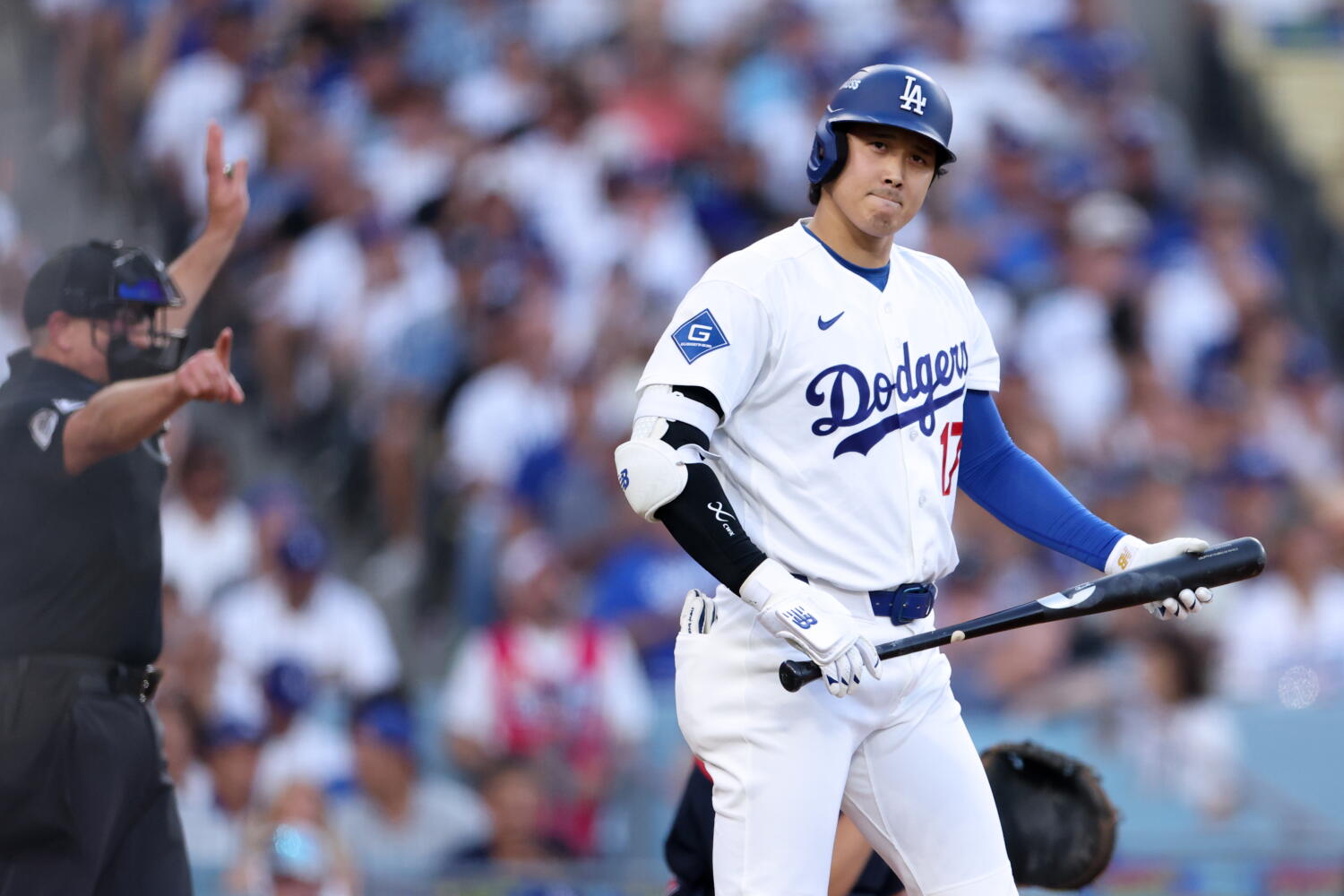
In high-leverage postseason baseball, traditional managerial heuristics frequently conflict with mathematical efficiency. When Los Angeles Dodgers manager Dave Roberts shifted Shohei Ohtani from the traditional top of the lineup down to the fifth spot for Game 3 of the National League Division Series against Atlanta Braves left-hander Chris Sale, observers treated the decision as a radical reaction to a slump. In reality, the tactical pivot exposed a fundamental optimization problem in modern sports management: how to construct a lineup topology that maximizes run expectancy against an elite pitcher while mitigating specific vulnerability corridors.
Evaluating this tactical decision requires analyzing the mechanics of sequencing, pitch-handedness splits, and the specific cost function of facing an elite left-handed starter.
The Cost Function of Left-Handed Dominance
To understand the rationale behind altering the batting order, one must examine the operational mechanics of Chris Sale's pitching profile, particularly against left-handed power hitters. Sale’s arm slot and sweeping slider-four-seam fastball combination generate severe platoon-neutralizing properties, rendering standard left-handed advantage metrics obsolete.
Historical performance data against Sale illuminated a clear offensive bottleneck. Prior to the matchup, Ohtani faced Sale in limited career plate appearances, managing a restricted output characterized by high strikeout rates and an isolated power suppression. When an elite pitcher possesses a specialized weapon designed to neutralize premium bats, the tactical cost of exposing a struggling high-leverage hitter early in the game escalates.
In traditional baseball strategy, the primary run-producer or table-setter must accumulate maximum plate appearances. However, in a short-series environment where run suppression from an elite starter dictates game-state probability, minimizing early-inning rally-killing outs becomes a priority.
Lineup Topology and the Mechanics of Protection
Lineup optimization is fundamentally a sequencing problem. The objective function is not merely to cluster the best individual hitters, but to maximize the probability of consecutive productive events that turn singles and walks into multi-run frames.
When a premier hitter undergoes a performance variance phase or faces an extreme stylistic mismatch, keeping them in the top three slots introduces structural inefficiencies:
- The Rally-Interruption Penalty: If the leadoff and second-tier hitters generate traffic on the basepaths, an automatic out or high-strikeout threat in the third spot stalls the inning before the heart of the order can capitalize.
- Pitcher Sequencing Pressure: Elite starters like Sale rely on establishing early dominance. Exposing a primary threat to early high-leverage sequences allows the pitcher to dictate the rhythm of the entire game.
By sliding Ohtani to the fifth position behind Mookie Betts, Freddie Freeman, Teoscar Hernández, and Will Smith, the Dodgers altered the sequence layout. This placement achieved two distinct tactical objectives: it shielded the struggling star from early multi-inning exposure to Sale's primary weapon set, and it positioned him as a leverage accumulator later in the game when the opposing bullpen was forced into action.
The Trade-Offs of Managerial Intervention
Every tactical adjustment in strategy carries an inherent opportunity cost. Moving an elite offensive weapon down the order decreases his projected total plate appearances over the course of a nine-inning game.
The primary limitations of this adjustment include:
- Reduced Volume: Lowering a high-OBP (On-Base Percentage) and high-SLG (Slugging Percentage) asset from the top tier guarantees fewer total opportunities to impact the scoreline over the course of the game.
- Psychological Variables: High-profile athletes operate within established routines. Disrupting those protocols introduces cognitive friction, though professional competitors typically adapt quickly to tactical modifications aimed at team success.
Managerial decisions in postseason environments are exercises in probability management rather than search for certainty. The choice to drop Ohtani was not an admission of permanent regression, but a targeted calibration designed to exploit the statistical distribution of a single game matchup.
Optimize the sequence to survive the elite starter, protect the assets through their vulnerability windows, and allow the depth of the roster to shoulder the burden until the leverage shifts. That is the architecture of modern postseason strategy.