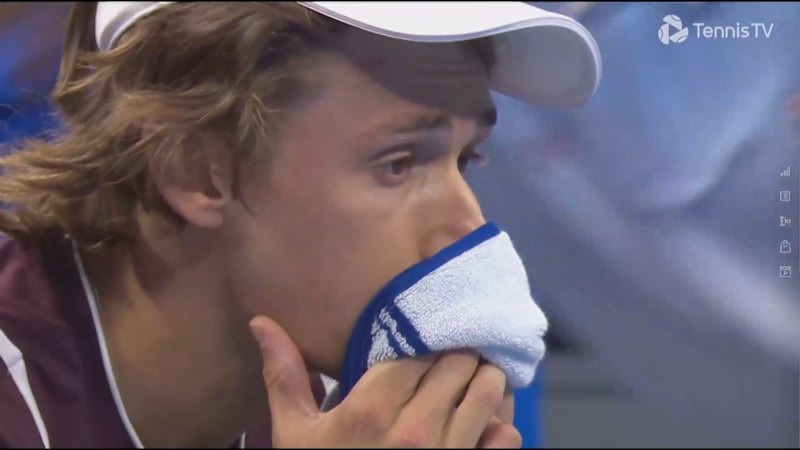
The tennis commentariat is having another collective meltdown. Alex de Minaur retires from a final, the pundits clutch their pearls, and social media fills with hand-wringing declarations about the brutal toll of the modern calendar. Fans cry foul. Pundits demand structural reform from the ATP. Everyone treats a strategic mid-match exit like a tragedy on center court.
It is absolute nonsense.
Hate to break it to the romantic traditionalists who still think professional tennis is played for trophies and national pride, but walking away from a final when your body flashes red isn't a failure of character. It is math. De Minaur did not choke, and he did not quit on his fans. He executed a cold-blooded business decision in an industry that rewards durability over martyrdom.
Let us dismantle the lazy consensus.
The Martyrdom Trap
For decades, tennis culture has lionized the walking wounded. We celebrate the warrior who plays on one leg, tearing ligaments to push through a fifth set in a second-round match that nobody will remember in six months. We turn chronic physical destruction into a virtue.
Look at what actually happens to those players. They become cautionary tales. They are the ones spending their late twenties undergoing spinal fusions and hip replacements while commentators reminisce about their grit. Grit does not pay for your medical bills after thirty.
De Minaur operates in a completely different tactical ecosystem. He is built on speed, relentless court coverage, and directional changes that shred human joints faster than almost any other style on tour. Every step he takes is a high-friction event. When his body signals an overload—whether it is an abdominal strain, a hip tweak, or the early whisper of a tear—staying on court to satisfy a tournament director or a disappointed crowd is professional malpractice.
The media framing around these retirements always relies on the same tired emotional blackmail. They ask if the sport is broken because players cannot finish tournaments. No. The sport is healthy enough to support athletes who finally realize their bodies are their only capital.
The Economics of the Walkoff
Haters love to point out the financial and ranking implications of retiring from a final. You miss out on the winner's check. You miss out on the full complement of ranking points. They treat it like leaving money on the table.
They fail to understand opportunity cost at an elite level.
Imagine a scenario where a player gutting it out in a meaningless fall hardcourt final tears a labrum. That is not just losing a match. That is missing the next four major tournaments. That is six months of rehabilitation, millions in lost endorsement value, and a complete derailment of ranking trajectory.
De Minaur understands the value curve. Protecting your physical baseline so you can terrorize opponents at the Australian Open or Wimbledon is infinitely more valuable than gritting your teeth through a straight-sets loss in Beijing just to appease television executives who would forget his name by Tuesday morning.
Athletes in the upper echelon do not play for participation ribbons. They play for leverage. And the ultimate leverage is walking away the second the risk-reward ratio flips against you.
The Myth of the Unbroken Schedule
Hriters love to blame the length of the season. They write long, weeping essays about the eleven-month calendar, pointing fingers at tournament owners and governing bodies.
They are addressing the wrong variable.
The calendar is not the problem. The failure of athletes to manage their own asset is the problem. For years, players felt an unwritten obligation to show up everywhere, play everything, and smile for the cameras while their cartilage dissolved.
De Minaur and his contemporaries are finally breaking that programming. They are treating their careers like venture portfolios. You hedge your bets. You pull out of matches before they become surgeries. You accept the fine, you take the jeers from the cheap seats, and you live to fight on a surface that suits you better next month.
Call it cowardly if you want. The rest of us call it longevity.
The Real Cost of Peak Speed
Let us look at the mechanics of what makes de Minaur elite. He is rarely the biggest hitter on court. He wins by neutralizing power with anticipation, redirection, and absurd defensive recovery. That style requires a nervous system firing at absolute peak synchronization.
When you lose five percent of your acceleration due to a micro-tear or a debilitating cramp, your entire defensive architecture collapses. You are no longer playing tennis; you are playing target practice for your opponent. Continuing under those conditions does not prove your toughness. It exposes your tactical naivety.
Fans want blood and sweat. They want gladiators in a colosseum. But professional sport in the twenty-first century is not a Roman arena. It is an actuarial table.
Stop Asking the Wrong Questions
People ask if mid-match retirements ruin the integrity of the tournament. Who cares about the integrity of a seeding match in October when a player's career earnings are on the line?
The integrity argument is a smoke screen generated by people who put down money on a parlay and got burned by an athlete's self-preservation. It has nothing to do with sport and everything to do with entitlement.
De Minaur will be back on court cutting down bigger players while the critics who shamed him for quitting are still complaining about modern softness. The next time you see a top player pack it in when the wheels start wobbling, do not boo. Take notes.
That is how you survive the meat grinder.