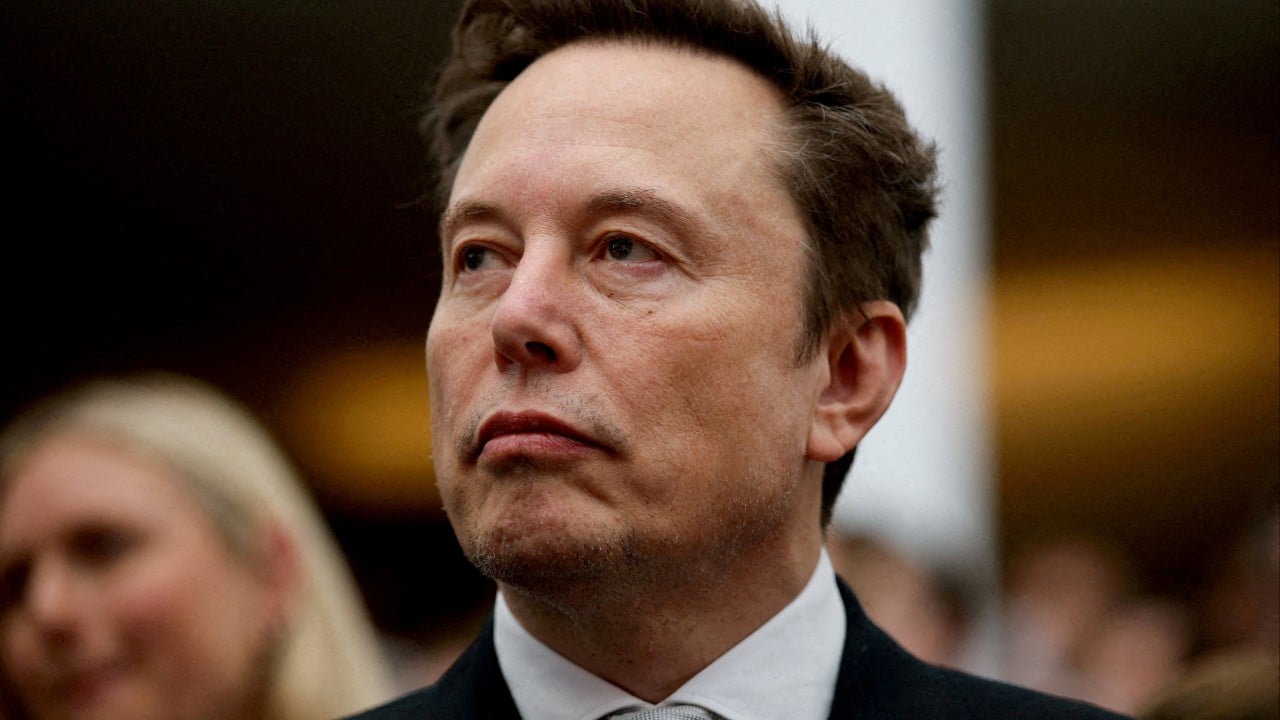
Philippine Ambassador to the United States Jose Manuel Romualdez stated publicly that Elon Musk is quietly exploring the development of "one or two" islands in the Philippines, tying the interest to clean energy and next-generation connectivity. That statement sparked headlines across Southeast Asia, yet most coverage stopped at the spectacle of a billionaire shopping for tropical real estate. The real story sits inside maritime chokepoints, subsea fiber vulnerabilities, and a constitutional barrier that prevents foreign nationals from owning a single square meter of Philippine soil.
Diplomats do not drop casual remarks about unnamed billionaires buying islands unless a specific policy goal sits behind the microphone. When Romualdez floated the claim during an interview with local reporters, he framed it around sustainability and advanced technology rather than luxury tourism. Understanding what Musk actually wants—and what Philippine law actually permits—requires stripping away the hype and examining the industrial math of the Western Pacific.
The Constitutional Wall Nobody Mentions
Start with the legal reality. Under the 1987 Philippine Constitution, foreign individuals and majority foreign-owned corporations cannot own land in the archipelago. Exceptions exist only for hereditary succession or former natural-born citizens, neither of which applies to Musk or any entity registered in Delaware or Texas.
Any "island development" involving SpaceX, Tesla, or an affiliated venture cannot be a traditional land acquisition. Instead, foreign capital enters the Philippines through tightly regulated vehicles:
- Long-term commercial leases capped at 25 years, renewable once for another 25 years under the Investors' Lease Act.
- Joint venture agreements where a Filipino partner holds at least 60 percent of the equity in any landholding corporation.
- Special Economic Zone concessions administered by the Philippine Economic Zone Authority, which grant tax holidays and operational autonomy without transferring underlying title.
This distinction matters because sovereign control never leaves Manila. If Musk’s engineers set foot on a remote islet in Palawan, Batanes, or Dinagat, they operate as tenants or minority joint-venture partners under Philippine regulatory oversight. Calling it "buying an island" misreads both the statute books and the political sensitivity surrounding foreign footprints in the archipelago.
Why Remote Archipelagos Solve an Engineering Problem
Strip away the real estate angle and look at what SpaceX and Tesla actually build. Both companies run on physical infrastructure that struggles inside dense, heavily regulated urban grids. Remote islands offer something Silicon Valley and coastal Texas cannot easily provide: isolation, unobstructed horizon lines, and blank-slate energy microgrids.
Consider the operational mechanics of Starlink, SpaceX’s low-Earth orbit satellite constellation. The Philippines became the first Southeast Asian nation to approve Starlink commercial operations after amending its Public Service Act to allow 100 percent foreign ownership in telecommunications. An archipelago of more than 7,600 islands represents a textbook validation environment for satellite-to-cell backhaul, maritime terminal routing, and disaster-resilient mesh networks.
An isolated island with zero legacy copper or fiber infrastructure acts as a live stress test for off-grid civilization—combining solar generation, grid-scale battery storage, and orbital broadband without fighting municipal permitting boards.
Tesla’s energy division faces a parallel constraint. Utility-scale battery deployments using Megapack units require high-solar-yield environments with severe grid instability to prove economic payback. Remote Philippine islands routinely pay among the highest electricity rates in Asia because they rely on subsidized diesel generators shipped across rough seas. Replacing diesel barges with solar arrays paired with lithium-iron-phosphate storage turns a remote outpost into a profitable case study for every developing island nation on Earth.
The Aerospace Factor
There is also an orbital geometry argument. Equatorial proximity gives rocket launches an immediate velocity boost from Earth’s rotation, reducing fuel burn per kilogram placed into orbit. While neither SpaceX nor Manila has announced launchpad plans, maritime recovery zones, downrange telemetry stations, and autonomous spaceport drone ship support bases all benefit from friendly ports near the Western Pacific equatorial belt.
Even without a single rocket booster touching Philippine soil, telemetry tracking and ground gateway stations located on sparsely populated islands close gaps in satellite handoffs over the South China Sea and the Philippine Sea.
Manila’s Quiet Geopolitical Calculus
Romualdez did not mention Musk by accident. For nearly a decade, diplomatic messaging out of Manila has walked a razor’s edge between Washington and Beijing, while trying to attract high-tier Western capital that historically bypassed the Philippines in favor of Vietnam, Malaysia, or Singapore.
Name-dropping Musk serves three immediate objectives for the Philippine diplomatic corps:
- Signaling regulatory openness to American tech executives who still view Southeast Asian bureaucracy as an impenetrable maze.
- Counterbalancing regional infrastructure influence by anchoring critical telecommunications and energy hardware to US-aligned corporations rather than state-backed Chinese contractors.
- Accelerating domestic telecom reform by using high-profile foreign interest as leverage against entrenched local duopolies that long resisted outside competition.
In Manila, public statements by senior envoys frequently function as trial balloons. By confirming early-stage discussions without naming specific islands or signing timelines, the embassy tests public reaction, gauges nationalist pushback, and nudges domestic agencies to clear administrative bottlenecks before formal contracts hit the table.
The Infrastructure Reality Check
Ambition collides quickly with Philippine geography. Developing an uninhabited or lightly populated island sounds straightforward on a slide deck in Boca Chica or Austin, yet execution in the archipelago brings brutal logistical friction.
Every ton of structural steel, concrete, solar glass, and battery hardware must arrive via shallow-draft landing craft. Deep-water ports do not exist on remote islets. Construction schedules bend entirely to the Amihan and Habagat monsoon seasons, which routinely shut down maritime freight for weeks at a time.
Then come the typhoons. Roughly twenty tropical cyclones enter the Philippine Area of Responsibility every year, and the strongest storms generate sustained winds exceeding 250 kilometers per hour alongside massive storm surges. Designing an off-grid energy and communications hub capable of surviving a Category 5 super typhoon requires heavy civil engineering—subterranean cabling, reinforced concrete bunkers for battery banks, and wind-rated mounting structures that multiply capital expenditure far beyond mainland averages.
Environmental and Local Friction
Permitting adds another layer of delay. The Department of Environment and Natural Resources enforces strict rules under the Environmental Compliance Certificate regime, particularly across marine protected areas and ancestral domains governed by the Indigenous Peoples' Rights Act.
Local politicians, provincial governors, and barangay captains wield immense practical power over ground access. Foreign developers who arrive with top-down federal approvals but ignore provincial stakeholders routinely watch their projects stall in court injunctions or local permitting standoffs. Musk’s teams are famous for moving fast and breaking regulatory norms in Texas; attempting that playbook in a Philippine province invites immediate paralysis.
Separating Signal From Speculation
History offers plenty of caution when evaluating billionaire island announcements. Across the Pacific and the Caribbean, high-profile tech founders have repeatedly floated visions of autonomous eco-islands, private research enclaves, and futuristic micro-states—only for projects to shrink into modest vacation compounds or quietly vanish once engineers confront desalination costs and supply chain math.
At the same time, dismissing Romualdez’s remarks outright ignores concrete groundwork already laid in the country:
- Starlink already operates commercially across the Philippines, serving remote resorts, maritime vessels, and provincial government offices.
- Philippine conglomerates have actively courted Tesla for both electric vehicle distribution and utility-scale energy storage deployments.
- The Marcos administration has aggressively pursued foreign direct investment in renewable energy, recently lifting foreign ownership caps on solar, wind, and tidal power projects.
That regulatory shift—allowing 100 percent foreign ownership in renewable energy generation—removed the single biggest structural barrier that previously kept companies like Tesla Energy from building wholly owned power assets in the country.
What Actually Happens Next
Do not expect a sprawling futuristic metropolis rising out of the Sulu Sea next year. If an agreement materializes from these quiet talks, it will look far more pragmatic than the headlines suggest.
The realistic blueprint involves a specialized industrial or research lease on a single coastal tract or small island—likely paired with a major Philippine conglomerate to handle local permitting, maritime logistics, and community relations. On the ground, that means a closed-loop solar-and-battery microgrid, high-capacity Starlink ground infrastructure, and perhaps a testing ground for autonomous marine or aerial hardware.
For Manila, even a modest physical footprint delivers outsized diplomatic value, proving that top-tier American engineering capital will bet on Philippine soil despite regional tensions. For Musk, a Pacific island outpost provides an isolated laboratory where energy storage, satellite connectivity, and harsh-weather resilience can be pushed to failure without municipal red tape getting in the way. Watch the Securities and Exchange Commission filings in Manila and the PEZA zone registrations over the next twelve months—because if dirt actually starts moving, the paper trail will show up there long before a press release ever drops.