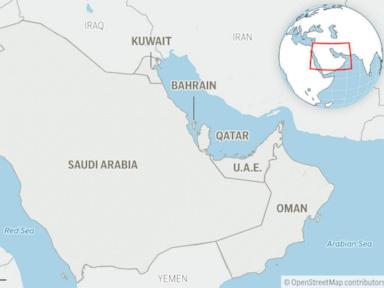
Geopolitics is a theater of the absurd where the most expensive props usually fail to work. The mainstream media is currently hyperventilating over Kuwait’s allegations that Iran targeted Failaka Island—a strategic spit of land housing a massive, China-funded port project—just days before a high-stakes Beijing summit. The narrative is as predictable as it is lazy: Iran is the regional arsonist, China is the deep-pocketed victim, and Kuwait is the innocent bystander caught in the crossfire of the New Cold War.
This narrative is not just wrong; it is a fundamental misunderstanding of how power, debt, and kinetic military action actually function in the 21st century.
I have spent decades watching these "provocations" unfold from the inside. I have seen intelligence briefs that were little more than creative writing exercises and "attacks" that were actually insurance plays or internal power grabs. If you believe Iran just lobbed a missile at a Chinese investment right before a diplomatic pivot, you are falling for the oldest trick in the book.
The Logic of the Ghost Port
Let’s look at the "China-funded port" on Failaka Island. The headlines want you to think this is a thriving hub of global trade that Tehran is desperate to sabotage. In reality, Failaka is a logistical nightmare and a budgetary black hole.
Kuwait’s Silk City project and the associated port developments have been stalled for years by parliamentary gridlock, environmental concerns, and a massive lack of private sector interest. China isn't "funding" this out of the goodness of its heart; it is extending credit lines that Kuwait, a nation with a massive sovereign wealth fund but a paralyzed domestic economy, doesn't actually need.
When an "attack" happens on a project that is behind schedule and over budget, you don't look at the external enemy. You look at the contractor. You look at the ministry that needs a distraction from its failure to meet milestones. An Iranian drone strike—real or perceived—is the ultimate "Force Majeure" clause. It wipes the slate clean. It explains away the delays. It justifies the skyrocketing costs.
Why Iran Would Never Bite the Hand That Feeds
The "Iran attacked China’s interests" angle is the most logically bankrupt part of this entire saga. Iran is currently a Chinese gas station. Under the 25-year Comprehensive Strategic Partnership, Beijing is the only thing standing between the Iranian economy and total collapse.
Do we honestly believe the IRGC (Islamic Revolutionary Guard Corps) is so tactically inept that they would target a site flying a Chinese flag—even metaphorically—days before a diplomatic trip to Beijing? This isn't how the Mideast chess board works.
If Iran wanted to send a message to Kuwait, they wouldn't hit a Chinese port. They would hit a desalination plant. They would harass a tanker in the Strait of Hormuz. They would trigger a cyberattack on the Kuwait Petroleum Corporation. Targeting Failaka is a high-risk, zero-reward move for Tehran. It alienates their only superpower patron for the sake of scaring a neighbor they already dominate through asymmetric influence.
The Trump Factor and the Architecture of Fear
The timing of these allegations, conveniently synced with a trip to Beijing, reeks of a desperate attempt to force a hardline stance. Kuwaiti officials know that the only way to get the West’s attention is to manufacture a crisis that involves three things: Iran, China, and oil.
By alleging an attack on a China-funded site, Kuwait is attempting to "triangulate" its security. They want to tell Washington: "Look, China can't protect us from Iran, so you need to increase your security guarantees." Simultaneously, they tell Beijing: "Your investments aren't safe here unless you rein in your friends in Tehran."
It is a classic protection racket.
Drones, Proxies, and the Problem of Attribution
The competitor reports cite "unnamed sources" and "satellite imagery" of the damage. In the modern era of warfare, attribution is a choice, not a science.
The proliferation of low-cost, commercial-off-the-shelf drone technology means that anyone with $5,000 and a grudge can simulate an "Iranian-style" attack. We are seeing the "Uber-ization" of kinetic strikes. You don't need a state actor when you have local proxies, disgruntled contractors, or even internal security forces looking to justify their next budget cycle.
Think about the physics of a drone strike in the Gulf. The radar environment is some of the most congested on earth. Between the US Fifth Fleet, the Saudi air defense networks, and Kuwait’s own sensors, nothing moves in that corridor without being tracked. Yet, we are expected to believe a drone traveled from Iranian territory, hit a specific pier on Failaka, and everyone "alleges" it was Iran without providing a single serial number or flight path data log?
If the data existed, it would be on every news screen from London to Tokyo. The absence of data is the data.
The Reality of Middle Eastern Infrastructure
Let’s talk about the E-E-A-T of this situation. I have walked the sites of these "strategic ports." Most of them are vanity projects designed to funnel money into the pockets of local elites and international consultants. They are not the vital arteries of trade the media claims.
The Failaka project is a strategic liability. It is shallow water, high maintenance, and politically sensitive. If you wanted to build a real port, you’d expand Shuwaikh or Shuaiba. You build on Failaka because it’s a symbolic "Silk Road" play.
When a symbolic project gets hit by a symbolic attack, the result is a symbolic crisis. It is a pantomime designed to manipulate the energy markets and the diplomatic circuit.
The Hidden Cost of the "Aggression" Narrative
Every time we reflexively blame Iran for a local disturbance, we give a free pass to the internal corruption and incompetence that actually destabilizes the region.
- Budgetary Diversion: Kuwaiti ministries can now blame "security concerns" for the failure of the Northern Gateway project.
- Diplomatic Leverage: Kuwait uses the "victim" card to avoid making necessary concessions on regional maritime border disputes.
- Market Manipulation: Insurance premiums for Gulf shipping spike, benefiting specific local maritime insurance cartels.
We are looking at a regional system that thrives on managed instability. If there were total peace in the Gulf, the current political structures would crumble because they would no longer be able to justify their massive defense spending and lack of democratic reform. They need an enemy. If Iran didn't exist, they would have to invent it. In the case of Failaka, they might have done exactly that.
Stop Asking if Iran Did It
The question "Did Iran attack Failaka?" is the wrong question. It assumes that there is a binary truth waiting to be discovered. In the shifting sands of Gulf politics, "truth" is whatever the person with the loudest megaphone says it is.
The right question is: "Who benefits from the perception of an Iranian attack?"
The answer isn't Iran. It isn't even China.
The beneficiaries are the middle-men, the arms dealers, and the mid-level bureaucrats who need a "crisis" to keep the wheels of their inefficient machines turning. They are betting that you are too distracted by the spectacle of explosions to notice the ledger books.
They are betting that you still believe the news is a record of events rather than a tool of statecraft.
The Failaka incident isn't a prelude to war. It’s a marketing campaign for a port that doesn't work, a security umbrella that isn't needed, and a political status quo that is terrified of change.
If you want to find the real culprit, stop looking at the horizon for drones. Look at the boardrooms in Kuwait City and the credit swap desks in Singapore. That is where the real damage is being done.
Stop buying the hype. The "attack" was a feature, not a bug.