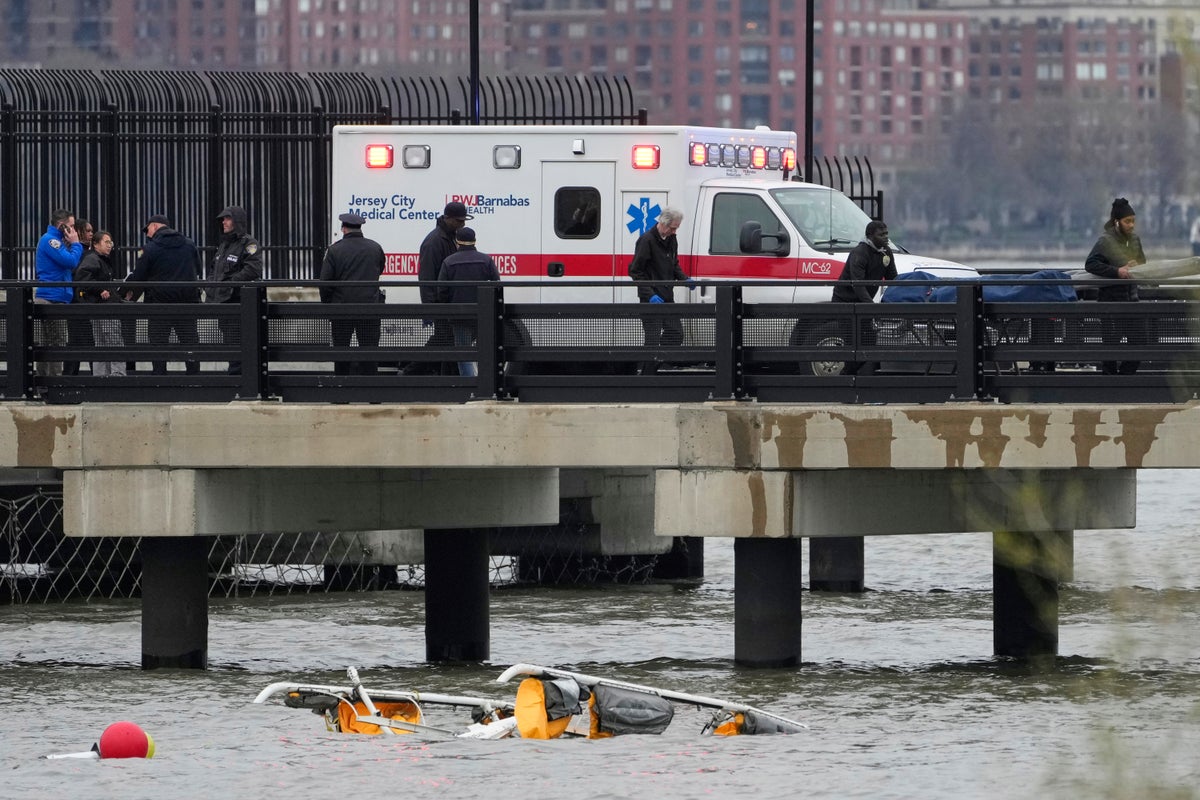
The federal investigation into the tragic New York City helicopter crash that claimed six lives points to a bird strike as the initiating event. However, blaming a flock of birds obscures a far more systemic failure. A bird strike may have triggered the loss of engine power, but the real culprits are outdated safety standards, inadequate low-altitude emergency margins, and a regulatory body that has consistently ignored warnings about urban helicopter flights. The tragedy was entirely predictable.
For decades, the skies above Manhattan have been treated as a high-stakes playground for tourists, commuters, and charter flights. When a single-engine turbine helicopter loses power over a densely populated river corridor, the margin between survival and catastrophe is measured in seconds. In this instance, those seconds ran out.
The Illusion of Engine Reliability
Aviation safety often relies on statistical probability. Regulators assume modern turbine engines are so reliable that the risk of a sudden, catastrophic power loss is negligible.
But probability is cold comfort when an aircraft encounters a flock of migratory geese.
When a bird is ingested into a helicopter’s turboshaft engine, the physical destruction is instantaneous. The compressor blades, spinning at tens of thousands of revolutions per minute, suffer immediate impact damage. The delicate aerodynamic balance required to compress air and maintain combustion is shattered. The engine experiences a compressor stall, characterized by loud backfires, a sudden drop in rotor RPM, and a complete loss of useful thrust.
For single-engine helicopters, this event is immediately critical. Unlike commercial airliners or twin-engine helicopters, which can lose an engine and continue flying safely to an airport, a single-engine helicopter instantly becomes a falling brick. The pilot has only one viable aerodynamic option to prevent a catastrophic uncontrolled plunge.
They must autorotate.
The Myth of the Easy Autorotation
Autorotation is the helicopter equivalent of gliding. By quickly disengaging the rotor system from the failing engine, the pilot allows the upward flow of air through the rotor blades to keep them spinning. This spinning motion preserves the rotor kinetic energy, which the pilot can use at the very last second to cushion the landing.
But autorotation is not a guaranteed escape hatch. It is an incredibly demanding maneuver that requires precise altitude, airspeed, and pilot reaction time.
In the crowded airspace over the East and Hudson Rivers, several factors make a successful autorotation highly improbable.
- Low Operating Altitudes: Many tour and charter flights operate at or below 1,500 feet to stay clear of commercial airliner traffic lanes. At this height, a pilot has less than fifteen seconds from the moment of engine failure to identify the emergency, establish a glide, select a landing spot, and execute the flare.
- The Dead Man Curve: Technically known as the height-velocity diagram, this is a graphical chart representing the combinations of altitude and airspeed where a safe autorotation is mathematically impossible. Many scenic routes force helicopters to fly precisely within or dangerously close to these high-risk zones.
- Winds and Obstacles: The East River is bordered by skyscrapers, bridges, and high-voltage power lines. These structures create unpredictable wind shear and rotorcraft-buffeting updrafts, making precise flight path management during a powerless descent nearly impossible.
When an engine fails over water, the pilot's only option is to aim for the river. Yet, landing on water introduces an entirely new set of lethal complications.
The Flotation Systems That Fail Under Pressure
Federal regulations require helicopters operating over water to be equipped with emergency flotation systems. These floats are designed to keep the aircraft upright long enough for passengers to evacuate.
In practice, they often fail.
Helicopters are top-heavy machines. The heavy engine, transmission, and main rotor assembly sit at the very peak of the aircraft, while the passenger cabin is relatively light. When a helicopter lands on water, its natural physical tendency is to capsize immediately.
If the floats do not deploy instantly, symmetrically, and fully, the helicopter will roll upside down. Once inverted, water floods the cabin, disorientation sets in, and escape becomes extremely difficult.
In past river accidents, investigators found that manual flotation systems were not deployed in time because the pilot was too busy trying to fly the aircraft. Even automatic systems can fail if the impact forces damage the deployment sensors or if the aircraft hits the water at an angle that shears the floats right off the fuselage.
The Long War Between the NTSB and the FAA
The National Transportation Safety Board (NTSB) has spent years sounding the alarm on urban helicopter operations. They investigate the crashes, find the structural flaws, and issue safety recommendations.
But the NTSB has no regulatory power. That authority belongs solely to the Federal Aviation Administration (FAA), an agency that has repeatedly resisted implementing stricter rules.
The NTSB has previously recommended banning single-engine helicopters from conducting commercial passenger operations over dense urban areas or large bodies of water. The logic is simple. If one engine fails, a second engine provides the necessary redundancy to reach a safe runway.
The FAA has consistently balked at this recommendation, citing the financial burden on operators. Twin-engine helicopters are significantly more expensive to purchase, maintain, and operate than single-engine models. By allowing single-engine aircraft to dominate the urban tourism and charter market, regulators have prioritized industry profit margins over passenger safety.
The disparity in safety standards between commercial airlines and on-demand helicopter charters is vast. While airline passengers benefit from redundant systems, rigorous safety management programs, and highly regulated flight paths, helicopter passengers are subjected to a regulatory environment that resembles the wild west.
Redefining Urban Airspace Safety
Preventing future tragedies requires moving past the simplistic explanation of "bad luck" or "unavoidable bird strikes."
Airports use sophisticated radar, noise cannons, and wildlife management teams to keep birds away from runways. No such protection exists for the low-altitude helicopter corridors winding through the heart of major cities.
If helicopters are to continue operating in these environments, the rules must change.
First, the FAA must mandate twin-engine aircraft for all commercial passenger flights over congested urban areas and water corridors. The technology exists to prevent single-point engine failures from becoming fatal accidents.
Second, emergency flotation systems must be redesigned. They should deploy automatically based on radar altimeter data and water immersion sensors, taking the burden off the pilot during those critical, chaotic seconds after a power loss.
Finally, flight paths must be moved away from restricted river corridors where the geography leaves no room for emergency maneuvers. If a flight cannot be conducted at an altitude that guarantees a safe landing spot on land, it should not be allowed to fly at all.
Until these changes are made, every flight over the city carries an unacceptable, unmitigated risk. The sky is a unforgiving environment, and relying on luck to avoid a flock of birds is not a safety strategy.