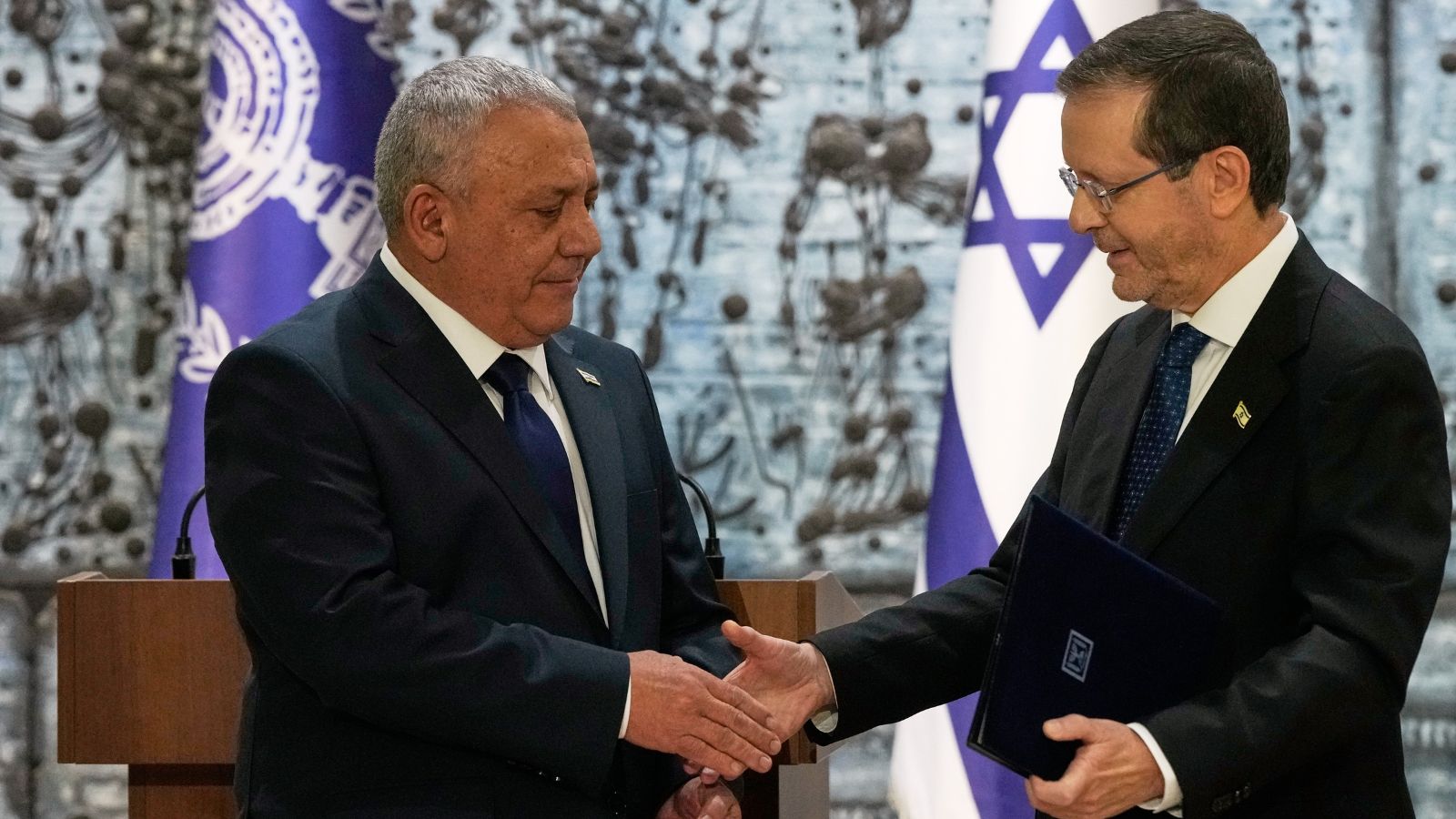
When Gadi Eisenkot accepted the mandate to form a governing coalition, he inherited a fragmented parliament locked in existential paralysis. The former Israel Defense Forces chief of staff made no effort to sugarcoat the arithmetic: traditional bloc alignment offers zero path to a functional majority. Reaching 61 seats in the Knesset under current party lines is a mathematical dead end. Eisenkot’s assertion that breaking the deadlock requires unconventional political moves is not clever rhetoric; it is a cold acknowledgment that standard coalition building in Jerusalem has completely collapsed.
For years, Israeli politics operated on a predictable axis. National security credentials paired with dependable religious or secular coalitions yielded predictable, if fragile, governments. That formula is broken. The core issue facing the latest mandate holder is not a lack of willing partners, but the structural incompatibility of the factions required to cross the finish line.
The Arithmetic of Paralysis
To understand why traditional negotiations fail, one must examine the raw numbers inside the Knesset. The parliament remains split into hardline factions that refuse to sit with one another under any circumstances.
Secular nationalist parties reject partnerships with ultra-Orthodox factions over long-standing disputes regarding military conscription exemptions and state subsidies. Simultaneously, right-wing national-religious blocs refuse to join any cabinet dependent on the passive support of Arab political parties. These are not mere policy disagreements; they are foundational ideological red lines enforced by base voters who punish compromise.
Eisenkot enters this arena with a distinct profile. Unlike career politicians who spend decades building party machinery, a former chief of staff carries broad public authority on security issues but lacks a disciplined party apparatus to enforce voting loyalty. Security prestige opens doors, yet it buys very little leverage when dealing with political operators whose primary incentive is retaining their regional patronage networks.
Unconventional Alliances and High-Stakes Bargaining
What do unconventional moves actually look like when standard party lines are frozen?
First, there is the potential splitting of existing party factions. In Israeli parliamentary history, individual lawmakers or small caucuses have broken away from their parent parties in exchange for senior ministerial portfolios or specific legislative guarantees. Eisenkot’s strategy relies heavily on enticing pragmatic elements from opposing camps to cross the aisle, effectively dismantling rigid party discipline.
Second, any non-traditional coalition would require unprecedented structural governance agreements. These include:
- Rotating Prime Ministerships: Short-term power-sharing agreements with strict legal triggers to prevent early dissolution.
- Carve-outs on Identity Legislation: Freezing contentious cultural and religious bills for the duration of the government to maintain a working baseline.
- Constructive Votes of No Confidence Rules: Higher parliamentary thresholds required to collapse the cabinet, forcing opposition groups to present an alternative prime minister before bringing down the administration.
These mechanisms are inherently unstable. They turn every cabinet meeting into a negotiation and give small, rogue factions outsized leverage over national policy.
The Limits of Security Prestige in the Political Arena
Military leaders transitioning to Israeli politics carry a mixed track record. While the public often turns to former generals during national crises, the skill set required to command a military apparatus differs fundamentally from managing a legislative coalition.
Commanders issue orders through a defined hierarchy. Politicians must manage equals who hold independent bases of power. When a prime minister designe seeks to pull rival leaders into a single room, security authority matters far less than the distribution of budget allocations, committee chairmanships, and legislative control.
Rivals understand that a general-turned-politician often lacks deep roots in party management. Opponents will deliberately prolong negotiations, testing whether the mandate holder will panic as the clock runs down. The statutory deadline for forming a government acts as an relentless pressure cooker, favoring seasoned party bosses who know how to extract maximum concessions in the final hours.
The Cost of Structural Compromise
If an unconventional government comes to fruition, its policy reach will be severely restricted by design. A coalition built across deep ideological divides cannot tackle fundamental constitutional reform, major judicial restructuring, or decisive peace initiatives. It becomes a caretaker administration by default, capable only of passing baseline budgets and managing immediate operational crises.
Supporters argue that a broad, limited government is vastly superior to the economic waste and institutional decay of repeated election cycles. Opponents counter that such governing arrangements create political paralysis, leaving the nation unable to respond decisively to shifting regional dynamics or internal economic strains.
Eisenkot’s mandate represents a decisive stress test for the Israeli political system. If a former military chief operating outside standard partisan playbooks cannot break the deadlock, the failure will demonstrate that the nation's parliamentary structure itself requires systemic overhaul. The coming weeks will reveal whether creative maneuvering can bridge gaps that appear unbridgeable, or whether the current political alignment makes stability impossible.