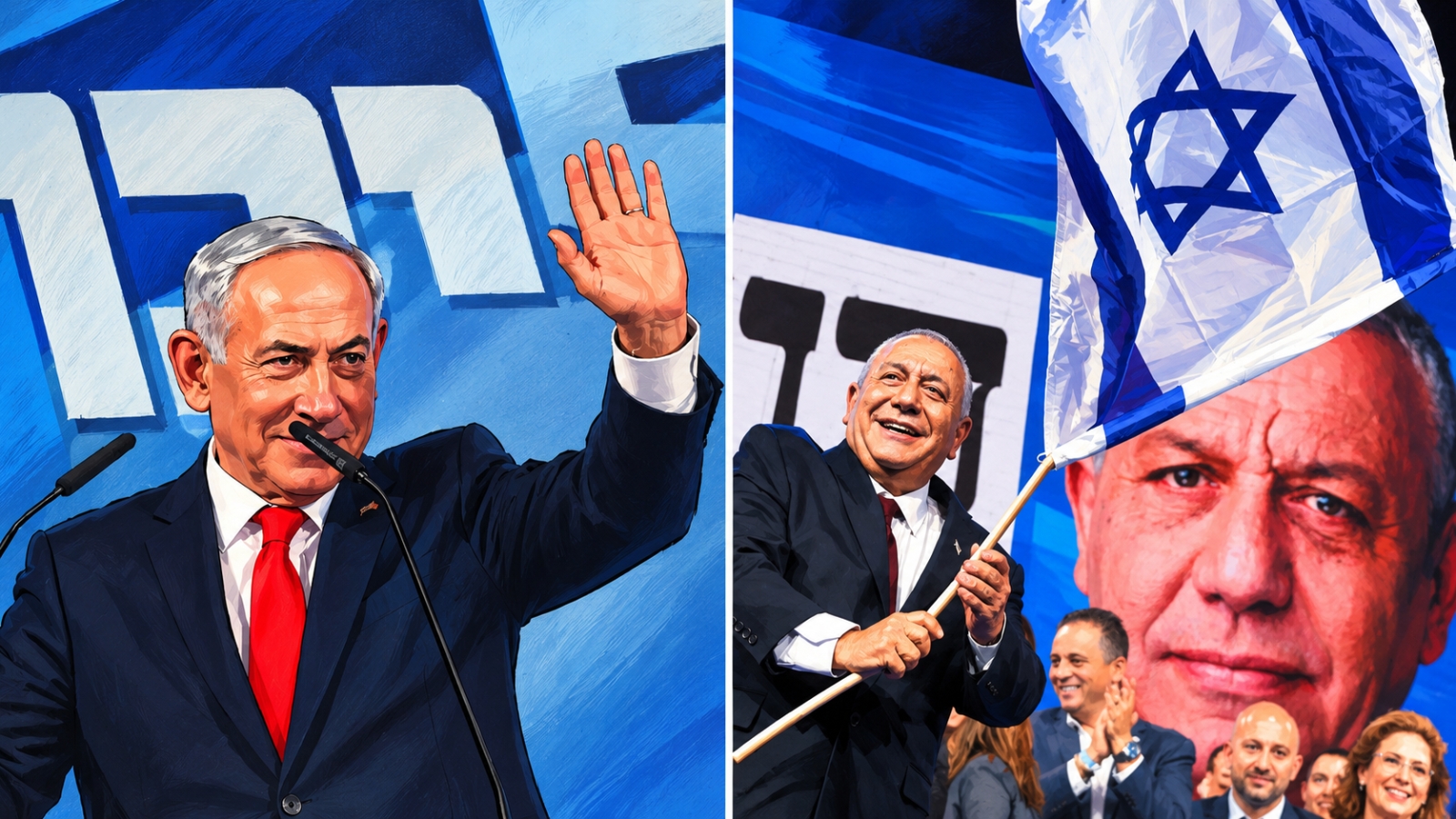
Gadi Eisenkot isn't bluffing. The former Israel Defense Forces chief of staff and prominent opposition figure has made it clear that his price for entering any future Israeli governing coalition isn't a cabinet seat or a budget line—it's a structural rollback of Benjamin Netanyahu's core policies.
If you've watched Israeli politics over the last few years, you know coalition deals usually get hammered out behind closed doors with vague promises and watered-down guidelines. Eisenkot is breaking that pattern. By publicly laying out strict conditions for joining a government and vowing to use a Knesset majority to reverse the current administration's trajectory, he's forcing every other opposition leader to pick a side before a single vote is cast in the next election cycle.
It's a calculated gamble. And honestly, it might be the only way Israel's fragmented opposition actually holds together once the ballot boxes close.
The Core Demands Behind Eisenkot's Ultimatum
When Eisenkot talks about reversing Netanyahu's policies, he isn't speaking in abstract political slogans. He's pointing directly at the legislative and security decisions that have divided Israeli society since the 37th government took office in late 2022.
First on his list is the ultra-Orthodox military draft exemption. As a former top military commander who lost his own son, Gal Eisenkot, in combat in Gaza, this isn't just a policy debate for him. It's personal, and it's existential for the military's manpower model. Eisenkot has repeatedly argued that Israel can't sustain a modern two-front or three-front defense posture while exempting tens of thousands of young Haredi men from service. Any coalition he joins must pass an equitable, mandatory service law—no loopholes, no delayed implementation dates, and no financial subsidies for institutions that dodge the draft.
Then there's the judicial overhaul. Netanyahu's coalition spent much of 2023 pushing legislation designed to weaken the Supreme Court's oversight of government actions and alter the Judicial Selection Committee. Those bills sparked massive nationwide protests before the October 7 attacks froze the legislative push. Eisenkot wants those laws formally buried, not just paused. He's demanding explicit commitments to restore judicial independence and anchor basic constitutional protections so a narrow 61-seat Knesset majority can't rewrite the rules of Israeli democracy overnight.
He's also targeting the government's approach to West Bank governance and Gaza's postwar reality. Eisenkot has been sharply critical of far-right ministers like Bezalel Smotrich and Itamar Ben-Gvir, accusing them of prioritizing ideological settlement expansion and rhetoric over strategic alliances and hostage recovery. Reversing those policies means stripping extreme-right factions of veto power over security decisions and re-engaging with regional partners like Saudi Arabia and the United States on a viable diplomatic framework.
Why a Knesset Majority Matters More Than Cabinet Seats
Most voters focus on who gets the Prime Minister's chair. Veteran lawmakers look at committee chairmanships and Knesset floor math.
Eisenkot's vow to use a Knesset majority to undo Netanyahu's policies highlights a basic truth about Israel's parliamentary system. In a 120-seat parliament, 61 votes give you near-total control over the legislative agenda. Under Netanyahu, the coalition used that majority to pass controversial Basic Law amendments, restructure ministerial powers—even creating a separate ministry inside the Defense Ministry for Smotrich—and starve opposition-led committees of influence.
You can't undo that kind of institutional rewiring just by swapping out the prime minister. You need a disciplined legislative bloc willing to pass counter-legislation in its first hundred days.
Think about what that actually requires in practice:
- Repealing bespoke laws passed specifically to accommodate Netanyahu's coalition partners, such as amendments allowing individuals with certain criminal convictions to serve as ministers.
- Rebuilding the state budget to redirect discretionary coalition funds away from non-core educational networks and toward war recovery, reserve soldiers, and public infrastructure.
- Establishing a state commission of inquiry into the failures surrounding October 7—a move Netanyahu's government has fiercely resisted, favoring instead a politically appointed review panel.
By framing his conditions around Knesset votes rather than personal titles, Eisenkot is warning potential partners like Yair Lapid, Benny Gantz, and Avigdor Liberman that he won't settle for symbolic compromises. If the next government doesn't have the backbone to pass these reversals on the Knesset floor, he's signaling he'd rather stay in the opposition.
The Friction Inside the Opposition Camp
Here's the part that makes political strategists in Tel Aviv nervous. While opposition leaders all agree that Netanyahu needs to go, they don't agree on how to replace him—or who to partner with to reach 61 seats.
Take Benny Gantz, Eisenkot's longtime partner in the National Unity party. Gantz has historically favored a softer, more conciliatory tone toward ultra-Orthodox parties like Shas and United Torah Judaism. For years, Gantz's theory of victory relied on peeling Haredi lawmakers away from Netanyahu by offering them generous budget guarantees and a compromised draft bill.
Eisenkot is effectively blowing up that strategy. You can't promise Haredi leaders a soft landing on military conscription while simultaneously vowing to enforce universal service from day one. Those two positions don't mix.
Meanwhile, Avigdor Liberman is pushing an even harder secular-nationalist line, and Yair Lapid is trying to position Yesh Atid as the responsible center-left anchor. Eisenkot sits right in the middle of these competing egos. Because of his military credentials and broad public trust, he carries weight with soft right-wing voters who feel alienated by Netanyahu's alliance with extremists but aren't ready to vote for Lapid.
If Eisenkot holds firm on his conditions, he forces Gantz and the others to choose between a broader, more fragile coalition that includes Haredi parties or a tighter, ideologically aligned bloc that actually shares a governing vision.
What People Get Wrong About Israeli Coalition Politics
If you follow Israeli news from abroad, it's easy to assume that pre-election pledges in Jerusalem are written in disappearing ink. Historically, that's been true. Israeli politicians have a long track record of swearing they'll never sit with a rival, only to sign a coalition agreement three weeks after election night in the name of "national unity" or "emergency governance."
Eisenkot himself joined Netanyahu's emergency war cabinet in October 2023 alongside Gantz, setting aside fierce political disagreements to manage the immediate military crisis in Gaza.
So why should anyone believe his red lines are real this time?
Because that war cabinet experience burned him. Eisenkot spent months inside the decision-making room watching Netanyahu delay critical strategic discussions, block postwar planning for Gaza, and cater to Smotrich and Ben-Gvir to keep his narrow coalition intact. When Eisenkot and Gantz finally walked out of the government in June 2024, Eisenkot's resignation letter didn't pull punches. He explicitly stated that extraneous political considerations had infiltrated the cabinet's most sensitive security decisions.
That firsthand experience changed his calculus. He saw what happens when you enter a coalition without ironclad, pre-agreed mechanisms to enforce policy. You end up providing political cover for decisions you oppose while lacking the votes to stop them.
How This Plays Out for Voters and Regional Allies
Eisenkot's stance isn't just domestic political theater—it has immediate consequences for how Washington and neighboring Arab capitals view Israel's political trajectory.
American officials and Gulf leaders have been hesitant to commit deeply to long-term regional integration plans while Israel's governing coalition remains dependent on far-right ministers who openly reject Palestinian diplomatic horizons and clash with the White House. When an opposition figure with Eisenkot's stature publicly commits to reversing those policies, he's sending a direct signal to international partners that an alternative governing majority is preparing to govern differently.
For Israeli voters, the message is just as blunt. The next election isn't simply a referendum on Netanyahu's personality or his ongoing corruption trial. It's a choice between two fundamentally different state models.
One model keeps the current power structure intact—preserving draft exemptions, weakening judicial checks, and letting ideological fringe parties dictate national security priorities. The other model, which Eisenkot is trying to lock in before campaign season even peaks, demands a hard reset on conscription, institutional accountability, and strategic diplomacy.
Watch how the other opposition leaders respond to Eisenkot's conditions over the coming weeks. If they adopt his red lines as a shared platform, the opposition enters the next race with a clear, actionable governing blueprint rather than just an "anyone but Bibi" slogan. If they dodge them or try to water them down, you'll know right away that the fight inside the opposition is far from over.