The air inside a biocontainment pod does not move like normal air. It is pulled, scrubbed, and regulated through high-efficiency particulate filters, creating a low, constant hum that sounds less like life and more like a machine keeping death at bay. Inside that negative-pressure plastic bubble, a human being becomes an island.
An American doctor found himself inside that hum, flying high above the Atlantic, leaving behind everything he knew for a sterile room in Frankfurt, Germany.
He had tested positive for the Ebola virus.
To the wires and the tickers, this was a standard international news update. A headline to be glanced at between morning coffee and the daily commute. A data point in the ongoing, multi-decade struggle against a hemorrhagic fever that has terrorized sub-Saharan Africa since 1976. But statistics are cold. They do not sweat through high-grade protective suits. They do not have to look their children in the eye through a pane of glass, wondering if a simple touch from three days ago was actually a sentence.
When we read about outbreaks, we tend to view them through the lens of macro-politics or global health infrastructure. We look at charts. We track infection curves. But the true story of Ebola is never found in the numbers. It is found in the sudden, terrifying shrinking of a person’s world.
The Perimeter at the Edge of the Forest
Imagine a line drawn in the dirt. On one side of the line is a bustling market in the Democratic Republic of Congo, thick with the scent of roasting charcoal, cassava leaves, and the humid, heavy air of the equator. On the other side is a makeshift isolation ward, where the only barrier between a deadly pathogen and the rest of humanity is a sheet of heavy-duty polyethylene plastic and a strict protocol written in Geneva.
The doctor had lived on both sides of that line. Like many medical professionals who volunteer for missions in conflict zones and outbreak epicenters, he wasn’t there for the glory. You do not sign up for the Congo out of vanity. You go because you believe that a life in Ohio or Oregon is not inherently more valuable than a life in North Kivu.
But the virus does not care about altruism.
Ebola is a master of subversion. It enters the body quietly, often masquerading as a common tropical malaise—malaria, typhoid, or a standard bout of influenza. For the first few days, the patient feels tired. A headache blooms behind the eyes. A mild fever sets in. In a region where malaria is as common as the common cold, these early warnings are easily dismissed.
Then, the replication begins. The virus attacks the endothelial cells lining the blood vessels, systematically dismantling the body’s ability to clot. It is a brutal, agonizing process that turns the body’s own immune response into a weapon against itself.
When the doctor’s test came back positive, the invisible machinery of global health logistics ground into motion. The decision to evacuate an American citizen to a specialized unit in Germany is not made lightly. It requires a choreography of diplomatic clearances, specialized aircraft, and a level of bio-secure transport that feels more akin to moving weapons-grade plutonium than a sick human being.
But while the jet was being fueled in Europe, a far more agonizing reality was unfolding on the ground in the Congo.
The Ones Left Behind
We often talk about quarantine as a medical necessity. We rarely talk about it as a psychological crucible.
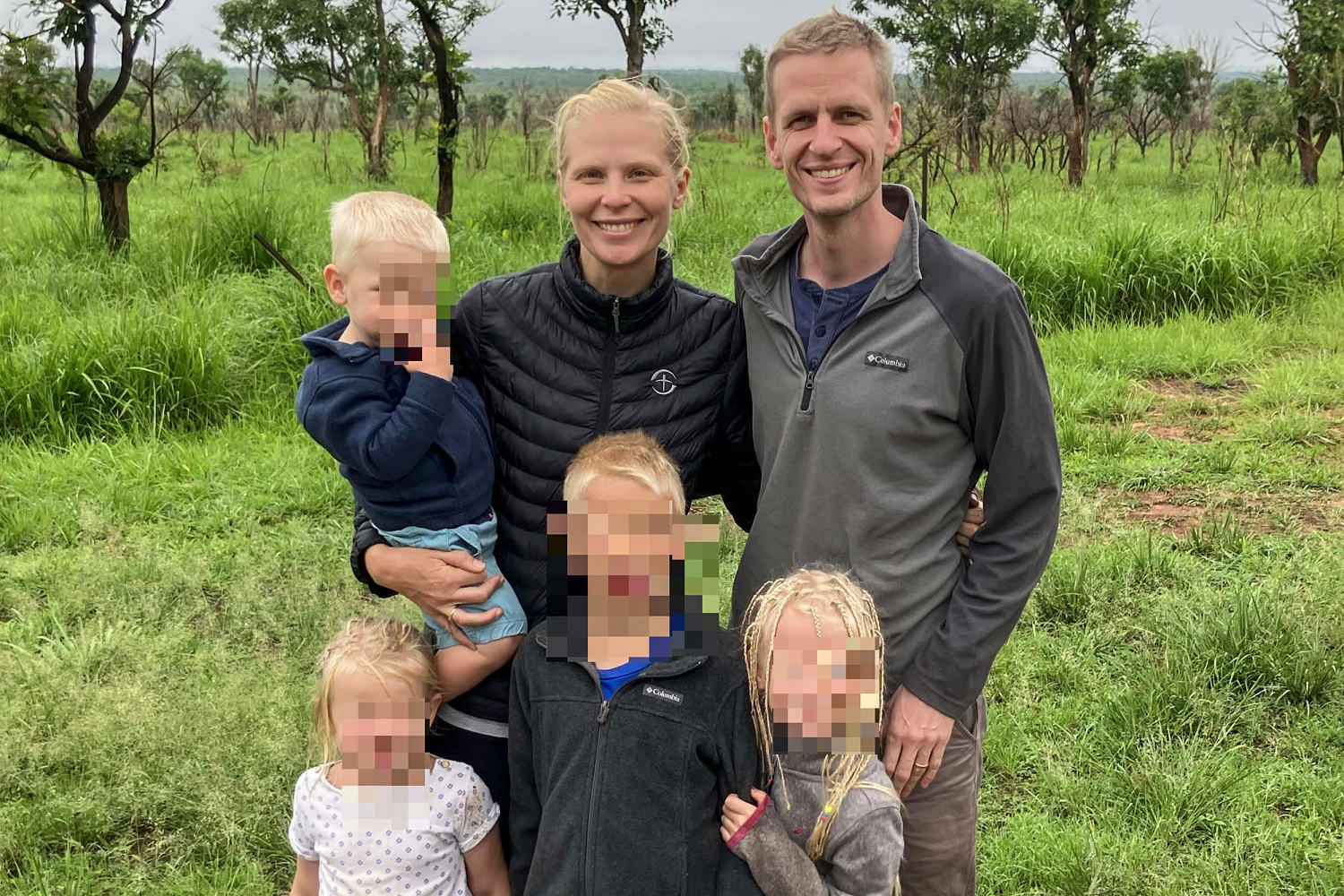
While the doctor was wheeled onto an airfield, insulated from the world by layers of protective fabric, his wife and children remained behind. They were not permitted to leave. They were placed under strict active monitoring, confined to a designated area, their body temperatures checked multiple times a day, their every symptom scrutinized by colleagues who looked at them with a mix of profound sympathy and instinctual dread.
Consider the geometry of that fear.
Your husband, your father, is flying away toward some of the best medical care on Earth, yet he has never been further from you. You are trapped in the very zone where the danger lives, waiting out a 21-day incubation period. Twenty-one days. It is a three-week psychological hostage situation.
Every morning begins with the thermometer. You slide it under your tongue or press it against your forehead, waiting for the beep. If it reads 36.6 degrees Celsius, you breathe for another twelve hours. If it reads 38.0, your world ends. You begin to question every sensation. Is that tickle in the throat a sign? Is that slight muscle ache from sleeping poorly on a cot, or is it the virus beginning its march through your system?
This is where the standard news reports fail us. They tell us that the family is "being monitored." They do not tell us about the silence in the room between the temperature checks. They do not tell us about the mother who looks at her child and has to consciously suppress the urge to hold their hand, because in the world of Ebola, love can be a vector.
The Illusion of Distance
There is a comfortable lie that Western societies tell themselves whenever an outbreak occurs in a developing nation: It is happening over there.
We look at the thatched roofs, the dirt roads, and the crowded clinics of central Africa and convince ourselves that the disease is a product of geography, poverty, or lack of development. We treat the oceans as moat walls.
But a virus does not recognize a passport. It does not respect a border wall. The distance between a remote village in the Congo and a state-of-the-art intensive care unit in Frankfurt is precisely the length of a charter flight. The evacuation of this doctor is a stark reminder that our health security is not local; it is global. You cannot wall off a fire in one room of a house and expect the rest of the building to remain cool.
When the doctor arrived at the Frankfurt University Hospital, he was taken to a specialized isolation unit designed to handle the world's most dangerous pathogens. The staff there wear positive-pressure suits that look like spacesuits. They breathe air supplied through hoses hanging from the ceiling. Every drop of waste fluid from his room is chemically treated and incinerated.
This is the pinnacle of human medical achievement—an absolute barrier between the sick and the well.
Yet, even in that ultra-modern facility, the basic human needs remain unchanged. A patient needs to see a face, not just a fogged plastic visor. They need to hear a voice that isn’t distorted by a respirator microphone. The paradox of high-level biocontainment is that the very tools used to save a patient’s life are the ones that strip away their humanity.
The 21st Day
The treatment of Ebola has advanced significantly since the devastating West African outbreak of 2014 to 2016. We now have monoclonal antibody treatments and experimental antivirals that have dramatically improved survival rates if administered early. We have vaccines that can create a ring of protection around an outbreak zone.
But science cannot cure the collateral damage of isolation.
As the hours tick away in Frankfurt, the doctor’s body fights the virus, aided by the best technology modern medicine can provide. And thousands of miles away, in a secure compound surrounded by the dense greenery of the Congo, a mother and her children continue to wait for the beep of a thermometer.
They are bound together not by proximity, but by a shared countdown. They are living through the quietest, most terrifying kind of waiting room, where the walls are invisible and the clock ticks at the exact same speed, whether you are in a high-tech ward in Europe or a metal-roofed bungalow near the equator.
The jet that carried the doctor away has long since returned to its hangar, its surfaces bleached and scrubbed. The news cycle has already moved on to other crises, other political dramas, other numbers. But the line drawn in the dirt remains, and those who stand near it know that the true measure of a plague is not how many people it kills, but how completely it separates us from the people we love.