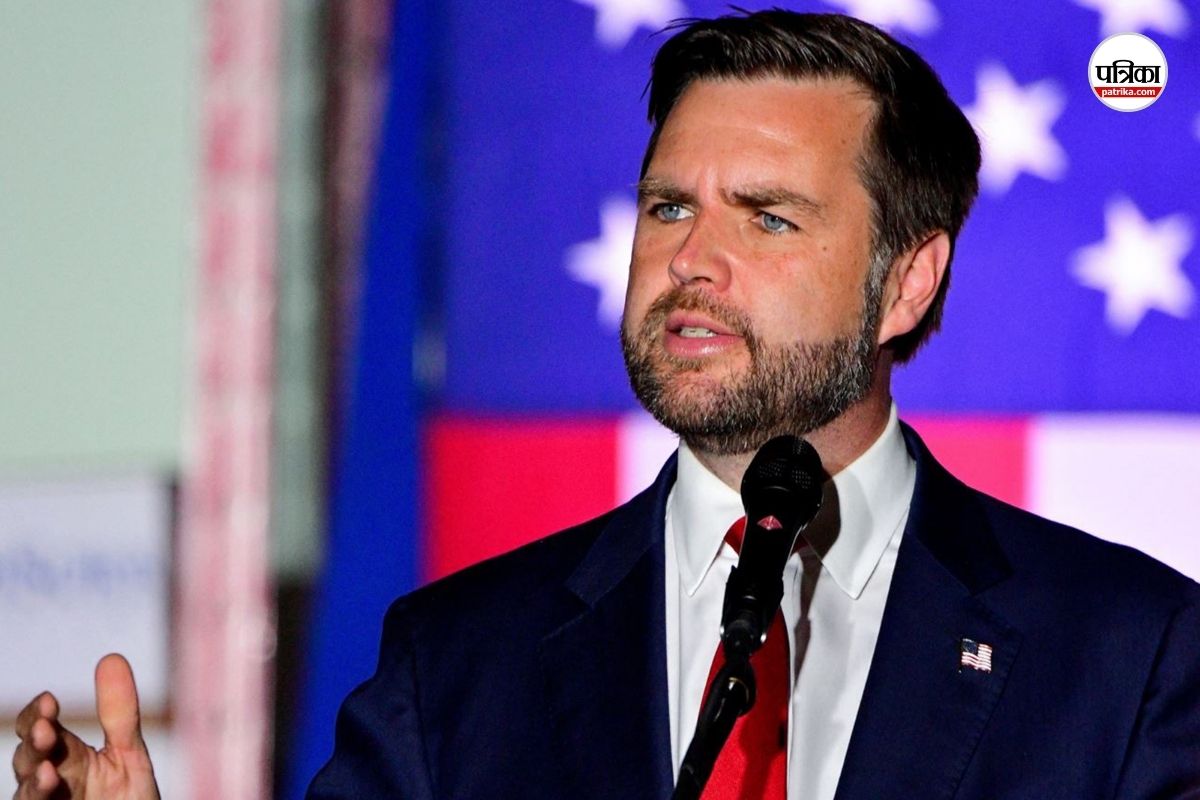
The collapse of a diplomatic narrative often reveals more about the structural instability of international relations than the initial claim itself. When Pakistani Prime Minister Shehbaz Sharif asserted specific progress regarding ceasefire conditions in regional conflicts, the immediate and public dismissal by U.S. Vice President JD Vance signaled a breakdown in the Verification-Trust Feedback Loop. This dissonance is not merely a "he-said, she-said" political spat; it is a clinical case study in the divergence between domestic signaling and international strategic reality.
Understanding this friction requires a decomposition of how diplomatic intelligence is validated and the specific mechanisms by which public contradictions function as tools of statecraft. Sharif’s claims attempted to position Pakistan as a central mediator—a role that historically grants the nation leverage in Western financial and military spheres. Vance’s rejection, conversely, serves as a hard reset of the evidentiary standard required by the United States.
The Triad of Diplomatic Legitimacy
The gap between the Pakistani narrative and the American response can be mapped across three distinct pillars of legitimacy. When these pillars are misaligned, the result is the public "ridicule" or "mockery" often described in media, though the underlying cause is a structural failure of coordination.
- Informational Asymmetry: Intelligence regarding ceasefire terms is rarely uniform. The United States maintains a multi-layered surveillance and diplomatic reporting apparatus that often bypasses regional intermediaries. If Sharif’s claims were based on third-party assurances or aspirational outcomes, they would inevitably collide with the granular, real-time data held by the U.S. Executive Branch.
- Strategic Signaling vs. Operational Fact: Domestic leaders often broadcast "diplomatic wins" to stabilize internal political volatility or to signal to their electorate that the nation remains a global player. However, when these signals enter the international arena without prior bilateral vetting, they become liabilities. Vance’s dismissal functioned as a tactical correction to prevent a false narrative from hardening into a perceived policy shift.
- The Threshold of Evidence: In the current U.S. administration's framework, a "ceasefire claim" requires specific, verifiable benchmarks—troop withdrawals, cessation of kinetic activity, and formal signed protocols. Sharif’s statements lacked these specificities, making them easy targets for a rigorous, data-driven rejection.
The Cost Function of Premature Attribution
In high-stakes geopolitics, claiming credit for a diplomatic breakthrough that has not yet materialized creates a significant "reputational tax." Pakistan’s attempt to frame itself as the architect of a specific ceasefire agreement involves a high-risk calculation.
The Economic Value of Mediation for Pakistan cannot be overstated. By positioning itself as the indispensable link between conflicting parties, Pakistan seeks to justify its continued receipt of security assistance and favorable terms from international lenders. However, when a superpower like the U.S. publicly invalidates those claims, the "mediation premium" evaporates. The cost is not just embarrassment; it is the degradation of the country’s credit as a reliable intelligence partner.
This creates a bottleneck in future negotiations. If the U.S. perceives that Pakistani leadership will prioritize domestic optics over the integrity of confidential negotiations, the flow of sensitive information will inevitably constrict. Vance’s bluntness serves as a prophylactic measure, ensuring that other regional actors do not mistake Sharif's optimism for American policy.
Structural Divergence in Regional Objectives
The friction between JD Vance and Shehbaz Sharif is rooted in a fundamental mismatch of regional objectives. To analyze this, we must look at the Objective Function of each actor:
- Pakistan's Objective: To maintain regional relevance, secure its borders, and manage a precarious economic situation by appearing as a stabilizing force in the eyes of the global community.
- The U.S. (Vance) Objective: To enforce a "Maximum Verification" strategy where no concessions are acknowledged until they are physically realized. This reflects a shift away from "trust-based" diplomacy toward a "transaction-based" model.
The disconnect occurs because Sharif is operating on a model of Aspirational Diplomacy, while Vance is operating on Empirical Realism. In Vance’s view, acknowledging a ceasefire that does not meet U.S. specifications would weaken the American bargaining position. Therefore, the dismissal is not a personal slight but a necessary defense of strategic leverage.
The Mechanics of Public Dismissal as Policy Tool
Publicly correcting a foreign head of state is a deliberate choice. It is rarely the result of a "slip of the tongue." This specific interaction utilizes three distinct psychological and diplomatic mechanisms:
- The Authority Reset: By flatly denying the claims, the U.S. re-establishes itself as the sole arbiter of what constitutes an "accepted" agreement. It tells the global audience that the definitive source of truth resides in Washington, not Islamabad.
- Narrative De-escalation: If the world believes a ceasefire is imminent based on Sharif’s words, markets and other political actors may react prematurely. Vance’s denial forces a "cool-down" period, preventing market volatility or secondary diplomatic shifts based on false premises.
- Incentive Realignment: The public nature of the rebuttal serves as a disciplinary mechanism. It signals to the Pakistani administration that future claims must be cleared or supported by evidence if they are to avoid public undermining.
The Intelligence Gap: Why the Claims Failed the Test
The failure of Sharif’s claims likely stems from a reliance on "soft intelligence"—conversations that indicate intent rather than action. In the analytical hierarchy, intent is the least reliable metric.
The Hierarchy of Diplomatic Reliability
- Tier 1: Kinetic Evidence (Satellites confirm troop movements, cessation of fire).
- Tier 2: Formal Signed Protocols (Legal documents signed by authorized representatives).
- Tier 3: Bilateral Confirmation (Both primary parties issue identical statements).
- Tier 4: Third-Party Claims (Mediators or neighbors describe the situation).
Sharif’s claims resided in Tier 4. For a strategist like Vance, acting on Tier 4 information is a cardinal sin of foreign policy. The dismissal was an inevitable consequence of Sharif attempting to elevate Tier 4 observations into a Tier 1 reality.
Strategic Pivot: The Required Re-calibration for Regional Stability
For Pakistan to regain its standing as a credible diplomatic intermediary, it must shift its communication strategy from Narrative-Driven to Evidence-Driven. This involves a three-step operational overhaul:
- Bilateral Pre-clearance: Ensuring that any statement regarding multi-party agreements is synchronized with the primary power brokers. This eliminates the possibility of public contradiction.
- Specificity in Dissemination: Instead of vague claims of "progress" or "agreed terms," the focus must shift to specific, measurable milestones that have already been achieved.
- De-linking Domestic Needs from International Reporting: The temptation to use foreign policy as a tool for domestic popularity must be resisted when the stakes involve superpower relations.
The Vance-Sharif incident is a stark reminder that in the current geopolitical climate, the "truth" is a commodity managed by those with the highest degree of verification capability. Pakistan’s strategy failed because it attempted to trade in a currency (aspiration) that the current U.S. administration no longer accepts.
The immediate strategic requirement for regional players is to recognize that the U.S. is moving toward a "Post-Trust" diplomatic framework. In this environment, the only valid communication is that which can be independently verified by technical means. Future Pakistani assertions that ignore this reality will continue to face the same corrective friction, further isolating the nation from the very diplomatic circles it seeks to lead. The move forward requires a total abandonment of speculative diplomacy in favor of a rigid, verifiable transactionalism.