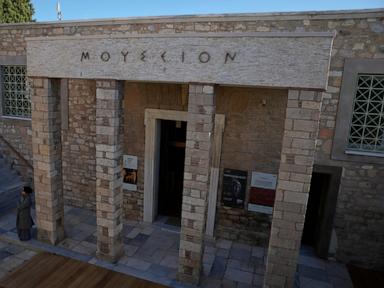
Silence.
That is the first thing you notice when you step over the threshold on the southeastern corner of the Acropolis rock, away from the relentless, sun-bleached clamor of the Parthenon crowds and down into the limestone hollow where Athens hid its oldest modern secret for nearly twenty years. Discover more on a related issue: this related article.
Most visitors never even knew it was there. They walked right past the low, flat roof, eyes glued upward to the towering Doric columns of Pericles’ golden age, snapping photos against the blinding Aegean sky while entirely oblivious to the fact that beneath their dusty sneakers sat the very room where modern Greece first learned how to claim its own soul. For decades, the Old Acropolis Museum was a subterranean phantom—locked, stripped of its marbles, overshadowed by its gleaming, glass-and-concrete successor down the slope in Makriyianni, and left to gather the quiet dust of bureaucratic hesitation.
Now, the heavy doors have swung open once more. More analysis by Travel + Leisure delves into related perspectives on the subject.
On the surface, the headlines read like standard municipal housekeeping: Greece's oldest modern-era museum reopens on the Acropolis after major restoration. A neat box checked by the Hellenic Ministry of Culture. A ribbon cut. A press release filed. Yet reducing this reopening to a mere architectural renovation misses the fierce, beating pulse of what actually happened inside that sunken stone sanctuary—and why stepping into it today feels less like entering a gallery and more like walking straight into the nineteenth-century psyche of a newborn nation.
A Nation Trying to Prove It Existed
To understand why a half-buried building on a windswept Athenian hill carries such ferocious emotional weight, you have to strip away two centuries of tourism brochures and picture Greece in the 1860s.
Imagine, for a moment, a composite character we might call Konstantinos—a young Athenian stonemason in 1865, walking up the jagged path of the Acropolis with lime dust caked under his fingernails and a battered tin of lukewarm coffee in his coat pocket. Only thirty-five years earlier, Greece had clawed its independence out of four centuries of Ottoman rule. The new country was bankrupt, bruised by foreign interference, and haunted by a patronizing European elite that loved ancient Greeks in theory while treating living Greeks as unworthy squatters camping among ruins they didn't understand. Every time a farmer plowed a field and struck a marble thigh or a bronze helmet, Western collectors descended like vultures, buying up the nation's memory by the crate and shipping it off to London, Paris, and Munich.
Konstantinos and his fellow builders were handed a radical, almost defiant assignment by the fledgling Greek state: build a house for the gods right where they fell, so they never leave home again.
The architect chosen for the job, Panagis Kalkos, faced an impossible aesthetic trap. How do you construct a modern building on the most sacred architectural plateau in Western civilization without committing visual blasphemy? Anything tall would compete with the Parthenon. Anything ornate would look like a cheap imitation.
Kalkos solved the riddle through sheer humility. Between 1865 and 1874, he carved into the natural bedrock on the southeastern edge of the citadel, designing a modest, single-story neoclassical structure that deliberately sank below the sightline of the ancient temples. When you stood on the Sacred Rock, the museum vanished into the terrain. It was architecture built on tiptoe—a quiet, respectful whisper in the presence of giants.
I remember standing outside those shuttered doors back in the autumn of 2014, pressing my forehead against the warm stone wall while tour guides hustled groups of exhausted cruisers toward the Erechtheion. At the time, the building looked abandoned, almost apologetic. The grand new Acropolis Museum at the foot of the hill had opened in 2009 with massive fanfare, soaking up every ounce of international attention and housing the famous Caryatids and Parthenon frieze in climate-controlled splendor. Looking at the old Kalkos building then, I felt a strange pang of confusion—and honestly, a little sadness. Why keep a hollowed-out shell on top of a monument that already had a world-class museum three hundred meters away? Was this just sentimental hoarding, or did the old stones still have something left to say?
What Happened When the Marbles Left
When the last major sculptures were carefully crated and lowered down the hill in 2007 and 2008, the Old Acropolis Museum didn't simply close; it suffered an identity crisis.
For over a century, from 1874 until the early twenty-first century, those low-ceilinged rooms had been bursting at the seams. As archaeologists dug deeper into the Acropolis soil in the 1880s, they uncovered the Perserschutt—the Persian rubble—where Athenians had reverently buried their shattered Archaic statues after Xerxes burned the citadel in 480 BC. Suddenly, the tiny museum was flooded with smiling korai (maiden statues) still wearing traces of vivid red and blue mineral pigment, fierce limestone pediments of Heracles wrestling sea monsters, and thousands of votive offerings. Kalkos’s modest building had to be expanded in 1888, renovated after the devastation of World War II, and endlessly reconfigured just to keep up with the sheer volume of history emerging from the dirt.
Then, overnight, the galleries went dark.
Think of the museum as an old family home after the children grow up and move into a sleek downtown apartment. The furniture is gone. The noise is gone. For nearly two decades, while conservationists debated, funding stalled, and structural engineers probed the foundation, the building sat in limbo. Critics whispered that reopening it was redundant. Tourists assumed it was an administrative shed or a restricted archaeological dig. Even seasoned travelers who had visited Athens five or six times walked right past its entrance without realizing they were brushing shoulders with Greece's very first national museum built specifically to protect a single archaeological site.
But the real problem with leaving the Old Acropolis Museum closed wasn't wasted square footage. It was historical amnesia.
Without that building open, visitors to the Acropolis experienced a bizarre chronological leap. You climbed the hill, saw the fifth-century BC ruins of Pericles, walked down the hill, and entered a twenty-first-century glass palace. The entire story of how those ruins were rescued, pieced together from rubble, fought over by nineteenth-century scholars, and preserved through wars and earthquakes simply evaporated. The human struggle between ancient destruction and modern reverence had been edited out of the visitor experience.
Inside the Resurrection
Step inside today, and you realize immediately that the Hellenic Ministry of Culture resisted the easy temptation to turn the building into a redundant mini-gallery. Instead, they turned the museum inside out—making the story of the Acropolis’s preservation, and the building itself, the centerpiece.
The air inside smells faintly of cool limestone, fresh plaster, and treated cedar. Light filters softly through the restored skylights and tall neoclassical windows, illuminating walls painted in muted, earthy tones that let the raw textures of Kalkos’s nineteenth-century masonry breathe. During the extensive restoration, crews didn't just slap on fresh paint and install LED track lighting. They reinforced the building against seismic tremors—a constant, non-negotiable threat in Athens—overhauled the antiquated climate and electrical systems, and stripped away decades of clumsy mid-twentieth-century partitions that had choked the original floor plan.
Consider what happens when you walk through the restored sequence of rooms now:
- You confront the birthplace of modern Greek archaeology. Rather than pretending the nineteenth century never happened, the exhibition showcases the heroic, messy, deeply human effort of early Greek archaeologists like Kyriakos Pittakis and Panagiotis Kavvadias, who cataloged fragments by candlelight and fought fiercely to stop antiquities trafficking.
- You see the unseen layers of the hill. Artifacts that couldn't fit into the main narrative downstairs—architectural fragments, inscriptions, everyday tools, and documentation of the Acropolis's post-classical lives as a Byzantine church, a Frankish palace, and an Ottoman garrison—finally get room to speak.
- You experience intimacy that megamuseums cannot replicate. Down in the new Acropolis Museum, you share space with ten thousand people a day, separated from masterpieces by thick glass barriers and vast atrium voids. Up here, in rooms scaled to human height, you stand inches from carved stone, feeling the grit of the chisel marks and the quiet weight of the mountain pressing against the exterior walls.
Look closely at the floor beneath your feet in the central gallery, and you can trace the subtle shift where Kalkos’s original 1874 footprint meets the 1888 extension. Nothing has been sanitized into sterile perfection. The restoration honors the scars.
The Invisible Stakes of Small Spaces
Why should anyone outside Athens care that a modest, nineteenth-century museum on top of a famous hill has reopened its doors? After all, the world is drowning in travel news, and Greece already welcomes more than thirty million visitors a year.
Because we are living through an era of blockbuster heritage—where ancient sites are increasingly packaged as frictionless, high-throughput theme parks designed to process maximum foot traffic in minimum time.
When you herd forty thousand people a day up a narrow marble ramp, subtlety is the first casualty. Nuance gets trampled. Visitors race from the Propylaea to the Parthenon, check off the Erechtheion, take a selfie overlooking the Plaka neighborhood, and march back down to catch their tour bus. In that frantic choreography, the Acropolis stops being a complex, living palimpsest of human devotion and becomes a giant stone backdrop for social media.
The reopened Old Acropolis Museum acts as a deliberate speed bump in that industrial tourism machine.
It forces you to slow down. Its low ceilings ask you to lower your voice. Its exhibits remind you that archaeological survival is never automatic; every surviving column on that hill exists only because generations of flawed, stubborn, underpaid human beings refused to let the past dissolve into lime kilns or private European drawing rooms.
And there is another, quieter political resonance humming beneath the floorboards. For decades, Greece’s campaign for the reunification of the Parthenon Sculptures from the British Museum faced a tired, paternalistic counterargument from critics in London: Athens has nowhere proper to put them. When the new Acropolis Museum opened in 2009, it demolished that excuse once and for all. Now, with the Old Acropolis Museum restored and reopened on the summit itself, Greece has completed an unbroken ecosystem of stewardship—from the bedrock where the statues were carved, to the nineteenth-century sanctuary where they were first sheltered, to the state-of-the-art galleries below where they await their missing halves.
Stepping Back Into the Sun
Walk out of the Old Acropolis Museum in the late afternoon, just as the fierce Mediterranean glare softens into amber and the tour buses begin thinning out along Dionysiou Areopagitou street below.
Look back at the low stone roofline tucked neatly against the southeastern cliff face. From fifty paces away, it almost disappears again into the gray rock, just as Panagis Kalkos intended one hundred and fifty years ago. No neon banners scream for your attention. No gift shop spills plastic trinkets onto the ancient path.
Yet if you stand still for a second, listening to the wind scrape across the dry thyme bushes and the distant hum of traffic rising from the modern city, you realize the hill feels whole again. Not louder. Not flashier. Just complete—like an old man who has finally found his voice after twenty years of silence, whispering the truth of how he survived to anyone willing to pause, step down into the cool stone shadow, and listen.