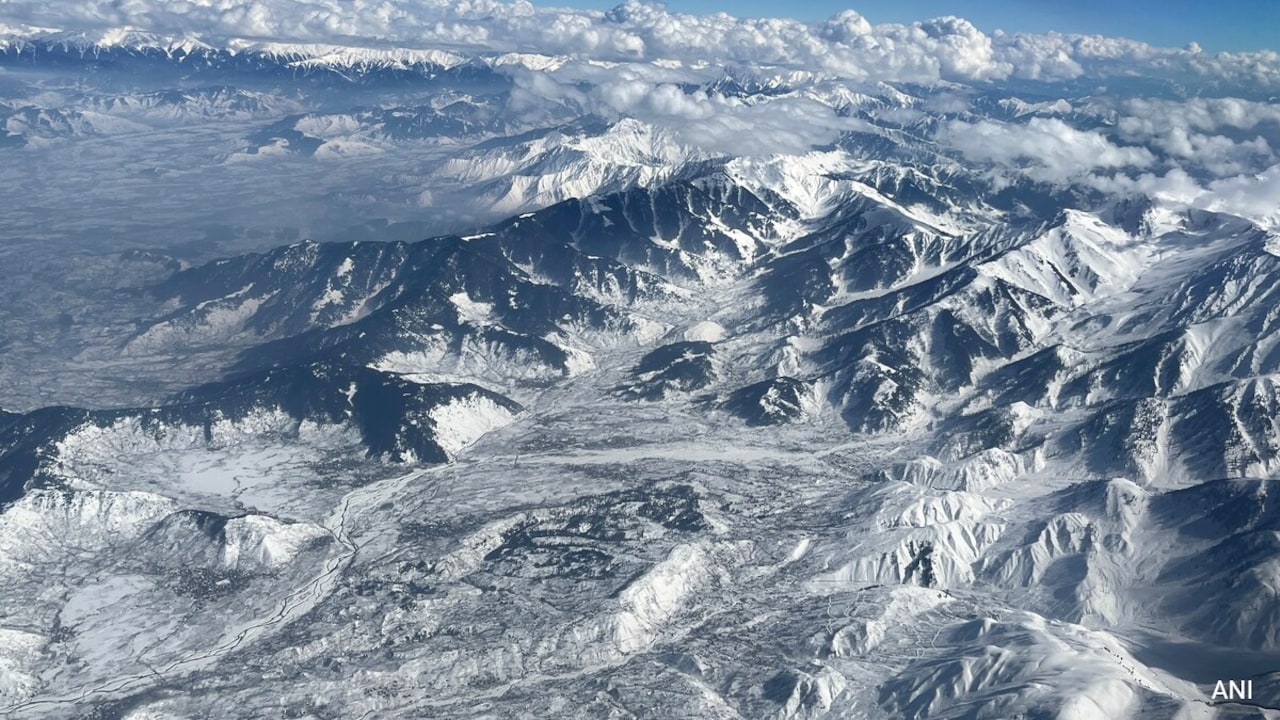
A 66-year-old American climber reached the 6,476-meter summit of Nepal’s Mera Peak. He turned around. He made it back down to High Camp at roughly 5,800 meters, zipped into his tent for the night, and never woke up.
Every wire service and adventure blog ran the exact same lazy obituary. They framed it as a freak tragedy on an "accessible," "non-technical" mountain. They mentioned his age—66—as a subtle nod to frailty, treating his death like an unpredictable roll of the cosmic dice.
That narrative is dangerously wrong. And if you are booking a Himalayan trip right now based on that consensus, it might get you killed.
The Himalayan trekking industry has a dirty secret wrapped in a marketing euphemism: the "trekking peak."
On paper, the Nepal Mountaineering Association classifies Mera Peak as a trekking peak. Outfitter websites plaster their sales pages with words like introductory, beginner-friendly, and straightforward. They sell it to weekend warriors, corporate executives, and retirees as a glorified walk in crampons.
Here is the reality they bury in the fine print: Your lungs do not read mountaineering classification charts.
At 6,476 meters (21,247 feet), the barometric pressure on Mera Peak is roughly half of what it is at sea level. Every single breath delivers less than half the oxygen molecules your brain and heart require to stay alive. Calling a 6,476-meter mountain "beginner-friendly" because you do not need to swing ice tools on a vertical wall is like calling open-ocean swimming "beginner-friendly" because there are no sharks. The technical terrain is easy. The physiology is lethal.
The "Summit Fever" Trap Nobody Talks About
When mainstream outlets report on a death during descent, they treat the summit as the finish line and the descent as an unfortunate footnote.
In high-altitude mountaineering, the summit is the halfway point. Worse, on Mera Peak, the standard commercial itinerary is engineered to create a physiological ambush right after you take your summit photos.
Look at the standard expedition schedule sold by almost every operator in Kathmandu:
- You spend days slogging up the Hinku Valley to Khare at roughly 5,045 meters.
- You move up to High Camp at around 5,800 meters—an altitude where the human body can no longer acclimatize, only deteriorate.
- At 2:00 AM, already dehydrated and sleep-deprived, you start a 10-to-14-hour round-trip push to 6,476 meters.
The industry standard is to summit and drop all the way back down to Khare in a single marathon push. Why? Because dropping 1,400 meters in one afternoon floods your hypoxic brain and lungs with thick, oxygen-rich air. Descent is the only real cure for acute altitude illness.
When a climber stops at High Camp on the way down to sleep at 5,800 meters, the alarm bells should be deafening. Stopping at High Camp on the descent is rarely a luxury choice; it is almost always the result of total physical depletion. You ran out of gas on the summit ridge. You burned your last reserves fighting the wind on the final steep dome. By the time you stumble back into High Camp, you do not have the neuromuscular coordination left to descend the glacier to Khare.
So you crawl into a tent at 5,800 meters. You go to sleep. And when you sleep at extreme altitude, your respiratory drive naturally drops. Your blood oxygen saturation plummets even further than when you were awake and gasping. If subclinical High Altitude Pulmonary Edema (HAPE) or High Altitude Cerebral Edema (HACE) was already brewing during your summit push, sleeping at 5,800 meters turns a survivable crisis into a fatal one before sunrise.
Stop Blaming Age and Start Blaming Bad Metrics
Whenever a climber over 60 dies in Nepal, armchair commentators immediately blame their birth certificate. What was a 66-year-old doing up there anyway?
That is pure biological illiteracy.
I have watched 24-year-old marathon runners collapse with fluid-filled lungs at 5,000 meters while 68-year-old trekkers paced steadily past them without a headache. Age is not the primary predictor of altitude mortality. In fact, epidemiological data from the Himalayan Rescue Association (HRA) and high-altitude medical researchers like Dr. Peter Hackett consistently show that younger, hyper-fit men often suffer higher rates of severe altitude illness than older adults.
Why? Because young athletes have the cardiovascular engine to outrun their own acclimatization. They hike too fast, ignore early warning signs, and push through pain that would make an older, more self-aware climber stop and rest.
The real killer isn't age. It is the VO2 max delusion.
Climbers train for Mera Peak by running half-marathons, grinding on StairMasters at sea level, and lifting weights. They show up in Lukla with resting heart rates in the 40s and assume their fitness makes them bulletproof.
Fitness measures how efficiently your muscles use oxygen when oxygen is abundant. Acclimatization is a slow, genetic, biochemical cascade—your kidneys excreting bicarbonate, your bone marrow ramping up erythropoietin, your capillaries dilating—that has zero correlation with how fast you can run a 10K. You cannot out-train hypoxia at sea level. You can only buy time at altitude.
The Questions You Should Actually Be Asking
If you search online for Mera Peak safety, you get fed sanitized marketing fluff designed to keep permit sales flowing. Let's tear down the standard "People Also Ask" playbook with actual ground truth.
"Is Mera Peak safe for beginners?"
No. It is technically accessible for beginners, which is a completely different thing. If you trip on a flat glacier because hypoxia has scrambled your cerebellar balance, or if your lungs fill with fluid at 5,800 meters, the fact that the slope angle was only 30 degrees will not save your life. Beginners belong on 4,000-to-5,000-meter treks first to learn how their specific genetics respond to thin air before stepping onto a glaciated 6,400-meter peak.
"What is the real death rate on Mera Peak?"
Operators love to brag that Mera Peak has a 70% to 80% summit success rate and a tiny fatality rate compared to 8,000-meter giants. That statistic is a shell game. Over 2,600 climbers take permits for Mera Peak in peak years. When you flood a mountain with thousands of novices on compressed schedules, a "low percentage" still translates to body bags every single season. Furthermore, Nepal does not maintain a transparent, real-time public database tracking delayed medical evacuations that end in Kathmandu hospitals days later.
"Does taking Diamox prevent deaths like this?"
Acetazolamide (Diamox) is a prophylactic aid, not a force field. It forces your kidneys to excrete bicarbonate, acidifying your blood and tricking your brain into breathing faster—especially while asleep. It speeds up acclimatization by roughly 24 to 48 hours. What it does not do is allow you to ignore a compressed itinerary, mask severe exhaustion, or safely sleep at 5,800 meters when your body is screaming to go down. Worse, climbers routinely pop Diamox like candy while failing to drink the 4 to 5 liters of water required to offset its diuretic effect, arriving at High Camp severely dehydrated and prone to blood clots and hypothermia.
How to Actually Survive a 6,000-Meter "Trekking Peak"
If you want to stand on top of Mera Peak and—more importantly—walk back into Kathmandu under your own power, throw out the standard commercial brochure and follow rules built for high-altitude survival:
Buy Two Extra Contingency Days in Khare (5,045m).
Do not book the tightest, cheapest 14-day itinerary. The HRA recommends gradual sleeping-altitude gains above 3,000 meters. Spending an extra 48 hours at 5,000 meters before touching High Camp lets your blood chemistry catch up to the elevation. Yes, it costs more in guide fees and teahouse bills. It is still cheaper than a helicopter body recovery.📖 Related: The Ticket We Buy for the Long Voyage HomeSet a Hard Turnaround Time—And Enforce It on Your Guide.
Most commercial guides are paid bonuses or tipped heavily based on summit success. That creates a toxic incentive structure: your guide wants you on top almost as much as your ego does. Before you leave High Camp, set a non-negotiable turnaround clock (typically 10:00 AM or 11:00 AM) and a minimum energy reserve rule. If reaching the summit means you will not have the strength to descend all the way back to Khare the same day, you abort at 6,300 meters. Nobody puts "He almost made it to Khare" on a tombstone.Monitor Resting SpO2 and Heart Rate Every Morning.
Bring a medical-grade pulse oximeter, not a cheap smartwatch sensor. Track your baseline in Kathmandu and every morning at camp. Oxygen saturation drops at altitude—that is normal. What is not normal is a resting heart rate spiking 15 to 20 beats per minute above your altitude baseline alongside a plummeting SpO2 that fails to recover after rest. Numbers don't have summit fever. Listen to them.Treat High Camp Like a Launchpad, Never a Sanctuary.
High Camp at 5,800 meters is a hostile environment perched on an exposed glacier. You go there for one night to stage your summit bid. You never plan to sleep there twice. If weather, fatigue, or illness traps you at High Camp after a summit attempt, your sole priority is getting assisted down to Khare immediately—even if it means being short-roped or lowered by your climbing Sherpa in the dark.
The Uncomfortable Trade-Off
Taking this approach has a massive downside that tour operators hate: you will turn around more often.
If you respect physiological red lines, enforce strict turnaround times, and refuse to burn your descent reserves just to touch a snow mound at 6,476 meters, you might spend $5,000 and three weeks of your life only to stop 200 meters shy of the top. Your Instagram feed won't get the hero shot. You won't get to brag at dinner parties about conquering Nepal's highest trekking peak.
Mountain guides have a saying that tourists laugh at in the bar in Lukla and forget on the glacier: Getting to the top is optional. Getting down is mandatory.
The next time an outfitter sells you a 6,476-meter mountain as an "easy starter peak," close the browser tab. Altitude doesn't care about your resume, your age, or what the brochure called the climb.