Thirty-nine years is enough time for a sapling to become timber, for an entire generation to grow up and have children of their own, and for the memory of a small girl to dissolve into the gravel of a French roadside.
In August 1987, maintenance workers clearing brush along the A10 motorway near Suèvres, in central France, found a body wrapped in a blanket. She was about four years old. She had dark curly hair, brown eyes, and a body covered in fractures, burns, and bruises accumulated over months of systematic cruelty. Nobody came to claim her. Nobody reported her missing. For more than three decades, the French press and the investigators who refused to let her file gather dust called her simply la petite martyre de l'A10—the little martyr of the A10.
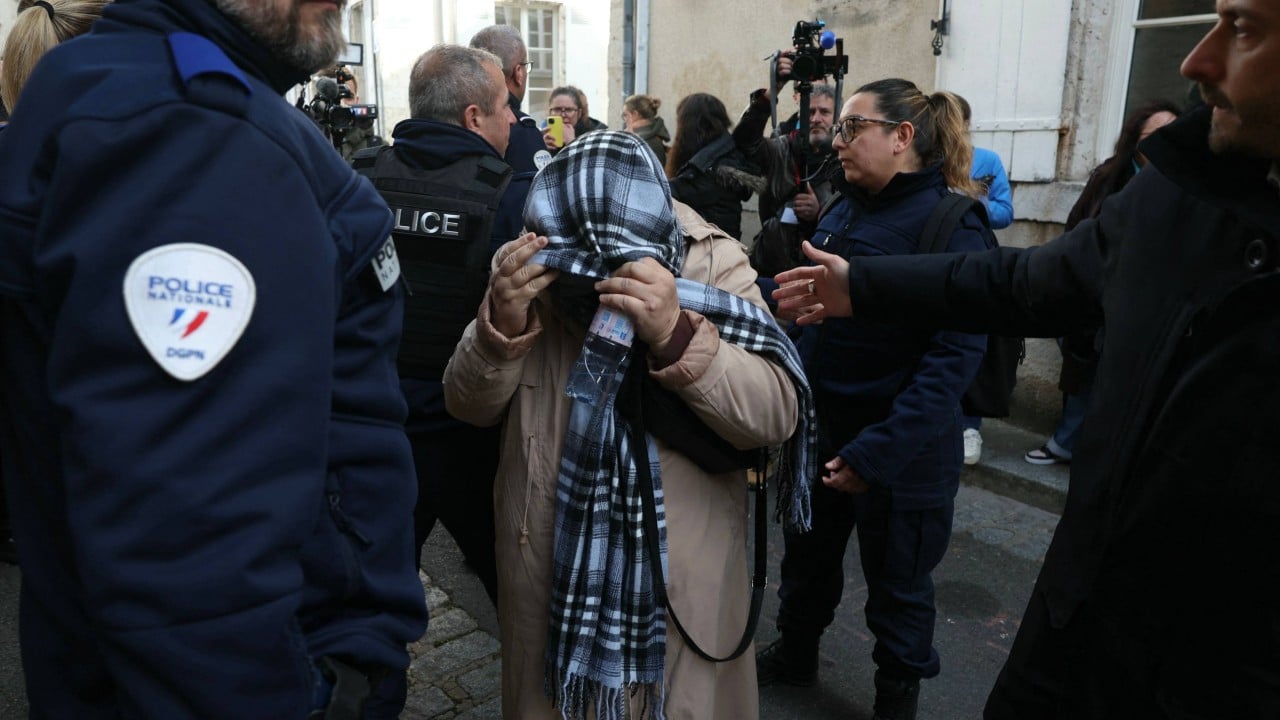
Now, in a courtroom in Blois, a seventy-two-year-old woman stands trial for her murder.
The headlines give you the arithmetic of the case. A mother, aged seventy-two. A daughter, aged four. A crime committed in the late 1980s. A trial happening decades later. That is the cold geometry of journalism—the who, what, when, and where compressed into a single breathless line meant to be scrolled past over morning coffee.
Look closer, though, and the geometry collapses into something far heavier. This is not merely a story about a horrific crime and a delayed arrest. It is a story about how a human being can vanish from the ledger of the living while still breathing, how bureaucracy and silence conspire to erase the vulnerable, and what happens when modern science finally forces the past to speak.
The Architecture of Erasure
To understand how a child could be tortured to death and dumped beside a major highway without a single neighbor, teacher, or relative sounding an alarm, you have to understand the quiet machinery of isolation.
Think of a child’s life as a web of witnesses. Under normal circumstances, a four-year-old is tethered to the world by dozens of fragile threads. A pediatrician measures her height. A preschool teacher notices a bruise on her forearm. A grocer hands her a piece of fruit. A grandmother asks why she hasn't visited lately. Each thread is thin, almost invisible on its own, yet together they form a safety net that makes it nearly impossible for a child to simply disappear without someone noticing the tear.
In the case of the girl known eventually as Inass Touloub, those threads were severed one by one—or never woven at all.
Born in Casablanca in 1983, Inass was brought to France by her parents, Ahmed Touloub and Halima Benkhelifa, who settled in the Paris region. Unlike her siblings, who were enrolled in school and integrated into the visible rhythms of neighborhood life, Inass was kept in the shadows. She was not registered at a local school. She had no regular medical trail in France. To the state, to the neighbors, to the wider community, she existed in a blind spot—a child living behind closed shutters in an apartment where the outside world was not invited.
Consider what that means in practical terms. When a child has no official footprint, the system designed to protect her does not fail in a dramatic, cinematic way; it simply never turns on. There is no truancy officer knocking on the door because no attendance sheet ever bore her name. There is no social worker flagging missed checkups because no clinic had her on its roster.
Silence.
That is the primary weapon of domestic terror—not the fist or the belt, though both were used with sickening regularity, but the wall built between the victim and anyone who might ask a question.
Thirty Years of Cold Stone
For thirty-one years, the investigators in Loir-et-Cher had everything except an identity. They had the autopsy reports detailing the healed and fresh fractures, the bite marks, the burns, and the fatal blow to the head. They had the blanket she was wrapped in. They had composite sketches distributed across Europe, plastered on train stations and police bulletins, showing the face of a dark-eyed toddler with a solemn expression.
More than sixty thousand people were questioned over the decades. Investigators chased leads across France, Belgium, Spain, and North Africa. Every tip ended in a dead end. The child was buried in a small cemetery in Suèvres, under a headstone that could not even bear her name, tended by locals who refused to let her be forgotten even when they did not know who she was.
If you have ever stood in front of an unsolved problem that spans decades, you know the specific kind of exhaustion that sets in—the creeping suspicion that truth has a half-life, and that once enough years pass, reality becomes permanently unreachable. Prosecutors retired. Detectives aged out of the force. The file boxes yellowed. By all conventional logic of criminal investigation, the little girl from the A10 should have remained a permanent mystery, another nameless casualty of a pre-digital era when borders were porous and records were kept in filing cabinets rather than searchable databases.
Yet the past is never truly sealed. It just waits for a better key.
How DNA Rewrote the Clock
The breakthrough did not come from a deathbed confession or a sudden attack of conscience. It came from a routine database match in 2018—thirty-one years after the body was found.
A young man, arrested for a minor offense, had his DNA entered into France’s national genetic database. When the system ran its automated comparisons, it flagged a familial link to the genetic profile extracted decades earlier from the unidentified girl on the A10. The young man was her brother—born years after her death, completely unaware that he had ever had a sister.
Think about that biological echo. A child murdered in 1987 left behind a microscopic signature that survived in a laboratory freezer while her parents moved on, divorced, and grew old. Three decades later, a brother who never knew her name carried the exact genetic markers needed to point investigators straight back to the apartment in Puteaux where she had spent her short, brutalized life.
Science did not bring Inass back. It could not undo a single fracture or erase a single hour of terror. What it did was strip away the anonymity that had protected her killers for more than half a lifetime. Suddenly, the ghost had a birth certificate. She had parents. She had a history.
Ahmed Touloub, her father, had died in Morocco in 2013, escaping earthly accountability by five years. Halima Benkhelifa, her mother, was still alive. She was living quietly in France, a grandmother in her sixties at the time of her arrest, having spent thirty-one years carrying a secret that everyone around her assumed did not exist.
The Weight of a Seventy-Two-Year-Old Defendant
Walk into a courtroom where an elderly defendant stands accused of a crime committed nearly forty years ago, and you immediately feel a strange, unsettling friction.
Our instincts are wired to respond to what is directly in front of us. When we look at a seventy-two-year-old woman—frail, gray-haired, speaking softly, perhaps leaning on a cane or struggling with the physical toll of age—our visual cortex registers vulnerability. We are conditioned to associate old age with fragility, with the winding down of power, with someone who needs help crossing the street rather than someone capable of inflicting monstrous violence on a helpless toddler.
That visual dissonance is precisely why delayed trials test the clarity of our moral judgment.
In the courtroom in Blois, the defense will naturally lean on the passage of time, on fractured memories, on the dynamic between a domineering husband and a frightened wife in 1980s France. Those questions are legitimate; the law requires examining intent, coercion, and individual responsibility rather than painting with a broad brush. Did she participate actively in the torture? Did she fail to protect her daughter out of terror of her husband, or out of shared cruelty? Did she help dispose of the body beside the highway?
Yet as the court weighs those questions, one truth must remain anchored in the center of the room: the person sitting in the dock today is the same legal and moral person who lived in that apartment in 1987. Time changes the exterior of a human being. It softens the voice and stoops the shoulders. It does not alter the ledger of what was done to a four-year-old child who weighed less than thirty pounds when she died.
Compassion for human frailty is a virtue, yet when misdirected, it becomes a second erasure—an implicit suggestion that if a perpetrator simply outlives the memory of their victim, the crime somehow shrinks in severity.
What We Owe the Uncounted
It is tempting to read a story like this as an anomaly—a dark Gothic tale from another century, sealed off from our modern, hyper-connected world. We like to believe that in 2026, with digital health records, mandatory school reporting, and cameras on every corner, a child could never vanish into thin air the way Inass Touloub did.
That comfort is an illusion.
Across Europe and North America, child welfare investigators still encounter what they call "ghost children"—kids kept out of formal schooling under the guise of homeschooling, moved frequently across jurisdictions to reset local oversight, or hidden within insular households where nobody outside the immediate family ever lays eyes on them. The tools of surveillance have grown sharper, yet the fundamental vulnerability of a small child remains unchanged: a four-year-old cannot dial an emergency number, cannot walk into a police station, and cannot articulate that the only world she knows is a crime scene.
She depends entirely on the adults around her—and when those adults become her executioners, she depends on the vigilance of strangers.
A neighbor who notices that a child never comes outside to play. A landlord who wonders why one toddler never appears when the rest of the family leaves the building. A relative who refuses to accept vague excuses about why a niece has been "sent to stay with family abroad." Most of the time, curiosity is an intrusion. Sometimes, it is the only thing standing between a child and an unmarked grave beside a highway.
In the small cemetery in Suèvres, the headstone of the little girl from the A10 finally bears her real name: Inass. For thirty-one years, strangers brought flowers to a grave marked only by the date her body was found. Now, the court in Blois is tasked with assigning responsibility for the date her life ended.
Whatever verdict the jury reaches, the trial itself serves a purpose that transcends punishment. It is a public refusal to let a human life be treated as disposable simply because she was small, hidden, and silenced before she had the words to ask for help. The highway traffic still rushes past Suèvres at a hundred and thirty kilometers an hour, indifferent as ever, while inside a quiet courtroom a few miles away, a seventy-two-year-old woman is finally forced to answer for the child she left in the grass.