Regulatory capture does not always arrive through overt corruption; more often, it manifests through structural overlap where a single practitioner occupies both the regulated marketplace and the disciplinary bench. When a sitting member of the Medical Council of Hong Kong resigns due to conflict-of-interest risks—triggering an immediate statutory by-election—the event exposes a recurring vulnerability in self-regulating professional monopolies. Standard news coverage treats such a resignation as a routine administrative vacancy. In operational reality, a conflict-driven departure reveals an acute failure in pre-appointment vetting, a systemic bottleneck in disciplinary adjudication, and a direct threat to public trust in healthcare oversight.
The Structural Architecture of Self-Regulation
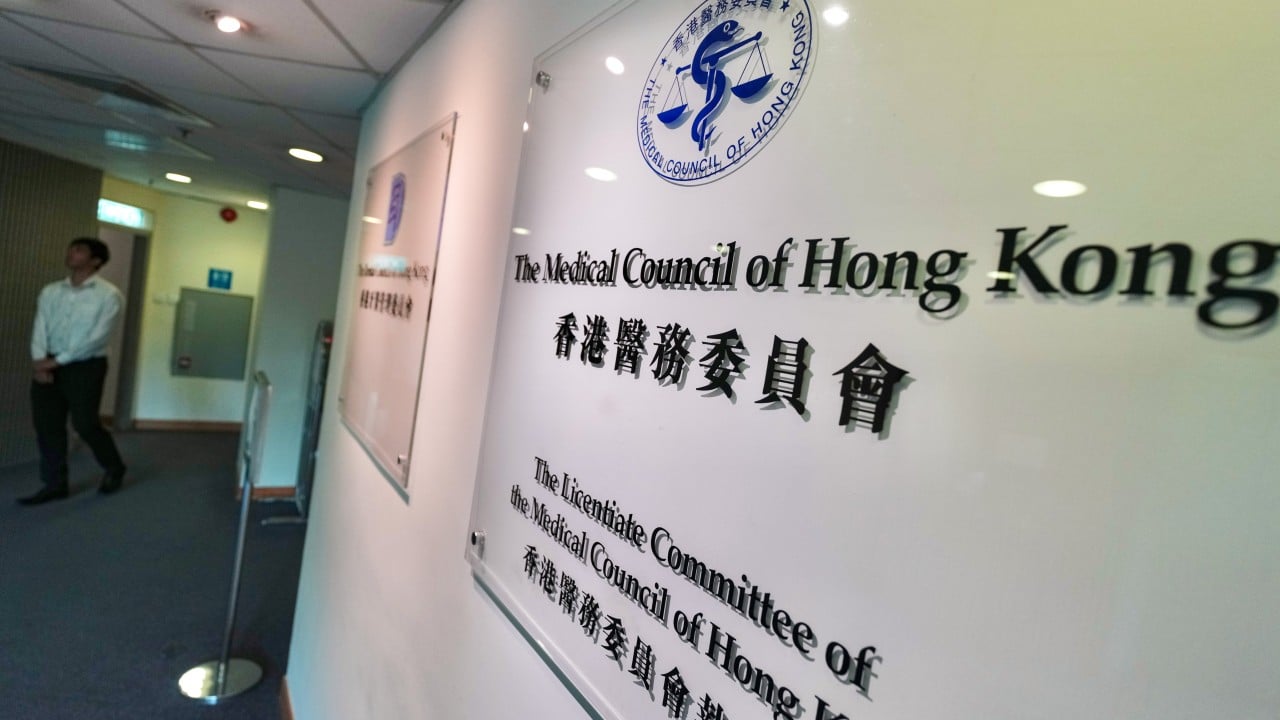
To understand why a single resignation forces an institutional reset, one must examine the statutory design of the Medical Council of Hong Kong (MCHK). Established under the Medical Registration Ordinance (Cap. 161), the Council operates as a statutory body tasked with maintaining the register of medical practitioners, administering licensing examinations, and exercising disciplinary jurisdiction over professional misconduct.
Unlike purely state-run regulatory agencies, professional medical boards rely heavily on peer adjudication. The foundational economic rationale is information asymmetry: only trained clinicians possess the technical literacy required to evaluate clinical negligence, diagnostic standards, and surgical competence. However, this reliance on insider expertise introduces a structural principal-agent problem. The Council acts as the agent for the public (the principal), yet its elected and nominated physician members remain active participants in the private and public healthcare markets they govern.
The composition of the MCHK attempts to balance this tension through a dual-track membership model:
- Appointed Lay and Institutional Members: Representatives nominated by the Chief Executive, the Director of Health, the Hospital Authority, the University of Hong Kong, the Chinese University of Hong Kong, and the Hong Kong Academy of Medicine.
- Elected Practitioner Members: Physicians directly elected by registered doctors on the General Register, alongside members nominated by the Hong Kong Medical Association (HKMA).
When an elected member resigns over a conflict risk, the disruption hits the democratic legitimacy of the peer-review half of the Council. Because elected seats represent the broader medical electorate rather than an institutional appointment, the vacancy cannot be filled by executive fiat. Section 3 of the Medical Registration Ordinance mandates a formal by-election, activating an administrative cycle that freezes committee bandwidth and delays pending disciplinary inquiries.
Anatomy of a Conflict Risk in Medical Adjudication
In governance theory, a conflict of interest is rarely binary. Rather, it operates across a spectrum of institutional friction that compromises either actual impartiality or the perception of procedural fairness—a distinction governed strictly in Hong Kong administrative law under the Porter v Magill test (whether a fair-minded and informed observer would conclude there was a real possibility of bias).
When a Medical Council member steps down citing conflict risk, the trigger typically falls into one of three operational categories:
- Commercial and Equity Overlap: A Council member holds an executive role, equity stake, or advisory contract with a private healthcare group, insurance network, or medical technology vendor whose business practices or affiliated clinicians fall under MCHK scrutiny.
- Association and Union Dualities: Active leadership within professional advocacy bodies—such as medical unions or specialty societies—creates a direct clash of fiduciary duties. An advocacy organization exists to protect the commercial and legal interests of doctors; the Medical Council exists exclusively to protect patients and uphold clinical standards. Occupying senior roles in both entities simultaneously forces the practitioner to serve two incompatible mandates.
- Concurrent Litigation or Inquiry Exposure: If a member’s own clinical practice, hospital department, or close professional network becomes the subject of a preliminary investigation, continuing to sit on the Preliminary Investigation Committee (PIC) or a full disciplinary inquiry panel invalidates the legal integrity of the proceedings.
The decision to resign rather than merely recuse oneself from isolated cases indicates a structural rather than transactional conflict. Recusal works when a board member knows a specific respondent or treated a specific patient. Resignation becomes mandatory when the member’s ongoing professional status conflicts with the core jurisdiction of the board itself. If a member must recuse themselves from thirty or forty percent of the docket due to systemic commercial or organizational ties, their continued presence degrades quorum capacity without contributing adjudicative labor.
The Operational Cost Function of a By-Election
Triggering a statutory by-election imposes measurable friction on an already strained regulatory apparatus. Historically, the MCHK has faced severe criticism from patient advocacy groups and legislators over multi-year backlogs in handling public complaints. Every procedural diversion compounds this latency.
The cost function of replacing a conflicted member breaks down into four distinct operational deficits:
1. Adjudicative Quorum Attrition
Disciplinary inquiries require specific panel compositions, blending medical practitioners and lay members to satisfy statutory quorum rules. Losing an active medical member immediately narrows the pool of eligible panelists. Because other members already face case-by-case recusals due to hospital affiliations or specialty overlaps, removing one full-time seat creates a compounding scheduling bottleneck. Hearings already scheduled months in advance risk adjournment if a replacement panelist cannot be cleared for conflicts.
2. Administrative Resource Diversion
The MCHK Secretariat operates with finite civil service staffing. Running a territory-wide election for thousands of registered medical practitioners requires gazetting notices, verifying the electoral roll, printing and distributing ballot papers, managing nomination periods, and auditing vote counts. Every administrative hour spent executing electoral logistics is an hour diverted from triaging incoming patient complaints and drafting inquiry determinations.
3. Regulatory Uncertainty During Transition
A by-election cycle typically spans several months from the formal declaration of a vacancy to the gazetting of the newly elected member. During this interregnum, strategic policy votes—such as updates to the Code of Professional Conduct, revisions to specialist registration criteria, or adjustments to non-locally trained doctor pathways—proceed with an incomplete mandate. If the departing member represented a specific constituency within the medical sector, that faction temporarily loses its voice in policy calibration.
4. Reputational Erosion and Judicial Review Vulnerability
The most acute risk is legal rather than administrative. If a departing member participated in preliminary screening decisions before recognizing or declaring their conflict, respondents sanctioned by the Council gain grounds to challenge the rulings via judicial review. Under Hong Kong administrative law, procedural impropriety or apparent bias at the preliminary stage can taint subsequent disciplinary findings, forcing the Council to vacate verdicts and retry cases at immense public expense.
Systemic Vulnerabilities in Current Vetting Protocols
The recurrence of post-election or mid-term conflict resignations points to a flaw in how candidates are vetted prior to taking office. Under current electoral rules for the Medical Council, eligibility to run for an elected seat relies primarily on baseline registration criteria: holding full registration, maintaining good standing without recent disciplinary convictions, and securing nominations from fellow registered practitioners.
What the electoral framework lacks is a mandatory, pre-nomination conflict audit.
In corporate governance—particularly among publicly listed financial institutions or state-owned enterprises—prospective board directors undergo rigorous independence screening before their names appear on a proxy ballot. Candidates must disclose all external directorships, equity holdings, consultancy retainers, and advocacy affiliations, allowing a nominating committee to evaluate whether those ties prevent the candidate from fulfilling their fiduciary duty.
Professional statutory bodies operate under an outdated assumption of self-policing: they assume that any licensed professional understands conflict rules and will voluntarily refrain from running if compromised. In practice, ambitious clinicians often seek Council seats precisely because they are deeply embedded in medical associations, private hospital networks, or healthcare startups. The very prominence that makes a candidate electable among peers frequently generates the commercial and political entanglements that render them conflicted as a regulator.
Strategic Remedies to Eliminate Structural Conflict
Preventing future by-election disruptions requires moving conflict management upstream—shifting from reactive resignation to proactive structural filtering. The Medical Council and the Health Bureau possess three concrete mechanisms to harden the governance architecture without requiring wholesale legislative overhauls.
Mandatory Pre-Nomination Disclosure Statements
Before the Returning Officer validates any nomination for an elected MCHK seat, the candidate should be required to submit a standardized, legally binding Declaration of Interests. This document must list all executive roles in medical unions, board positions in private healthcare operators, equity stakes exceeding a defined threshold in medical enterprises, and active legal proceedings. Publishing an executive summary of these disclosures alongside candidate manifestos allows the medical electorate to price conflict risk into their votes before ballots are cast.
Bright-Line Cooling-Off Rules for Advocacy Leaders
To eliminate the structural clash between regulatory duty and union advocacy, the Council should establish explicit incompatibility rules within its standing orders. Specifically, individuals holding office-bearer positions (President, Vice-President, Honorary Secretary, or Council Member) in major medical trade associations should be barred from simultaneously sitting on the MCHK's Preliminary Investigation Committees. If elected to the Council, the practitioner must resign their union executive post within fourteen days of gazettal, or forfeit the regulatory seat.
Expanded Reserve Panelist Pools
To insulate disciplinary timelines from sudden vacancies or mass recusals, the MCHK should decouple disciplinary adjudication from core policy governance. Expanding the statutory pool of appointed assessors and temporary panel members—drawing from retired senior clinicians and academic specialists who have exited active commercial practice—creates an adjudicative buffer. Retired practitioners possess deep clinical literacy while carrying virtually zero active commercial, hospital, or referral conflicts.
The Final Strategic Play
The Medical Council of Hong Kong should immediately treat this by-election not merely as a seat-filling exercise, but as a stress test for its internal compliance architecture. Ahead of the upcoming nomination window, the MCHK Secretariat and the Health Bureau must issue a binding pre-election conflict disclosure protocol requiring every prospective candidate to audit and declare their commercial, institutional, and union affiliations prior to ballot certification. Simultaneously, the Council should route all pending disciplinary inquiries away from active commercial practitioners and toward a dedicated roster of retired clinical assessors, permanently insulating patient protection timelines from the political and financial entanglements of the sitting board.