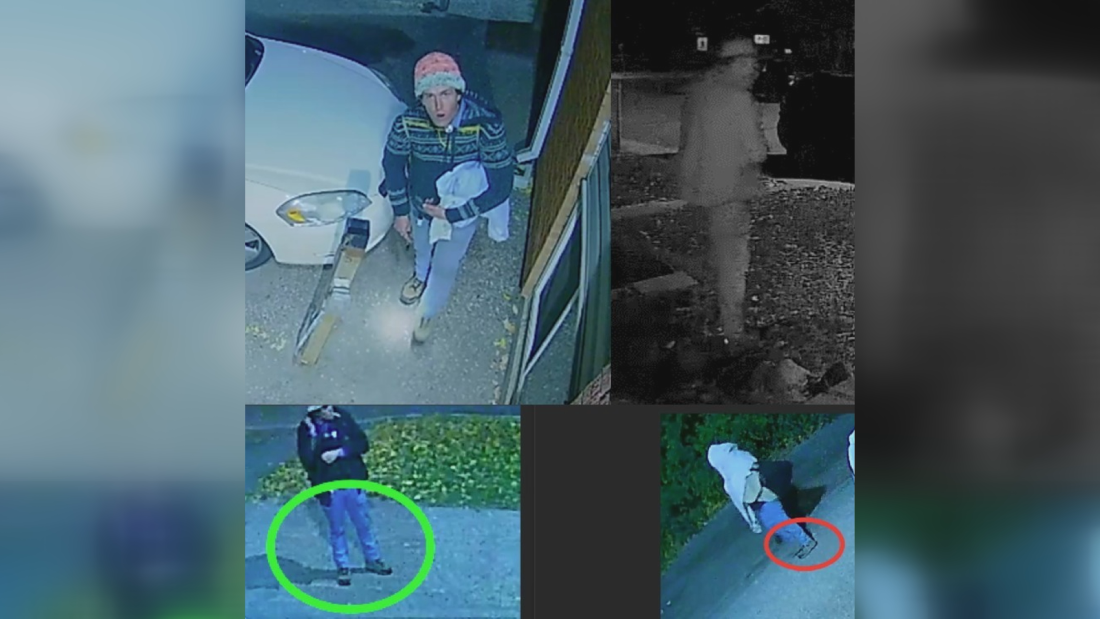
Footsteps.
That is usually the first thing anyone remembers when a normal Tuesday night fractures into sirens and black smoke. Footsteps on gravel that should have been empty. A shadow passing a porch light that nobody turned on. A brief pause outside a window where the curtains are drawn, followed minutes later by the sharp crackle of something catching that has no right to burn.
When police in Saskatoon search for someone seen prowling near a home before a suspicious house fire, the headline reduces a terrifying sequence of minutes to a neat police-blotter sentence. Yet anyone who has ever stood barefoot on cold concrete at two in the morning, smelling wet ash and burning insulation while neighbors whisper in bathrobes, knows how thin the line is between an ordinary street and an arson investigation.
Let me be candid right away: I do not have a verified police bulletin or specific case file in front of me beyond that single headline. Rather than inventing case facts, names, or charges that were never confirmed, I want to walk you through how investigators, neighbors, and ordinary people experience the stretch of time between a prowler in the yard and a suspicious fire at the door. Where I use a neighbor or investigator to show how these moments unfold, I will mark that scenario clearly as hypothetical.
The Quiet Before the Heat
A house fire rarely begins with a roar. It begins with a decision made in the dark.
Think about how quiet a residential block becomes after midnight. Even in a mid-sized city like Saskatoon—where winter wind rattles eaves and summer evenings stretch long and pale—most houses hold their breath between one and four in the morning. Porch lights blink out. Refrigerators hum behind drywall. People sleep with the quiet assumption that the perimeter of their property is a boundary line everyone respects.
Prowling tests that assumption.
In criminology and fire investigation, prowling before a suspicious blaze matters because timing links intent to opportunity. An accidental electrical fault or a forgotten pot on a stove has its own messy, mechanical signature. A suspicious fire often carries human fingerprints—not always literal ones, but behavioral ones. Someone walking along side yards, testing gates, peering into windows, or lingering near a back porch before smoke rises tells investigators that the space was studied before it was struck.
Suppose, in a purely hypothetical scenario, a homeowner named David wakes to his dog low-growling near the hallway. He looks out through a crack in the blinds and sees a figure in dark clothing moving along the side fence, stopping near the garage for half a minute, then slipping toward the alley. Ten minutes later, the smoke alarm chirps once, then wails. By the time sirens reach the block, the figure is gone, and the hardest part of the investigation has already begun: proving whether that prowler lit the match, watched from down the street, or simply wandered through the wrong yard on a bad night.
That uncertainty is the hardest part to sit with. Fear thrives in the gap between might have and did.
Why "Suspicious" Is a Heavy Word
People hear "suspicious fire" on the news and picture a movie scene—someone splashing gasoline across a living room floor in slow motion. Real life is far stranger and far more frustrating.
Fire is destructive by nature. It eats the very evidence meant to explain it. Wood chars, plastics melt into unrecognizable shapes, water from hoses washes away residues, and heat warps metal until it looks like taffy. When fire investigators walk through a damaged home after the hotspots are knocked down, they are reading a room like archaeologists piecing together a shattered vase in poor light.
A fire is labeled suspicious when ordinary explanations fail to fit what remains. Maybe there is no appliance near the point of origin. Maybe burn patterns sit low to the floor where accidental heat rarely starts. Maybe a window was forced, a gate was left unlatched, or a witness spotted someone lingering near the property shortly before flames appeared.
Yet a prowler sighting and a suspicious fire are two separate threads until police weave them together. Someone seen prowling could be the person responsible for setting the fire. They could also be a thief looking for unlocked doors who panicked and fled when something went wrong, or even a bystander who walked past and saw something they are afraid to report.
Investigators have to hold all of those possibilities open at once without jumping to a story that feels neatest. That patience is essential in criminal investigations, even when neighbors on the block want answers before sunrise.
Living Inside the Aftermath
I have lived through the sickening hollowness that follows an emergency on a quiet street, though not as a fire chief or detective. Years ago, a neighbor's garage caught fire two doors down from where I lived. Nobody in my house was hurt, and the firefighters arrived fast enough to save the main structure. Still, for weeks afterward, every car idling past the curb at midnight made my chest tighten. Every crunch of footsteps on the sidewalk felt louder than it used to.
That is the invisible stake behind a headline like Saskatoon police seek person seen 'prowling' before suspicious house fire.
Property can be rebuilt. Lumber, drywall, wiring, and siding can be bought again with insurance payouts and contractor crews. Peace of mind takes much longer to replace. Once you realize that someone walked right up to a house before fire broke out, your own home can start feeling less like a fortress and more like a glass box.
You start checking deadbolts twice. You wonder if your outdoor motion lights reach the side yard or stop at the driveway. You look at your neighbors' ring cameras and realize how many blind spots exist between two houses separated by ten feet of grass and a cedar hedge.
None of that makes you weak. It makes you human. A home is where you keep the people you love and the things that hold your memories; having someone prowl around it before a suspicious blaze strikes at something primal.
How Investigators Piece Together the Minutes That Matter
When police put out a call for information about someone seen prowling prior to a suspicious fire, they are usually racing against a very specific clock: memory.
Human memory is slippery under stress. If someone wakes up groggy at three in the morning and sees a person near a neighboring house, they might remember the height, the color of a jacket, or the direction the person walked—and forget the details within forty-eight hours as daily routine crowds over the moment.
Investigators look for anchors to pin those memories down:
- Exact timestamps. A text message sent at 2:14 a.m., a security camera timestamp, or a transit schedule can turn a vague recollection into a hard timeline.
- Movement paths. Did the person approach from the main avenue or slip through back alleys? Did they leave on foot or get into a waiting vehicle?
- Behavior before and after. Prowling looks different from someone walking home with headphones on. Stopping by windows, ducking behind hedges, or checking doors signals a different intent than simply passing through.
Even small details that seem trivial to a resident can matter enormously to detectives. Someone walking a dog at dawn might notice a scorched patch near a fence line or a piece of discarded packaging they wouldn't have connected to a house fire a block away.
What Neighbors Can Actually Do Without Playing Detective
When a suspicious fire and a prowler report hit close to home, people often swing between two extremes: locking themselves inside in dread, or going out into the dark looking for trouble. Neither helps much.
Practical awareness sits right in the middle.
First, treat anything unusual near a home as worth noting calmly. If you see someone prowling around a property—especially at odd hours or near a house where smoke or fire later occurs—call police rather than confronting the person yourself. Confrontations in the dark escalate fast, and you never know what someone is carrying or why they are there.
Second, pay attention to lighting and sightlines around your own yard. Motion-activated lights near side gates, back doors, and garages don't stop every determined intruder, but they take away the cover of darkness that prowlers rely on. Clearing brush or tall clutter right against exterior walls also reduces places for someone to hide and removes dry fuel near the foundation.
Third, check whether any home cameras or dashcams recorded anything around the time of the incident, even if the angle seems slightly off. A car turning onto the block two minutes before smoke was spotted can be the missing link detectives need.
Above all, talk to the people next door. Suspicious fires and prowling reports isolate people behind locked doors and drawn curtains, yet neighborhood safety depends heavily on ordinary eyes and quiet solidarity. Knowing who belongs on the block makes it much easier to notice who doesn't.
The Smoke That Lingers After the Sirens Leave
By afternoon on the day after a fire, the flashing lights are gone. The hose lines are coiled back onto trucks. Yellow caution tape may still flutter along a fence post, catching the breeze while delivery vans roll past on the street.
From the curb, the story looks almost finished—a damaged house, a police appeal, a line in the local news.
Inside the walls, though, the air still smells sharp and bitter. A family or a set of neighbors is left staring at scorched wood and unanswered questions, wondering who stood in the dark outside, what they were looking for, and why the night turned to flame.
A single set of footsteps in the dark can echo for a very long time.