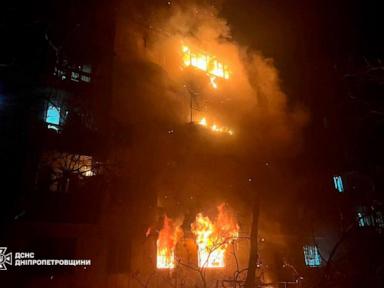
Every time Russian missiles hit Kyiv, Western newsrooms copy-paste the exact same obituary. A death toll. A damaged bridge. A blacked-out neighborhood.
Readers scroll past, shake their heads at the tragedy, and assume Ukraine's capital is slowly grinding to a halt. That narrative is emotionally satisfying for headline writers, yet it completely misunderstands modern warfare, infrastructure resilience, and the strategic math driving Moscow's campaign. Read more on a similar topic: this related article.
When a wire report reduces a massive, coordinated air campaign to "three dead, bridges crippled, power cut," it treats a deliberate system-level siege like a localized weather disaster. It mistakes temporary kinetic disruption for permanent strategic paralysis. If you want to understand what is actually happening in Ukraine's energy sector and urban transit networks, you have to stop counting broken transformers and start looking at grid topology, air defense economics, and civil engineering redundancy.
The Lazy Consensus of Damage Reporting
Standard war reporting suffers from an acute recency bias. Journalists look at the smoke rising from a combined heat and power plant or a span of concrete over the Dnipro River and declare the asset "crippled." Additional analysis by Al Jazeera highlights related perspectives on this issue.
In civil and electrical engineering, "crippled" is rarely a binary state.
Consider the bridges spanning the Dnipro in Kyiv—structures like the Pivnichnyi, Metro, Paton, Pivdennyi, and Darnytskyi bridges. Media reports routinely frame strikes near or on these crossings as catastrophic severed arteries. In reality, modern Soviet-era and post-Soviet steel-and-concrete river crossings were designed during the Cold War specifically to survive high-explosive shockwaves. While a cruise missile or ballistic warhead can crater an asphalt deck, sever trolleybus catenary wires, or warp secondary steel girders, bringing down a main load-bearing pier requires sustained, pinpoint heavy ordnance that rarely penetrates dense urban air defenses.
Transit slows down. Commuters spend an extra ninety minutes rerouting through the metro tunnels beneath the river—tunnels buried deep enough to double as nuclear fallout shelters. Supply trucks shift to night schedules or pontoon alternatives. Calling a multi-lane metropolitan artery "crippled" because of localized deck damage or temporary security closures confuses traffic congestion with logistical collapse.
The same distortion applies to the electrical grid. When reporters write that strikes "cut power" to Kyiv, readers picture a nineteenth-century blackout where the entire city goes dark until someone flips a single master switch. Ukraine does not operate a fragile, centralized microgrid. It operates part of the Continental European Synchronous Area, having synchronized with ENTSO-E in March 2022 just weeks after the full-scale invasion began.
How Energy Warfare Actually Works
I have spent years analyzing critical infrastructure vulnerabilities and grid stress-testing across Eastern Europe, and the biggest misconception among generalist commentators is confusing generation capacity with transmission agility.
To understand why Kyiv keeps turning the lights back on within hours of a barrage, you have to separate three distinct layers of the power system:
- Baseload Generation: Nuclear power plants (like Rivne, Khmelnytskyi, and South Ukraine) supply the lion's share of Ukraine's electricity. Russia generally avoids direct strikes on active reactor containment buildings due to the catastrophic fallout risks that would blow back across its own borders and trigger direct NATO intervention. Instead, Russian planners target the switchyards and substations connecting those nuclear plants to the high-voltage grid.
- Thermal and Hydro Balancing: Combined Heat and Power (CHP) plants and hydroelectric dams (such as the Kyiv Hydroelectric Power Plant in Vyshhorod) absorb sudden spikes in demand. These are frequent targets because knocking them out forces grid operators at Ukrenergo to impose rolling blackouts to prevent frequency drops that would trip the nuclear reactors offline.
- Autotransformers and Distribution Substations: This is the real choke point. High-voltage 750 kV and 330 kV autotransformers step down electricity so it can enter urban distribution networks. They are massive, oil-filled, custom-built machines weighing hundreds of tons. You cannot buy one off the shelf at a hardware store; manufacturing a replacement takes months.
When headlines announce that power is cut in Kyiv, they are usually describing automated load-shedding. Ukrenergo engineers deliberately disconnect residential districts in real time to protect the high-voltage autotransformers from cascading overloads when a thermal plant drops off the network. A dark apartment block in Pechersk or Obolon is often proof that the grid's protection relays worked, preventing a total systemic collapse that would take weeks to reboot from a "black start."
The Economics of the Missile-to-Transformer Ratio
Military analysts at institutions like the Royal United Services Institute (RUSI) and the Center for Strategic and International Studies (CSIS) have repeatedly documented the underlying math of Russia's strike packages. Moscow is not launching multi-million-dollar Kh-101 cruise missiles, Iskander-M ballistic missiles, and swarms of Shahed-136 drones simply to annoy commuters in Kyiv.
They are running a cost-exchange attrition model.
A single Russian ballistic missile costs anywhere from $1 million to $3 million. An air-launched cruise missile runs upwards of $10 million. To stop those incoming warheads, Ukrainian air defense crews fire Patriot PAC-3 interceptors costing roughly $4 million per shot, or NASAMS and IRIS-T missiles costing between $500,000 and $1 million each.
Even when Ukrainian air defenses intercept 80% to 90% of an incoming salvo—a staggering technical achievement against mixed ballistic and low-flying drone trajectories—the remaining 10% that leak through are aimed at high-value, slow-to-replace industrial bottlenecks.
Here is the brutal reality that optimistic pundits refuse to admit: the defender always pays more to protect everything than the attacker pays to strike one point.
You cannot put a Patriot battery around every 330 kV substation in Ukraine. Every interceptor fired over Kyiv to save an electrical transformer is one less interceptor available to protect mechanized brigades on the eastern front in Donbas. By forcing Ukraine to concentrate its rarest Western air defense assets around urban infrastructure and river crossings, Russia achieves a strategic objective even when its missiles are blown out of the sky over the suburbs.
Why "Human Cost" Framing Obscures Strategic Intent
Look again at the headline structure: "Russian attacks on Kyiv kill 3, cripple bridges and cut power."
Listing three fatalities alongside crippled bridges and power cuts flattens three completely different dimensions of warfare into a single, digestible soundbite.
First, a low civilian death toll during a massive bombardment of a city of nearly three million people is not evidence of a minor attack. It is evidence of deep civil defense adaptation. Kyiv residents have spent years normalizing air raid alerts, moving into deep metro stations, and following the "two-wall rule" during ballistic threats. When dozens of missiles and drones target a dense metropolis and only three people die, that reflects hardened civil behavior and active interception—not a lack of destructive intent.
Second, framing infrastructure strikes purely around immediate civilian misery ignores the industrial target set. Kyiv is not just an administrative capital; it is a primary hub for Ukraine's domestic defense manufacturing, drone assembly, electronics repair, and military logistics. Rolling blackouts do not just turn off residential Wi-Fi and elevators. They force defense workshops onto expensive diesel generators, disrupt precision machining tolerances, and strain rail freight timetables moving western aid from the Polish border toward the front lines.
What People Get Wrong About Infrastructure Resilience
If you search online for what happens during infrastructure strikes in Ukraine, you run into two predictable, flawed assumptions:
Assumption 1: "Once a power plant or bridge is hit, it's out for the winter."
Wrong. Since late 2022, Ukrainian energy crews have built the most battle-hardened rapid-repair logistics network on the planet. Engineers pre-position concrete blast walls, gabion cages filled with sand, and anti-drone netting around critical substations. When a transformer burns, crews begin clearing debris before the air raid siren even finishes wailing. They cannibalize decommissioned Soviet-era equipment from across Eastern Europe, reroute lines through mobile substations, and restore temporary feeds in days rather than months.
Assumption 2: "Decentralized green energy will quickly make Kyiv immune to missile strikes."
This is a popular talking point among policy think tanks, and it collapses under basic physics. Solar panels and wind turbines are great for supplementing daytime supply, and distributed gas-piston generators help keep hospitals and water pumping stations running during outages. However, an industrial metropolis with heavy electric rail transit, district heating pumps, and manufacturing plants cannot run its winter peak load on rooftop solar and small batteries. For the foreseeable future, high-capacity baseload generation and high-voltage transmission lines remain indispensable—and vulnerable.
The Downside of the Decentralized Defense Strategy
To be completely candid, leaning heavily into distributed backup power and rapid patching carries severe long-term costs that rarely make it into upbeat resilience stories.
Running a modern European capital on thousands of decentralized diesel and gas generators is an economic and environmental bleed. Fuel logistics become massively complex. Maintenance cycles on small commercial generators running 16 hours a day lead to frequent mechanical failures. Worse, patching damaged high-voltage equipment with scavenged parts creates a Frankenstein grid held together by temporary bypasses. Every makeshift repair reduces the grid's overall stability margin, increasing the risk that a sudden cold snap—when temperatures in Kyiv plunge to minus 15 degrees Celsius—will trigger cascading failures even without a single missile launch.
Furthermore, burying substations underground or encasing them in massive reinforced concrete sarcophagi—a strategy Ukraine has actively pursued for key facilities—drains billions of dollars from offensive military procurement. Money poured into concrete bunkers for transformers cannot be spent on artillery shells, FPV drones, or infantry training.
Stop Reading Box Scores and Start Watching Grid Frequency
If you want to actually track who is winning the infrastructure war in Ukraine, ignore the breathless breaking-news alerts that treat every blackout like the fall of Rome.
Instead, watch three concrete indicators:
- ENTSO-E Cross-Border Electricity Imports: When Ukraine's domestic thermal generation takes heavy hits, Ukrenergo relies on emergency power imports from Poland, Slovakia, Romania, and Hungary. The volume and duration of those imports tell you far more about true grid damage than any press release.
- Rail Freight Punctuality: Ukrainian Railways (Ukrzaliznytsia) is the circulatory system of the war effort. When bridges or traction substations are hit, watch how quickly electric locomotives are swapped for diesel locomotives. As long as freight trains keep crossing the Dnipro on schedule, the bridges are functionally intact regardless of what the headlines claim.
- Interceptor Expenditure Rates: Pay attention to the ratio of ballistic missiles (which require top-tier Patriot or SAMP/T interceptors) versus slow-moving drones in each Russian wave. When Moscow shifts heavily toward ballistic salvos, they are actively trying to exhaust Ukraine's upper-tier air defense magazine before winter peaks.
Modern infrastructure warfare is not a single knockout punch. It is an engineering race between destruction and repair, fought with concrete, copper wire, and finite interceptor stockpiles. The headlines tell you the lights went out; the real story is how many spare transformers are sitting in a warehouse across the border waiting to turn them back on.