Forty-eight hours in November 2026 told two completely different stories about where global power is heading. On Tuesday in Manila, Donald Trump sat in a plain, blue-draped hotel conference room with the leaders of Japan, India, and Australia, patting backs and cracking jokes. By Thursday in Shenzhen, he was sitting beneath crystal chandeliers and jade sculptures at a massive ring-shaped table with Xi Jinping and Vladimir Putin.
In both rooms, Trump used the exact same word to describe the men and woman sitting across from him. Friends. Recently making news recently: When the Sky Breaks over a Quiet Border.
If you only read the surface-level headlines, this looks like either erratic diplomacy or naive charm. It isn't. When you watch how differently those two rooms functioned, a much clearer picture emerges about how Washington is actually treating the shifting world order right now. Trump isn't confused about who America's allies are, nor is he blindly trusting adversaries. He's running two completely separate operating systems at the same time—one built on transactional personal access for democratic partners, and another built on great-power spheres of influence for nuclear rivals.
The Optics Gap Between Manila and Shenzhen
Diplomacy lives in the staging, and the contrast between Trump's two stops couldn't have been sharper. More insights into this topic are explored by Associated Press.
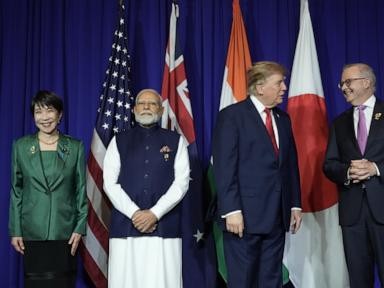
In the Philippine capital on November 17, the Quadrilateral Security Dialogue—better known as the Quad—met in a utilitarian resort conference room. Four long tables covered in blue cloth formed a square. Each leader sat flanked by Cabinet officials, with zero decorative flair beyond the mandatory national flags. It was the first in-person, leader-level Quad summit in over two years, and the atmosphere was loose, slightly chaotic, and visibly unscripted.
Trump turned the pre-meeting photo op into an impromptu press conference. He slapped Australian Prime Minister Anthony Albanese on the back, jerked a thumb toward Indian Prime Minister Narendra Modi to call him "a very tough man," and pointed at Japanese Prime Minister Sanae Takaichi while adding, "and she may be even tougher." Modi didn't even crack a smile—in fact, he gestured impatiently to wrap up the press availability while Trump kept right on taking questions. Still, the core message to Tokyo, New Delhi, and Canberra was personal accessibility. "My phone is always open and the Oval Office is always open to you," Trump told them.
Two days later at Kylin Villa in Shenzhen, the improvisation vanished.
For the first-ever trilateral summit between the United States, China, and Russia on the margins of the Asia-Pacific Economic Cooperation (APEC) forum, Beijing staged a visual monument to great-power parity. Marble floors. Chandeliers. A ring-shaped table centered around pink flowers, with Trump, Xi, and Putin seated wide apart and completely alone—no Cabinet secretaries whispering in their ears.
The body language flipped completely. Xi had greeted Trump at the Shenzhen airport with a rare, warm hug, and Putin and Trump clasped arms on the APEC stage. Yet once the three men sat down at Kylin Villa, Xi read stiffly from a prepared script with a blank expression, Putin stared down at his briefing papers, and Trump leaned back with a tight, measured smile. The banter was gone.
Why "Friend" Means Different Things in Different Rooms
Critics love to mock Trump's habit of calling authoritarian strongmen his friends. Just look at the backlash from European capitals after the Shenzhen summit, where officials worried aloud that calling Putin a friend undermines Western resolve on Ukraine.
Here's what those critiques miss. In Trump's diplomatic vocabulary, "friend" isn't a statement of shared values or moral alignment. It's a baseline precondition for doing business.
At the Shenzhen table, Trump explained his logic plainly: "Too often, past leaders avoided talking to nations with whom they had disagreements. And, uh, we feel the opposite." That's a direct rejection of the post-Cold War American playbook, which treated high-level presidential summits as rewards for good behavior. Under previous administrations, isolating Moscow or keeping Beijing at arm's length was a tool of pressure. Trump treats isolation as a waste of time.
When he calls Albanese, Modi, and Takaichi friends, he's signaling that bilateral friction—over tariffs, defense spending, or trade deficits—can be worked out directly between leaders without going through bureaucratic chokepoints. When he calls Xi and Putin friends, he's signaling something else entirely: that he views them as the sole decision-makers of rival empires who deserve seat-at-the-table recognition rather than lectures on democratic norms.
Honestly, you don't have to like that approach to see why it unsettles traditional diplomats. It flattens the distinction between treaty allies and strategic competitors. If everybody gets the same warm label, allies naturally start wondering what their loyalty actually buys them.
Two Divergent Playbooks on Paper
You can see the exact split in Trump's strategy by comparing what came out of Manila versus what came out of Shenzhen. The two meetings produced wildly different statements that point toward two competing visions of global order.
In Manila, the Quad leaders focused on practical, defensive coordination across the Indo-Pacific:
- Maritime and economic security: Keeping shipping lanes open and pushing back against coercion without naming Beijing directly every five seconds.
- Supply chain resilience: Coordinating on critical minerals and emerging technologies so democratic economies aren't held hostage by single-source monopolies.
- Institutional continuity: Proving that the Quad survived leadership transitions in Tokyo and Washington and remains a permanent fixture of regional security.
Compare that to the 90-minute trilateral session in Shenzhen, which produced a joint "declaration toward peace." Instead of regional deterrence or alliance defense, the U.S., China, and Russia issued sweeping language about major-power cooperation, global oil production, United Nations reform, and reducing nuclear risks.
That nuclear language actually caught seasoned Asia hands off guard. Edgard Kagan, a former U.S. ambassador to Malaysia now serving as a senior advisor at the Center for Strategic and International Studies, pointed out that getting Beijing to sign onto joint language about nuclear weapons and future dialogue represented a notable concession from China—especially given that the New START arms control treaty expired back in February 2026. Even without a binding timetable or concrete caps on warheads, getting Xi into a three-way nuclear conversation is something Washington has chased for years.
The Quiet Return of Spheres of Influence
Here is the deeper shift that makes observers in Tokyo, Taipei, and Brussels nervous.
For decades, the United States anchored a rules-based international order built around multilateral alliances, open trade, and the idea that smaller nations shouldn't have their borders or sovereignty traded away by bigger neighbors. The Manila Quad meeting belongs to that world—or at least a leaner, more transactional version of it.
The Shenzhen trilateral points toward something much older.
When the leaders of the United States, China, and Russia sit alone in a room as equals to discuss global stability, it revives the specter of a 19th-century concert of great powers—or a modern Yalta. Putin himself didn't even shy away from that comparison at his Shenzhen press conference, famously asking reporters what was so bad about Yalta. In that version of the world order, three dominant powers sit above everyone else, implicitly recognize each other's geographic spheres of influence, and agree not to meddle in one another's core interests.
Look at how Washington's own actions in 2026 reinforce that perception. Analysts at the Institute of Geoeconomics in Tokyo have noted how the U.S. military operation in Venezuela in January 2026 and the joint U.S.-Israeli strikes on Iran the following month signaled a willingness to enforce regional dominance through unilateral power. When Washington asserts its own sphere forcefully in the Western Hemisphere and the Middle East, it becomes much harder to argue against Beijing and Moscow claiming privileged influence in their own neighborhoods.
What Allies Actually Fear
Japan's Prime Minister Sanae Takaichi knows this tightrope better than almost anyone. Tokyo relies completely on the U.S. nuclear umbrella and security treaty, yet Japan sits right next to both China and Russia. Notice how Xi Jinping publicly snubbed Takaichi during the APEC gatherings in Shenzhen while warmly embracing Trump. That's classic wedge diplomacy. Beijing wants U.S. allies to look at the photos from Kylin Villa and wonder whether Washington might eventually cut a bilateral or trilateral deal over their heads.
European leaders have the exact same anxiety regarding Ukraine. Despite 90 minutes of talks in Shenzhen, Putin offered zero breakthroughs on a ceasefire, blaming Kyiv and Europe for refusing to compromise while complaining about strikes on the Crimea bridge. For Moscow, simply sitting on equal footing with the American and Chinese presidents—and getting called a friend on global television—was already a diplomatic win that undermined Western efforts to treat Russia as a pariah.
Why Both Approaches Are Running at Once
It's tempting to ask which Trump is the "real" one: the Quad partner backing democratic deterrence in Manila, or the great-power dealmaker dining with autocrats in Shenzhen.
That's the wrong question. Both are real, and Trump sees zero contradiction between them.
In his mind, maintaining strong ties with Japan, India, and Australia gives him the strength he needs when he walks into a room with Xi and Putin. Conversely, keeping an open channel to Beijing and Moscow prevents a catastrophic great-power collision—especially over nuclear weapons or regional flashpoints—while giving him room to pursue trade and energy deals. Remember, just days after embracing Xi in Shenzhen, Trump still slapped new tariffs on Chinese goods. A handshake in Guangdong doesn't mean the trade war is over; it just means the fight happens alongside personal flattery.
The risk isn't that Trump doesn't know what he's doing. The risk is that running two contradictory systems at once creates massive strategic ambiguity. Allies like India, Japan, and Australia will keep showing up to Quad meetings and taking Trump's phone calls, because they can't afford not to. At the same time, they're hedging their bets—building independent defense capacity, diversifying trade away from both Washington and Beijing, and preparing for a world where American security guarantees feel less automatic.
How to Read Trump's Next Move in Asia
If you're tracking geopolitics, global markets, or supply chains over the next year, stop reacting to the adjectives Trump uses at press conferences. Watch three concrete indicators instead:
- Track working-level follow-through, not summit declarations. Joint statements like the Shenzhen peace declaration are heavy on optics and light on enforcement. Watch whether U.S., Chinese, and Russian nuclear negotiators actually schedule technical arms-control talks in early 2027, or if the declaration stays pure theater.
- Watch how Quad initiatives translate into capital. In Manila, Australian Prime Minister Anthony Albanese proposed a 2027 Quad business forum, alongside ongoing pledges on critical minerals and maritime security. Follow where actual government funding and private investment go—particularly in semiconductor supply chains and rare-earth processing outside China.
- Monitor ally hedging behavior. Pay close attention to bilateral defense deals between middle powers—like Japan, Australia, India, South Korea, and European nations—that don't include the United States. The faster those side agreements multiply, the more U.S. allies are quietly pricing in a spheres-of-influence world.
Trump's week in Asia proved that personal warmth is his universal currency. Whether that currency buys lasting stability or simply accelerates the breakup of the old alliance system depends entirely on what happens after the cameras leave the room.