Chalk.
That is the first thing you smell when a tray of ancient human remains is pulled from a climate-controlled cabinet in a northern museum. Not grave dirt. Not peat smoke. Just dry, mineral chalk and the faint metallic tang of old steel calipers resting against ivory-colored bone.
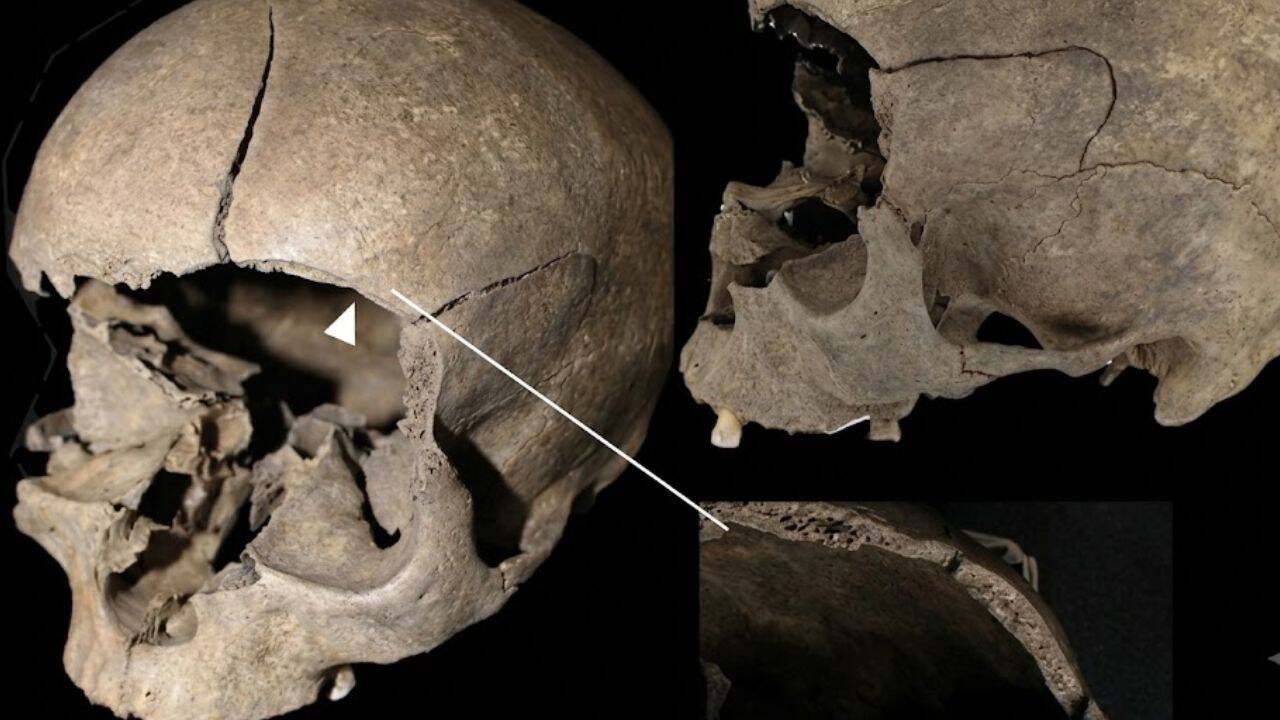
I have spent enough hours over osteological trays to know that a skeleton rarely gives up its secrets all at once. It requires patience. It requires running a gloved fingertip along a ridge of calcified tissue that looks, to an untrained eye, like a harmless bump. Yet when archaeologists find 19 injuries across 12 people buried in Iron and Viking Age Scandinavia, that small bump stops being a footnote in a catalog. It becomes a witness.
We tend to picture the past through extremes. On one side sits the romanticized saga of the Viking raider—all broadaxes, shield walls, roaring longships, and glorious Valhalla. On the other sits a neat statistical tally: twelve skeletons, nineteen wounds, a neat little fraction that turns human agony into a spreadsheet row.
Neither extreme tells the whole truth. When you look closely at trauma preserved in bone from the Iron Age and Viking Age in Scandinavia, you are not looking at a single dramatic battle. You are looking at survival. You are looking at bodies that took a hit, stayed alive, and kept walking across cold, uneven ground for months or years afterward.
Let us be clear from the start: to understand what those nineteen injuries actually mean for daily life, I am going to walk you through a hypothetical scenario based on real archaeological patterns. Call him Torstein—a fictional stand-in, though his bone profile mirrors genuine osteological findings from northern burial grounds. Imagine Torstein at thirty-eight, standing by a turf wall in Jutland or along a Norwegian fjord. His left forearm has a slight curve where a radius once snapped. A shallow depression sits along the outer edge of his brow. None of these marks killed him on the spot. They are healed or partially remodeled lesions, proof that someone pulled him out of the mud, bound his limb with splints or wool strips, fed him warm broth while fever burned through his chest, and kept him alive long enough for bone cells to knit the damage back together.
That is the part of the story that rarely makes the headline. A fatal sword cut to the skull tells you how a life ended. A healed fracture tells you how a community lived.
Why Nineteen Wounds Matter More Than One
When people hear about nineteen injuries found in twelve individuals from Iron and Viking Age Scandinavia, the instinct is to ask who hit whom. Sharp-force trauma? Blunt-force blows? Was this warfare between rival chieftains, a barroom brawl over watered ale in a timber hall, or a slip on wet slate while hauling timber?
Osteology—the study of human bones—does not always hand out neat labels like "sword" or "ice." Bone reacts to force in biomechanically consistent ways regardless of the cultural story attached to the weapon or tool. A sharp blade leaves clean incisions or bevels where thin cortical bone gives way; a heavy blunt object crushes or radiates fracture lines outward from the point of impact; a sudden fall onto a hard surface can buckle a collarbone or snap a forearm raised in reflex.
What makes a cluster of nineteen injuries across twelve people so revealing is the ratio and distribution. Twelve people. Nineteen distinct lesions. Some individuals carry more than one mark. Some wounds show signs of healing; others sit closer to the time of death.
Admittedly, reading ancient bone is humbling. I have stared at a healed depression on a frontal bone and felt that familiar flutter of uncertainty that every researcher knows when the evidence stops just short of a confession. Did that dent come from a glancing blow with a club during a dispute over grazing rights? Or did a heavy wooden beam swing loose inside a low-ceilinged longhouse during a winter storm? When soft tissue is gone—no bruises, no torn ligaments, no scar tissue—you have to resist the temptation to invent melodrama where caution is required.
Yet uncertainty does not mean emptiness. Even when we cannot name the exact object that struck a person in the Iron Age or Viking Age, we can read the consequences. A fracture that heals straight enough to hold weight implies care, immobilization, and time. A crooked union—where bone ends overlap slightly before fusing—tells another story: perhaps the person had to keep working before the break was fully set, or perhaps medical knowledge in a rural settlement relied more on rest and herbal poultices than mechanical alignment.
The Myth of the Invincible Northerner
Modern culture loves a tough caricature. We slap a braided beard and a horned helmet onto the past (even though actual Viking helmets did not have horns) and assume people back then were built like granite statues who shrugged off pain.
Touch cold iron on a winter morning and see how tough you feel.
Living in Iron and Viking Age Scandinavia meant navigating a demanding physical environment long before central heating, paved roads, antibiotics, or X-rays. Every season brought its own hazards. In spring and autumn, bogs and riverbanks turned slick; in winter, ice turned paths into traps and darkness stretched across most of the day. Inside the home, open hearths filled timber rooms with smoke while providing warmth and light, and heavy cauldrons, looms, and tools were part of daily labor.
Now, let us use a metaphor—and I want to flag it explicitly as one—to picture how trauma accumulates across a lifetime. Think of a skeleton like an old wooden boat kept in service through decades of coastal squalls. You patch a plank here, caulk a seam there, replace a rib when winter storms split the hull. The boat still floats. It still carries cargo. Yet if you strip away the tar and look at the timber up close, every repair shows where the sea pushed back.
Human bone is alive, constantly remodeling itself through osteoblasts that build new bone and osteoclasts that clear away damaged tissue. Unlike a wooden hull, a living skeleton actively tries to mend itself. That biological resilience is astonishing, especially when you consider what these people lacked. No sterile dressings. No painkillers beyond whatever botanicals or fermented drinks were on hand. No orthopedic pins. When a bone broke in Iron or Viking Age Scandinavia, survival depended on infection staying at bay and on other people stepping in to share the load while the injured person healed.
That social dimension is easy to overlook when you read a summary of nineteen injuries in twelve skeletons. A wound happens to an individual, yes, with a specific nervous system feeling the shock and ache. Still, a person with a broken arm or a cracked rib in an agrarian or maritime society cannot simply order groceries from a phone or sit at a desk all day. Someone else has to haul water. Someone else has to tend livestock or mend nets.
Every healed injury in a burial ground is quiet evidence of interdependence.
Reading the Marks Without Guessing Wildly
If you ever find yourself in front of an archaeological display showing skeletal trauma, look at where the marks sit before you let your imagination run away with you.
Forearms and hands often tell stories of instinctive defense or everyday reaching and bracing. The skull and face can record blows from above or in front, or falls onto unforgiving surfaces. The torso—ribs and vertebrae—reflects compression, impact, or heavy strain.
What separates careful archaeology from sensationalism is how experts weigh competing explanations. A single wound on one skeleton might look dramatic on its own. Look across twelve people and nineteen injuries, and patterns begin to emerge—or stubbornly refuse to emerge, which is also data. Sometimes a sample shows mostly healed trauma, pointing toward chronic risk and survival in a settled community. Sometimes perimortem injuries—damage occurring around the time of death, distinguishable from post-mortem breakage in the soil by how the bone fractures—point toward violence or sudden catastrophe.
Let us pause on that distinction between perimortem and post-mortem damage, because it trips up almost everyone at first. Soil pressure over centuries can crack dry bone. A shovel during excavation can nick a margin. A root can press against a skull for a thousand years and leave a curve that looks suspiciously deliberate until you examine the fracture edges and color patination under magnification. Archaeologists spend years training their eyes to spot the difference between a blow struck in life and the slow, silent weight of the earth.
That precision matters. When researchers report nineteen injuries in twelve individuals from Iron and Viking Age Scandinavia, they are sorting through real physical alterations and asking disciplined questions about violence, accidents, health, and burial context.
What These Burials Quietly Ask Us Today
Why should someone sitting in a warm room with glass walls and glowing screens care about nineteen injuries in twelve bodies from a thousand or more years ago?
Because distance makes patterns easier to see.
When we read about modern crime rates, workplace accidents, or sports concussions, we are drowning in data and wrapped in our own assumptions. Stepping back into Iron and Viking Age Scandinavia strips away modern conveniences and forces us to look at human vulnerability stripped down to bone and grit. It reminds us that violence and accidents are not a modern invention, nor is compassion. People fought, argued, fell, got hurt, healed, and were buried by communities that remembered who they were.
It also reminds us how easily history gets flattened into caricature. "Viking" has become a brand word for ferocity and conquest; "Iron Age" often sounds like a dusty textbook chapter between stone tools and runestones. Yet twelve individuals carrying nineteen injuries between them suggest lives full of friction—physical, social, environmental—that do not fit neatly into a single movie poster.
I sometimes wonder what the person who buried Torstein—or any of those twelve real individuals—felt on the day they lowered the body into the ground. Grief does not change much across centuries, even if burial rites do. You remember the way they walked with a slight stiffness after a bad winter. You remember the story behind the scar. You place what you can in the grave, turn back toward the living, and carry on with the work that still needs doing before nightfall.
Cold chalk on a museum table. A faint ridge where bone once split and then grew whole again. Those nineteen marks across twelve skeletons do not shout a single answer, yet they hold us steady in a quiet truth: long before our names existed, people endured pain, leaned on one another, and left their mark in stone and bone.