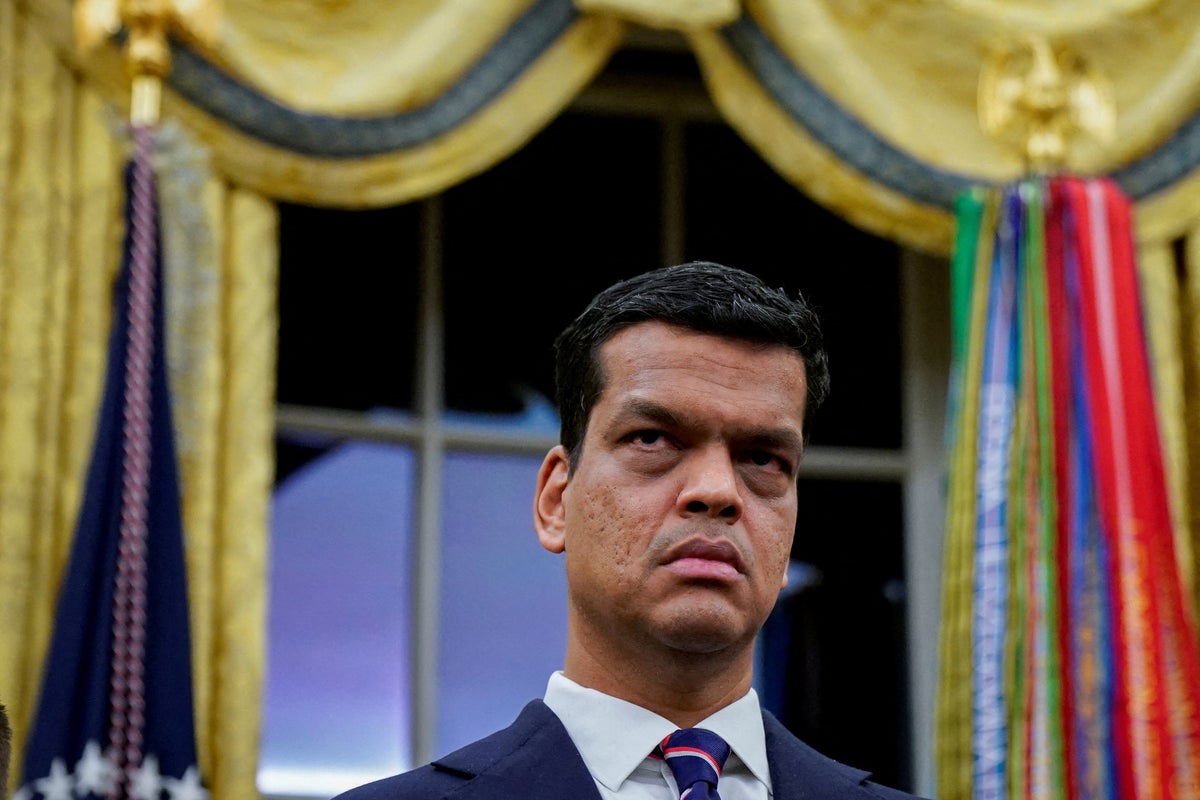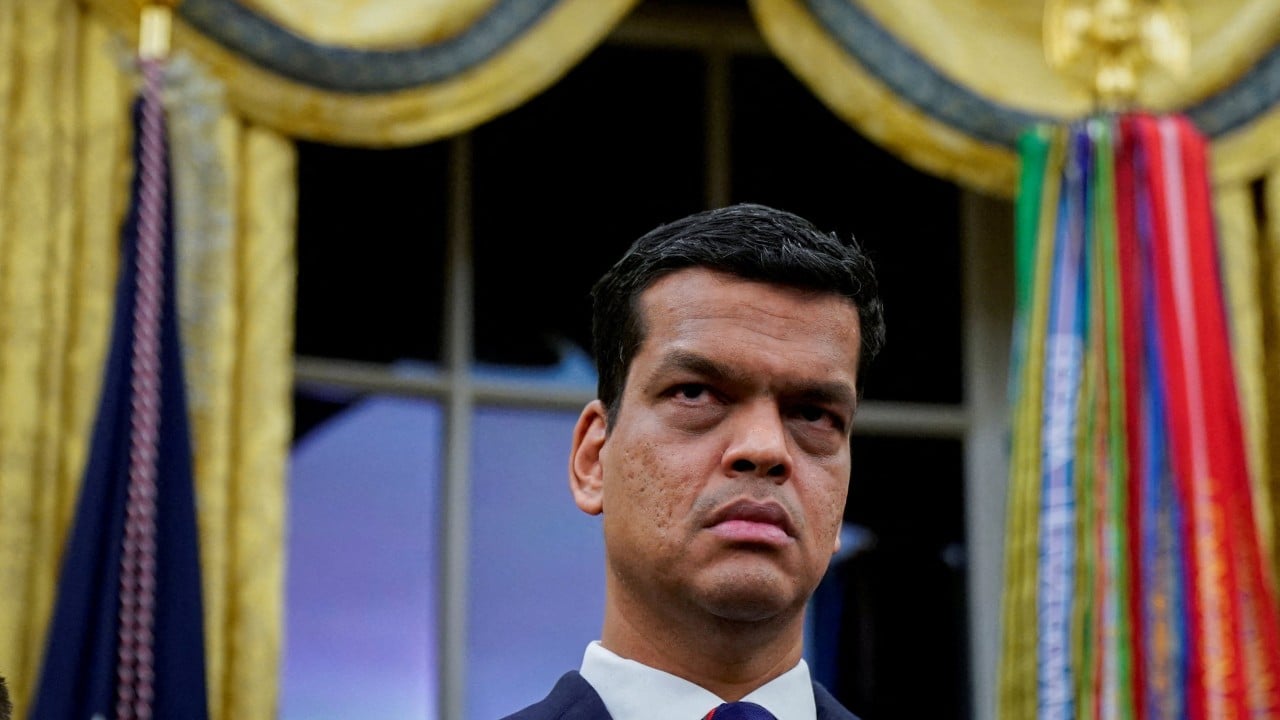
The air inside the Oval Office feels different when the door clicks shut. It lacks the hum of a server farm, yet the decisions made within its heavy walls dictate exactly how much power those servers can draw from the American grid.
On a Tuesday in early June, a pen scraped across parchment, signing an executive order that established a voluntary cybersecurity testing framework for the most advanced artificial intelligence models on earth. Standing behind the Resolute Desk, smiling for the cameras, was Sriram Krishnan.
He looked exactly like what he was: a Silicon Valley prince who had traded the casual fleece of a venture capitalist for the structured tailoring of a White House senior policy adviser. Born in Chennai, educated in India, and hardened in the product departments of Microsoft, Facebook, and Twitter, Krishnan represented the ultimate triumph of the tech elite. He was a partner at Andreessen Horowitz, a confidant to Elon Musk, and the man Donald Trump trusted to keep America at the absolute front of the algorithmic arms race.
Four days later, Krishnan announced he was walking away.
The public statement on X was polite, scrubbed clean by the invisible hands of political communications. It called the role the privilege of a lifetime. It praised the president. It spoke vaguely of a brief rest before launching an outside institution to tackle the massive technical challenges facing the nation.
But beneath the pristine surface of that announcement lies a quiet, brutal ideological war that has been fracturing the administration from the inside out. Krishnan did not just leave a job. He stepped out of a crossfire.
To understand why a tech visionary would abandon the highest corridors of power at the precise moment humanity is birthing a new form of intelligence, you have to look at the irreconcilable friction between two entirely different visions for America.
On one side stands the Silicon Valley vanguard, represented by Krishnan and his close ally David Sacks, the administration's former AI and crypto czar. Their philosophy is simple, aggressive, and deeply capitalistic: move fast, build data centers, slash state-level regulations, and let the engineers cook. To them, national security is synonymous with corporate dominance. If Google, Microsoft, or xAI are slowed down by safety mandates, Beijing wins. It is a light-touch, pro-industry doctrine. They engineered an executive order limiting states from passing their own patchwork of AI laws, and they fought bitterly to ensure that government code reviews remained strictly voluntary.
But on the other side of the West Wing sits a different kind of power.
Consider the perspective of Chief of Staff Susie Wiles or Treasury Secretary Scott Bessent. These are political realists who look at the rapid evolution of frontier models and see a terrifying vulnerability. Lately, their anxiety has centered on highly advanced systems like Anthropic’s Mythos.
These models are no longer just writing poetry or summarizing emails. They are capable of autonomously discovering deep, unpatched security flaws in software code. To a national security hawk, a tool like Mythos is a digital nuclear warhead. If an adversary gets ahold of it, or if the model itself behaves unpredictably, it could dismantle critical infrastructure before a human operator even realizes a breach has occurred.
This deep anxiety explains why the Pentagon recently blacklisted Anthropic after the company refused to allow its models to be used for domestic surveillance and fully autonomous weapons. It also explains why the populist, nationalist wing of the Trump coalition looked at Krishnan not as an asset, but as an ideological interloper.
The friction was there from the very beginning. When Trump first tapped Krishnan in late 2024, the appointment triggered an immediate, ugly public backlash from right-wing influencers like Laura Loomer. They did not care about his venture capital pedigree or his engineering brilliance. They looked at his past support for easing green-card caps and bringing skilled foreign workers to the United States and saw a direct threat to the domestic workforce. Tech titans like Musk rushed to defend him online, but the political scar tissue remained.
Krishnan spent eighteen months flying to international summits in Paris, New Delhi, and London, trying to stitch together a global framework that favored American innovation. He sat in rooms where tech CEOs agreed to give the government early access to their models. He fought to build out the massive energy infrastructure required to feed the ravenous appetite of domestic data centers.
But the ground was shifting beneath his feet.
Just this weekend, the president publicly floated a radical new idea: the federal government acquiring direct financial stakes in AI companies, turning frontier technology into a literal partnership with the American public. Twenty-four hours later, Trump ordered national security agencies to diversify their AI vendors to prevent a single company from holding a monopoly on military intelligence.
The environment has mutated. The era of letting Silicon Valley write its own rules from within the White House is colliding with the reality of state power, economic populism, and genuine existential fear over what these machines can do.
Sriram Krishnan is not retiring to a beach. His new outside venture is a calculated chess move. Out of office, an advisor is liberated from the strict ethical constraints and conflict-of-interest disclosures that bind a federal employee. By building an external institution, Krishnan can continue to lobby for the Silicon Valley doctrine, advising the administration from a safe distance while avoiding the daily political shrapnel of the West Wing.
The tech elite believe they can control the future because they wrote the code. But Washington has a way of reminding even the most brilliant engineers that human nature, political survival, and the raw fear of the unknown are forces that no algorithm can ever fully model.