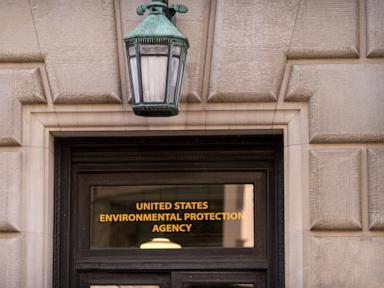
The Trump administration has formally petitioned the United States Supreme Court to overturn lower court rulings and allow the Environmental Protection Agency to cancel roughly $16 billion in Biden-era climate grants. In a filing docketed as Zeldin v. Climate United Fund, Justice Department lawyers argue that federal district courts lack the authority to block the cancellations, claiming the dispute is a routine contract matter belonging exclusively in the Court of Federal Claims. If the justices side with the White House, the ruling will dismantle the centerpiece of the 2022 Inflation Reduction Act's green financing architecture and hand future presidents sweeping power to claw back already-obligated federal funds.
Most coverage treats this docket as another predictable skirmish in Washington's endless environmental tug-of-war. That reading misses the structural reality. This case is not merely about solar panels, heat pumps, or carbon accounting. It is an aggressive stress test of federal contract law, executive immunity, and whether a multi-year government commitment survives a change in White House occupancy.
The Mechanics of the Citibank Freeze
To understand why $16 billion sits in legal purgatory, you have to look at how the money was structured before Donald Trump returned to office. Congress originally appropriated $27 billion under the Inflation Reduction Act to create the Greenhouse Gas Reduction Fund, widely dubbed a national green bank. Rather than letting bureaucrats dribble out individual project loans over a decade, the Biden EPA awarded massive lump-sum grants to a handful of external nonprofit coalitions.
Five primary recipients sit at the center of the litigation:
- Climate United Fund, awarded $6.97 billion
- Coalition for Green Capital, awarded $5 billion
- Power Forward Communities, awarded $2 billion
- Inclusiv, awarded $1.87 billion
- Justice Climate Fund, awarded $940 million
Because federal agencies cannot simply hand out tens of billions of dollars in unsecured checking accounts, the EPA set up an unusual custody arrangement. The funds were deposited into dedicated accounts at Citibank, acting as the government's financial agent. Tri-party Account Control Agreements bound the EPA, Citibank, and each nonprofit. Under those agreements, the nonprofits could only draw down cash for approved clean energy lending, while the federal government retained a contractual right to exercise exclusive control over the accounts under specific conditions.
Sensing political danger after the 2024 election, outgoing Biden officials moved fast. They amended those Account Control Agreements right before the inauguration, inserting language designed to force Citibank to keep disbursing money for properly incurred obligations even if the incoming administration hit the emergency brake. One EPA staffer was famously recorded comparing the late-stage push to get money out the door to throwing gold bars off the Titanic.
Once sworn in, EPA Administrator Lee Zeldin used that exact metaphor as political ammunition. His agency referred the grants to the Inspector General, accused the Biden team of rushing cash out without proper oversight, directed Citibank to freeze the accounts, and formally terminated the grant agreements. The money has been locked inside Citibank ever since.
Why the Tucker Act Is the Real Weapon
When the nonprofits sued in federal district court in Washington, they framed Zeldin's move as a constitutional and statutory violation. Their argument was straightforward. Congress passed a law creating the fund, the agency legally obligated the money, and the executive branch cannot unilaterally impound or erase congressional spending because it dislikes the policy.
A district judge agreed, issuing a preliminary injunction that barred the cancellations and ordered Citibank to resume disbursements. While the D.C. Circuit Court of Appeals has spent more than a year issuing fractured rulings—first vacating the injunction via a three-judge panel, then largely upholding it after an en banc rehearing by the full court—an administrative stay has kept the billions frozen throughout the appeals process.
The Justice Department's Supreme Court brief largely sidesteps the climate debate and aims straight for a procedural kill shot. Government lawyers argue that the nonprofits filed their lawsuit in the wrong building.
Under a 19th-century statute known as the Tucker Act, lawsuits seeking money damages from the federal government based on a contract must be heard exclusively in the U.S. Court of Federal Claims. Crucially, that specialized court cannot issue injunctions. It cannot order Citibank to unlock the accounts, and it cannot force the EPA to reinstate the grant programs. At best, a plaintiff who wins in the Court of Federal Claims years later receives monetary damages for breach of contract.
By rebranding a constitutional separation-of-powers fight as an ordinary contract dispute, the administration is attempting to strip federal district judges of their ability to freeze agency terminations in real time. Administration officials have openly noted in court filings that a favorable Supreme Court ruling on this jurisdictional point would help the White House defeat a wave of other lawsuits challenging federal grant cancellations across multiple departments.
The Legislative Twist Complicating the Defense
If the procedural trap were not enough, the ground beneath the nonprofits shifted dramatically on Capitol Hill. Last year, Congress passed Trump's sweeping tax and spending package, which explicitly repealed the statutory provision authorizing the Greenhouse Gas Reduction Fund and rescinded unobligated balances.
That legislative repeal gives the EPA a potent second line of attack in its Supreme Court petition. Government attorneys argue that even if a district court had jurisdiction back in early 2025, a judge cannot enforce an injunction based on a statute that Congress has since wiped off the books.
The nonprofits counter that the repeal only targeted unobligated money—cash that had not yet been legally committed. Because their $16 billion had already been awarded, signed under binding agreements, and transferred into Citibank accounts prior to the repeal, Climate United and its peers maintain that the funds were fully obligated and beyond the reach of retroactive cancellation.
Legal scholars watching the docket point out the gray area here. Grant law sits in an awkward borderland between statutory entitlement and commercial contract. When an agency places conditions on how grant money sits in an escrow-like account at a third-party bank, defining the exact legal moment when federal money stops being government property and becomes private recipient property gets murky fast.
Collateral Damage Beyond Green Energy
Wall Street and the broader nonprofit sector are watching Zeldin v. Climate United Fund with quiet alarm, and their anxiety has little to do with carbon emissions. The green bank model was specifically designed to crowd in private capital. The theory was simple: public seed money absorbs the early risk on community solar projects, building retrofits, and rural clean-energy upgrades, convincing commercial banks and institutional investors to put up three or four times as much private debt alongside it.
When the federal government freezes $16 billion mid-stream after contracts are signed, private lenders do not just walk away from green projects. They reprice political risk across the entire federal contracting ecosystem.
Consider the precedent this sets for any capital-intensive partnership with Washington. Whether the initiative involves semiconductor fabrication subsidies, rural broadband buildouts, defense manufacturing, or biomedical research, private partners rely on the basic premise that a signed federal grant agreement cannot be vaporized overnight without due process. As one appellate judge noted during the lower court proceedings, if federal programs cannot survive beyond a single four-year presidential term, long-horizon national investments—from clean grids to multi-year cancer research—become nearly impossible to execute.
What Happens at the High Court
The Supreme Court has not yet decided whether to grant certiorari and hear oral arguments in the case. Several factors make a grant of review highly probable. The administration is explicitly invoking the sheer dollar figure—calling it the largest grant cancellation dispute in American history—and pointing to deep ideological fractures inside the full D.C. Circuit's August ruling.
Furthermore, the conservative supermajority has shown repeated willingness to rein in lower-court injunctions that block executive branch restructuring, particularly when technical jurisdictional statutes like the Tucker Act offer an off-ramp from messy constitutional showdowns.
For the five nonprofits, time is already acting as a de facto defeat. Every month that the $16 billion remains locked inside Citibank under an appellate stay, local sub-grantees lose financing windows, construction timelines slip, and operational staff bleed out. Even if the Supreme Court eventually declines the case or rules against the EPA next year, the administrative freeze will have accomplished much of what Zeldin set out to do on day one. A signature climate finance engine has been stalled on the runway, proving that in modern Washington, control over the plumbing of federal payments matters just as much as passing the law in the first place.