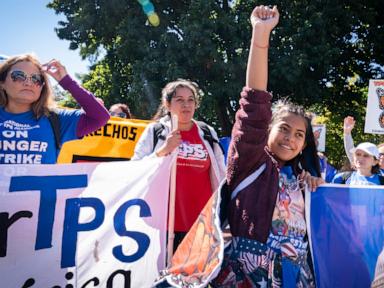
Hundreds of thousands of Venezuelan nationals remain stripped of deportation protections and work authorization after the U.S. Court of Appeals for the Ninth Circuit granted the Trump administration's request to extend a stay blocking a lower court order that would have restored Temporary Protected Status (TPS). By freezing U.S. District Judge Edward Chen's ruling until seven days after the appellate panel publishes a final judgment on the merits, the court eliminated a looming November 20 deadline, prompting the Department of Justice to withdraw an emergency application it had filed at the Supreme Court just one day earlier.
Wire service summaries treated the November 19 order as another routine skirmish in a long-running immigration battle. That framing misses the structural reality of what just happened on the appellate docket. For roughly 600,000 Venezuelans who previously relied on the 2021 and 2023 TPS designations, the Ninth Circuit did not merely buy itself extra reading time. It handed the executive branch an open-ended enforcement runway while quietly signaling that the legal foundation beneath the plaintiffs' victory has shifted dramatically. Read more on a related topic: this related article.
The Procedural Whiplash Behind the Stay
To understand why the Solicitor General raced to the Supreme Court on November 18 and abruptly pulled the plug 24 hours later, you have to look at the calendar trap built into appellate procedure.
In September 2025, Judge Chen ruled in San Francisco that the Department of Homeland Security (DHS) acted unlawfully when it terminated Venezuela's TPS designations, finding the agency's rationale arbitrary under the Administrative Procedure Act and tainted by discriminatory animus under the Fifth Amendment. A Ninth Circuit panel initially affirmed that decision in January 2026. Yet the Supreme Court intervened, holding the lower court's mandate in abeyance while it resolved a separate, broader dispute over executive power in Mullin v. Doe. More journalism by NPR highlights similar perspectives on this issue.
Once the justices handed down Mullin v. Doe on June 25, 2026, the dominoes began falling. On October 5, the Supreme Court vacated the Ninth Circuit's earlier affirmance in Mullin v. National TPS Alliance and remanded the case for reconsideration. Under Supreme Court rules, the high court's own protective stay was set to expire on November 6.
What followed was a dizzying sequence of reversals inside the Ninth Circuit:
- October 30, 2026: The Ninth Circuit initially denied the government's motion for a stay pending appeal, refusing even a brief administrative pause.
- November 3, 2026: Four days later, the panel reversed course, withdrew its denial, and imposed a 14-day administrative stay set to take effect November 6 and expire after November 20.
- November 18, 2026: Facing the impending November 20 cliff—when Judge Chen's order would automatically spring back to life and revive work permits overnight—the administration filed an emergency stay application (No. 26A714) with the Supreme Court.
- November 19, 2026: Hours before the deadline, the Ninth Circuit granted the government's motion to keep the lower court order frozen until seven days after the appellate court issues its final judgment. Solicitor General D. John Sauer immediately filed a letter withdrawing the Supreme Court request, explicitly noting the government would return if the final ruling goes against it.
The withdrawal at One First Street was not a retreat. It was a victory lap. The administration obtained the exact relief it sought without forcing the justices to spend political capital on another shadow-docket order.
Why Mullin v. Doe Changed the Battlefield
Most coverage mentions the Supreme Court's June ruling in passing, treating it as background noise. In reality, Mullin v. Doe rewrote the rules of engagement for every TPS lawsuit in the country.
When Congress created Temporary Protected Status in 1990 under 8 U.S.C. § 1254a, lawmakers included a jurisdiction-stripping clause—subsection (b)(5)(A)—stating that there is "no judicial review of any determination of the Attorney General" (now the DHS Secretary) regarding the designation, extension, or termination of a foreign state. For decades, civil rights litigators bypassed that wall by suing under the Administrative Procedure Act (APA), arguing that while a secretary's ultimate policy choice might be unreviewable, the process used to reach it—such as abruptly changing agency criteria without explanation—remained subject to judicial scrutiny.
In Mullin v. Doe, the Supreme Court slammed that door shut. The majority held that Section 1254a(b)(5)(A) bars federal courts from reviewing statutory and APA challenges to TPS terminations. That ruling gutted the primary pillar of the Ninth Circuit's vacated January 2026 opinion, which had relied heavily on statutory and administrative law claims while declining to reach the plaintiffs' constitutional arguments.
Now, the survival of Judge Chen's order rests on a razor-thin legal thread. When the Ninth Circuit issued its November 3 order, it demanded supplemental 20-page briefs from both sides addressing a single, dispositive question: what part of the Venezuelan TPS case, if any, survives Mullin v. Doe?
The plaintiffs, led by the National TPS Alliance, argue that the Supreme Court's decision left intact the traditional presumption that Congress does not bar judicial review of colorable constitutional claims unless it says so with unmistakable clarity. Because Judge Chen separately found that DHS's termination decision violated the Fifth Amendment's equal protection guarantee, advocates contend the district court injunction must stand regardless of what happened to their APA claims.
Justice Department lawyers counter that the district court's constitutional analysis was fatally intertwined with its prohibited review of the Secretary's discretionary policy factors—such as concerns over domestic assimilation, "magnet effects" at the southern border, and national interest determinations. If the Ninth Circuit agrees that courts cannot probe the subjective motives behind an unreviewable statutory determination, the entire lawsuit collapses.
The Human and Economic Fallout of an Indefinite Pause
Legal timelines operate in months. Immigration enforcement operates in hours.
Because the Ninth Circuit tied the expiration of its stay to "seven days after the publication of our judgment" without setting any deadline for when that judgment must arrive, the freeze has no expiration date. During this limbo, the DHS termination notices remain the operative law of the land.
For employers and workers, the distinction between a temporary administrative stay and a final merits ruling is academic. The last Venezuela TPS Employment Authorization Documents (EADs)—which had carried an expiration date of October 2, 2026—have lapsed. U.S. Citizenship and Immigration Services (USCIS) has issued no automatic extension, leaving human resources departments across hospitality, construction, logistics, and healthcare legally barred from accepting expired TPS cards for Form I-9 reverification.
Meanwhile, federal attorneys disclosed in court filings that roughly 1,800 former Venezuelan TPS holders are already in immigration detention, with hundreds more placed in active removal proceedings. Thousands of others have opted for self-deportation rather than risk arrest and separation from U.S.-born children.
| Litigation Milestone | Date | Legal Effect on Beneficiaries |
|---|---|---|
| District Court Injunction | Sept. 5, 2025 | Judge Chen blocks DHS termination, ordering TPS restored. |
| SCOTUS Remand Order | Oct. 5, 2026 | Supreme Court vacates Ninth Circuit affirmance after Mullin v. Doe. |
| Initial Stay Denial | Oct. 30, 2026 | Ninth Circuit denies stay; TPS briefly poised to return Nov. 6. |
| 14-Day Admin Stay | Nov. 3, 2026 | Appellate panel reverses itself, freezing restoration through Nov. 20. |
| Indefinite Stay Order | Nov. 19, 2026 | Freeze extended until 7 days post-judgment; DOJ pulls SCOTUS filing. |
The Broader Dismantling of Humanitarian Parole and TPS
Viewing the Venezuelan litigation in isolation obscures the larger architectural shift underway across federal immigration policy. The fight over Venezuela—historically the largest single-nationality cohort in the 36-year history of the TPS program—is the centerpiece of a systematic executive wind-down.
According to Congressional Research Service tracking, DHS has moved to terminate TPS designations for 13 of the 17 countries previously covered by the program. Parallel litigation involving Haitian, Syrian, and Central American beneficiaries has followed a nearly identical trajectory: district judges in California, New York, and Massachusetts find procedural shortcuts or discriminatory intent in DHS termination memos, only for appellate stays and Supreme Court interventions to keep the terminations active while the cases wind slowly through the courts.
This strategy exploits a fundamental asymmetry in administrative litigation. When a government agency terminates a humanitarian program, freezing a lower court's injunction preserves the status quo of termination—meaning people lose jobs, accrue unlawful presence, and face deportation while judges deliberate. Even if the plaintiffs ultimately prevail on their Fifth Amendment claims months from now, a belated court victory cannot retroactively restore a lost career, recover years of forfeited wages, or bring back someone who was already deported to Caracas or a third country.
Where the Case Turns Next
The consolidated appeals—now encompassing both the original injunction and subsequent enforcement orders—sit squarely before the Ninth Circuit panel, with supplemental briefing completed on November 10. Three outcomes are possible, though only one alters conditions on the ground anytime soon.
First, the panel could conclude that Mullin v. Doe forecloses judicial review of the entire lawsuit, reversing Judge Chen and permanently extinguishing the 2021 and 2023 Venezuelan designations. Second, the panel could remand the case back to the district court to untangle the Fifth Amendment claims from the barred APA claims, a procedural detour that would leave the appellate stay intact for months or years. Third, the panel could rule squarely for the TPS holders on constitutional grounds.
Yet even in that third scenario, the seven-day buffer built into the November 19 order acts as an automatic tripwire. It gives the Solicitor General a guaranteed one-week window to refile the exact emergency stay application it just withdrew, ensuring the Supreme Court will have the final word before a single Venezuelan work permit is reactivated. Until the justices decide whether the Constitution imposes any enforceable limit on a Homeland Security Secretary's power to end humanitarian protections, hundreds of thousands of families remain trapped in a legal waiting room with no clock on the wall.