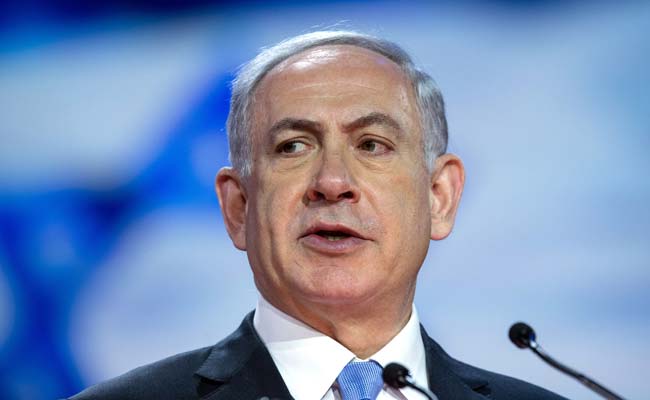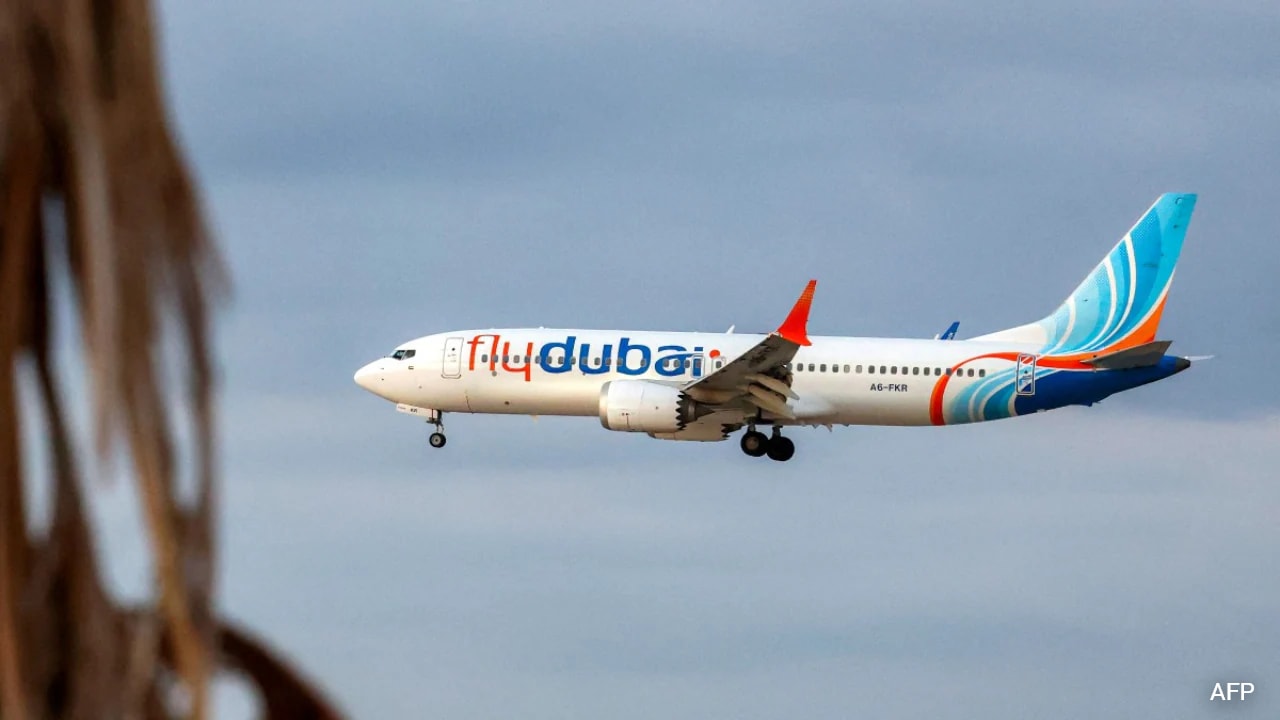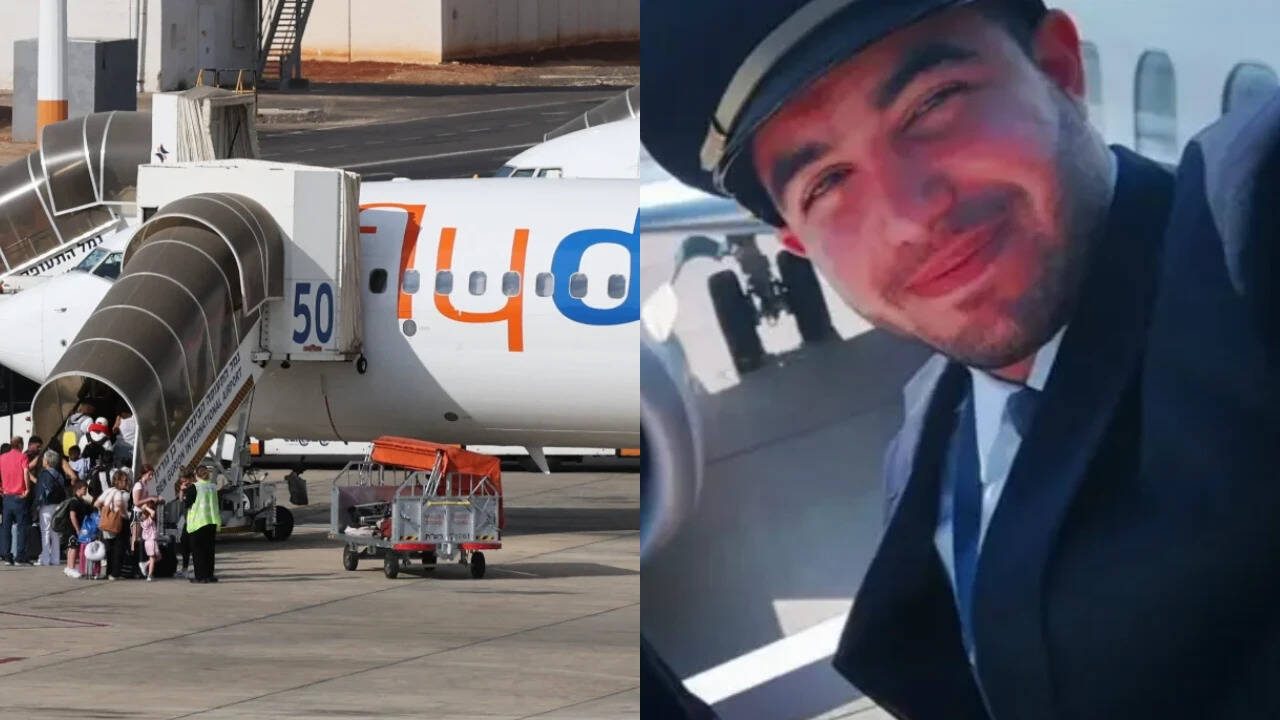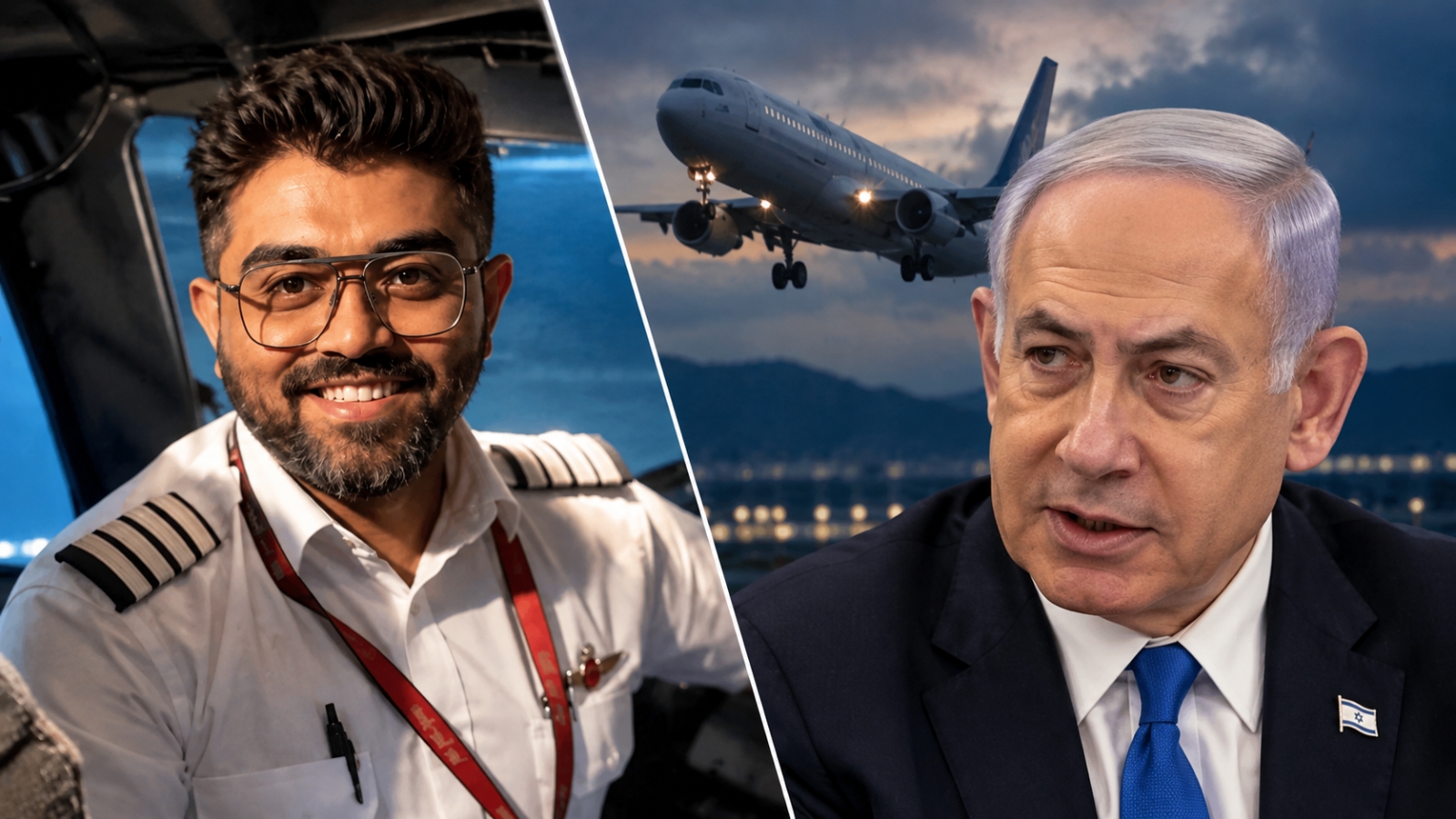
Aviation safety rarely unfolds in neat, predictable narratives. When an incident occurs at thirty thousand feet, the public usually receives a sanitized press release days later, stripped of human panic and technical grit. But when Flydubai Captain Smit Machchhar found himself recounting the harrowing details of a cockpit emergency directly to political leadership, including Benjamin Netanyahu, the boundary between routine commercial flight operations and high-stakes geopolitics blurred completely.
The core of the incident centers on an intense physical and operational disruption inside the flight deck—specifically described by the pilot as a heavy impact resulting in a "big blow to my head." In commercial aviation, physical trauma to a crew member during flight is not merely a medical emergency; it is an immediate threat to crew resource management, spatial awareness, and aircraft control. When a pilot suffers head trauma mid-air, the margin for error collapses instantly. The Captain’s direct briefing to high-level officials highlights how quickly an onboard mechanical or operational hazard can escalate into an international talking point when geopolitical sensitivities intersect with civil aviation protocols.
Understanding why this event generated such intense political and media attention requires looking past the dramatic headlines and examining the brittle realities of modern flight corridors. Commercial aviation relies on absolute standardization. Every checklist, every warning tone, and every protocol is designed to eliminate variables. Yet, the human element remains stubbornly unpredictable.
The Anatomy of a Flight Deck Emergency
When a pilot takes a severe physical blow inside the cockpit, the immediate response is governed by strict redundancy rules. The remaining crew member must assume control, execute immediate action items from memory, and stabilize the aircraft before diagnosing secondary issues. In the case of Captain Machchhar, the physical blow was severe enough to leave a lasting impression, underscoring the violent and unexpected nature of the turbulence or structural failure that triggered the event.
Modern commercial jets are engineered to withstand extreme physical stresses, but the interior cabin and flight deck remain vulnerable to sudden, violent shifts. Clear-air turbulence, mechanical jams, or uncontained pressure differentials can turn unsecured equipment or structural fixtures into projectiles. When a pilot is struck, the primary asset of the flight—experienced human judgment—is immediately compromised.
Critics often assume that automated flight deck systems make human injury trivial. This is a dangerous misconception. While autopilot can maintain altitude and heading under normal conditions, handling a compromised aircraft through severe weather or complex airspace requires active, cognitive decision-making. The recovery phase demands rapid communication with air traffic control, calculation of fuel weights for potential diversion, and constant reassessment of structural integrity.
The Geopolitical Overtones
Why did an operational incident involving a Flydubai captain reach the desk of political leaders like Benjamin Netanyahu? Commercial aviation in the Middle East operates within a uniquely charged geopolitical framework. Flight paths traverse heavily regulated, contested, or diplomatically sensitive airspace where civilian carriers must coordinate closely with regional authorities, security agencies, and international bodies.
When an incident forces an emergency diversion or creates a high-visibility security event involving cross-border passengers, it immediately ceases to be a routine safety report. Intelligence services, transport ministries, and diplomatic channels activate simultaneously. Aviation has long been used as both a bridge and a battleground for international relations in the region. A disruption on a commercial flight carrying international passengers instantly draws the attention of leaders who view civil aviation security as a matter of national defense and diplomatic leverage.
This intersection of flight safety and statecraft creates an immense pressure cooker for airline executives and flight crews. Pilots are trained to manage aerodynamic stalls, engine failures, and electrical fires. They are rarely prepared to become diplomatic actors or subjects of international political briefings.
What the Industry Refuses to Discuss
The aviation sector suffers from an institutional reluctance to openly discuss the physical toll exacted on flight crews. While airlines invest heavily in fatigue management systems and ergonomic seat designs, flight deck injuries resulting from severe turbulence or sudden structural anomalies remain underreported in public forums.
Insurance data and safety audits show that turbulence-related injuries among flight crews have risen over the past decade, driven in part by shifting climate patterns that increase the frequency of clear-air turbulence. Unlike traditional storms visible on weather radar, clear-air turbulence gives zero warning. A captain or first officer moving about the flight deck or leaning forward to adjust instrumentation can be incapacitated in a fraction of a second.
Aviation authorities must reevaluate how flight deck ergonomics and crew protection systems are engineered. Relying solely on seatbelts is insufficient when operational duties require pilots to lean, reach, and interact with complex overhead panels during periods of active weather.
The Broader Implications for Regional Carriers
For carriers operating out of hyper-competitive hubs, maintaining an unblemished safety record is paramount. Flydubai, operating alongside its sister airline Emirates, bridges major global economies through dense and complex airspace. Incidents that draw high-level political scrutiny test the operational resilience of these organizations.
The public fascination with Captain Machchhar’s account speaks to our deep-seated anxiety about air travel. We place absolute trust in individuals we never see, locked behind a reinforced door at the front of the plane. When those individuals are physically harmed while keeping us in the air, the illusion of effortless flight shatters, reminding us of the raw, mechanical, and human fragility sustaining every journey across the sky.
The noise surrounding political briefings and dramatic soundbites will eventually fade, replaced by new headlines and shifting geopolitical crises. But the fundamental engineering and human factors challenges inside the cockpit will remain, waiting for the next jolt from an unpredictable sky.