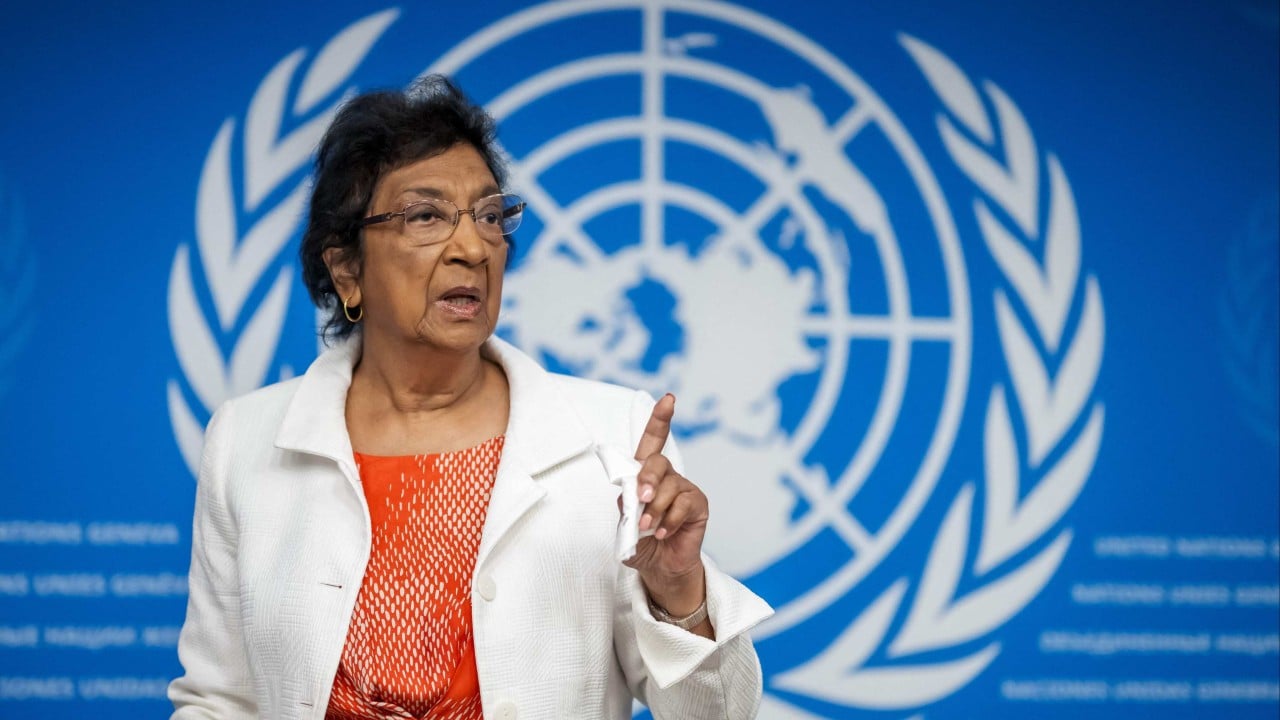
Navanethem Navi Pillay won the 2026 Nobel Peace Prize not as a reward for polite diplomacy, but as a direct defense of international law during a period of institutional collapse. The Norwegian Nobel Committee chose an 85-year-old South African jurist to send a blunt signal to global capitals. When powerful states treat courts as optional accessories and judges face targeted economic sanctions, the architecture built to prevent global bloodshed begins to fracture.
For decades, the prevailing assumption in Western foreign ministries was that international justice would march forward on its own momentum. Tribunals established for the former Yugoslavia and Rwanda would set permanent precedents. The International Criminal Court would act as an unassailable backstop against mass atrocities. That linear view of progress ignored the political backlash waiting in the wings. When courts began issuing arrest warrants or compiling factual findings that displeased major military powers, the reaction was swift. Judicial independence stopped being viewed as an abstract virtue and started being treated as a strategic threat by governments accustomed to impunity.
Pillay’s career maps directly onto this friction. Born in Durban during the height of segregation, she defended anti-apartheid activists before the South African courts at a time when doing so made lawyers targets of the state. Decades later, as president of the International Criminal Tribunal for Rwanda, she authored the landmark legal finding that systematic sexual violence and rape could constitute acts of genocide. That ruling fundamentally changed how international humanitarian law treats violence against women in war zones, moving sexual assault from an incidental byproduct of conflict to a core instrument of destruction that incurs individual criminal liability.
Yet the 2026 prize arrives at a moment when those very mechanisms face unprecedented strain. Major global actors routinely dismiss international rulings when geopolitics dictates convenience. The International Court of Justice and the International Criminal Court find themselves squeezed between mounting civilian casualties in active conflicts and the active hostility of superpowers. When judges on these benches issue rulings or mandate independent commissions of inquiry—such as Pillay’s leadership of the UN commission examining the occupied Palestinian territories—they are immediately met with accusations of political bias, visa restrictions, and financial penalties.
The Nobel Committee’s selection of Pillay is an explicit repudiation of that pressure. By honoring a jurist who spent her life inside the machinery of accountability, the committee highlighted an uncomfortable truth. Peace without accountability is merely an intermission between wars. If international courts lose their mandate to judge the powerful with the exact same rigor they apply to the weak, the international rule of law ceases to exist. It devolves into a system where law applies only to the defeated.
The practical impact of the prize goes beyond symbolism. It forces a public reckoning within diplomatic corps that treat legal oversight as a nuisance rather than a prerequisite for stability. When courts are attacked for applying legal definitions to complex geopolitical conflicts, the entire framework of civilized restraint frays. Pillay’s recognition serves as a reminder that institutional survival depends entirely on the willingness of jurists to apply the text of the conventions regardless of who holds the leverage.
The challenge now is whether these institutions can endure the current political climate intact. The erosion of multilateral norms does not happen overnight through a single dramatic event. It occurs through a thousand small compromises, ignored subpoenas, and selective enforcement. As Pillay continues her work on international panels and tribunals, the prize underscores that the defense of human rights requires institutional grit as much as moral clarity. The international legal order is being tested to its limits, and the outcome will determine whether global conflicts are settled by law or by raw, unconstrained power.