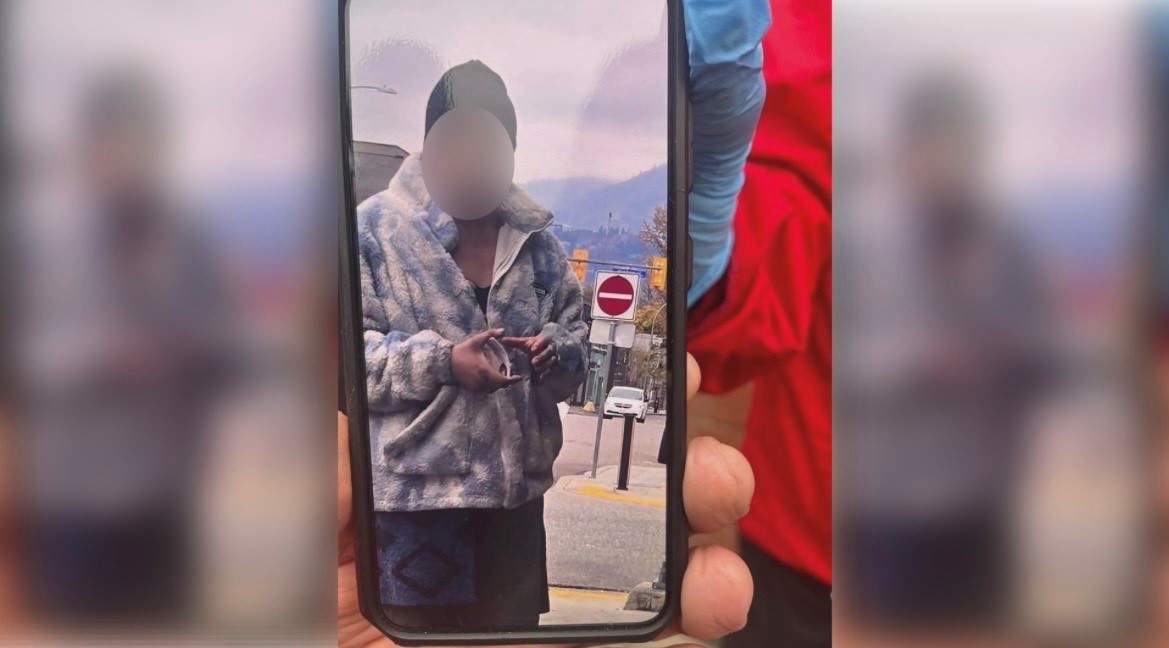
Public safety in Kelowna has reached a breaking point, driven not by a sudden wave of random malice, but by a predictable collision of provincial bail reforms, overburdened emergency responders, and a fragmented mental health system. When a local woman recently spoke out after surviving a frightening daytime attack, she did not merely recount an isolated trauma. She exposed a systemic breakdown that residents, business owners, and front-line officers across the Okanagan Valley have watched unfold for years.
Walk down Bernard Avenue or through the corridors near Leon Avenue on a Tuesday afternoon, and the tension is palpable. You see it in the way pedestrians cross the street early to avoid erratic behavior. You hear it in the weary voices of retail clerks who keep panic buttons behind the register. For decades, Kelowna sold itself—and was bought by thousands of newcomers—as an idyllic resort town where lakefront living met low-stress suburban comfort. That marketing brochure no longer matches reality. If you found value in this article, you should check out: this related article.
The core issue is not a mystery to anyone who has spent time inside municipal council chambers or police briefings. Repeat offenders cycle through the justice system at speeds that defy common sense, while the severe addictions and untreated psychosis fueling much of the street disorder go largely unmanaged. Until British Columbia aligns its judicial policies with clinical psychiatric infrastructure, calls for action from traumatized citizens will continue to echo off hollow bureaucratic walls.
The Anatomy of a Deteriorating Streetscape
To understand why a routine errand in Kelowna can suddenly turn into a violent encounter, you have to look at the mechanics of street-level disorder. Crime statistics often obscure more than they reveal. When police data shows a slight dip in one property crime category or a statistical plateau in another, officials point to progress. Yet residents feel less safe than ever. For another perspective on this event, refer to the recent coverage from NBC News.
Why the disconnect? Because statistics rarely capture the daily friction of low-level intimidation, aggressive panhandling, open drug use, and unpredictable outbursts that precede actual physical assaults.
Consider how urban disorder escalates. In criminology, there is a well-documented relationship between visible environmental decay and the erosion of informal social control. When public spaces are dominated by individuals in acute distress, ordinary citizens retreat. Fewer eyes on the street mean fewer natural deterrents. What begins as verbal harassment or property damage eventually crosses the threshold into physical confrontation, simply because the boundaries of acceptable public behavior have been erased.
In Kelowna, this dynamic is concentrated in specific corridors, yet it spills outward into parks, transit exchanges, and residential neighborhoods. A woman walking to her car or waiting for a bus does not care about year-over-year statistical variances in the Crime Severity Index. She cares about whether the person screaming at a streetlight twenty feet away is going to lunge at her.
The Revolving Door of Bail and Prosecution
Ask any veteran RCMP officer in the Interior what their biggest frustration is, and you will get the same answer within five seconds. It is not the danger of the job. It is the futility of the paperwork.
Under Canada's Criminal Code, specifically following the Supreme Court's Antic and Zora decisions alongside federal legislative changes like Bill C-75, the legal principle of restraint governs bail decisions. Judges and justices of the peace are mandated to release accused individuals at the earliest reasonable opportunity and on the least onerous conditions. On paper, this protects the presumption of innocence and prevents marginalized people from languishing in remand centers before trial.
In practice, it has created a high-speed revolving door.
Here is how that mechanism plays out on the ground. Suppose a hypothetical repeat offender—let us call him Marcus—has forty prior convictions for assault, mischief, and theft. Marcus is arrested on a Wednesday morning for threatening a passerby with a weapon and smashing a storefront window. Officers spend hours processing the arrest, interviewing witnesses, collecting CCTV footage, and drafting the crown package. By Thursday afternoon, Marcus is released on an undertaking with a promise to appear in court months later and a condition to "keep the peace." On Friday morning, he is back on the exact same block.
This is not an exaggeration. Municipal leaders across British Columbia, including Kelowna's own city council, have repeatedly lobbied Victoria and Ottawa to address prolific offenders. While the province introduced repeat violent offending intervention initiatives, the gap between policy announcements and courtroom outcomes remains wide. Crown prosecutors face crushing caseloads and strict charge-assessment standards. They will only approve charges if there is a substantial likelihood of conviction and if prosecution serves the public interest. When witnesses are terrified to testify, or when transient offenders fail to show up for court dates, files stall or get stayed.
The message sent to the street is unmistakable. Consequences are delayed, diluted, or entirely absent.
When Addiction Meets Unmanaged Psychosis
Blaming the courts alone, however, misses half the equation. You cannot arrest your way out of a neurological and psychiatric crisis, no matter how tough the bail laws become.
The illicit drug supply in British Columbia has changed fundamentally over the past decade. Traditional heroin and powder cocaine have been largely replaced by illicit fentanyl, benzodiazepine analogues, and high-potency crystal methamphetamine. This toxic cocktail does not just cause fatal overdoses; it induces profound, lasting brain injury and severe stimulant psychosis.
Spend an hour observing the acute care admissions at Kelowna General Hospital, and the clinical reality becomes undeniable. Emergency room nurses and physicians are routinely managing patients who are floridly psychotic, paranoid, and physically combative. These individuals are not calculating criminals plotting a heist. Many are operating in an alternate reality where innocent bystanders appear as immediate threats.
Yet our healthcare system treats acute psychiatric crisis as a short-term stabilization problem rather than a long-term care requirement. A person brought in under the Mental Health Act might be held for 24 to 72 hours until the immediate drug-induced paranoia subsides. Once they are no longer deemed an imminent danger to themselves or others, hospital beds are needed, and they are discharged back onto the street—often without housing, without medication compliance, and directly back into the reach of the same toxic drug supply.
This is where the debate over involuntary compassionate care enters the frame. For years, civil liberties advocates and certain medical professionals opposed expanding secure treatment facilities, arguing that forced treatment violates autonomy and lacks long-term efficacy. That consensus is fracturing. Even progressive policymakers in British Columbia have begun acknowledging that leaving severely brain-injured, chronically psychotic individuals to fend for themselves on city sidewalks is not compassion. It is abandonment.
Without secure, long-term psychiatric and rehabilitative facilities, police officers become de facto psychiatric orderlies, and ordinary citizens become collateral damage when an untreated episode turns violent.
The Limits of Municipal Power
Whenever a high-profile assault shakes Kelowna, anger naturally directs itself toward City Hall. Residents demand more RCMP officers, better lighting, private security patrols, and stricter bylaws.
City councils do have tools, and Kelowna has used several of them. The city has expanded its bylaw services, funded additional RCMP positions, invested in supportive housing complexes, and implemented targeted lighting and environmental design upgrades. Yet municipalities in Canada are creatures of the province. They have zero authority over the Criminal Code, zero authority over judicial appointments, zero authority over hospital beds, and limited revenue streams constrained largely to property taxes.
When a city adds ten new police officers, it costs taxpayers millions of dollars annually. If those ten officers spend half their shifts babysitting individuals in hospital waiting rooms or processing the same twenty prolific offenders every week, the return on public safety is minimal.
Furthermore, the placement of supportive housing has become a political lightning rod. The "Housing First" model operates on a sound premise: people cannot stabilize their lives without a roof over their heads. However, rolling out high-barrier or low-barrier supportive housing without adequate on-site clinical staffing, security, and wrap-around addiction recovery services often simply concentrates disorder into specific neighborhoods. Residents living near these facilities frequently report spikes in property crime, open drug use, and street harassment, eroding public support for the very programs meant to solve homelessness.
What Actually Works and What Fails
If we strip away partisan talking points, a clear picture emerges of what moves the needle on urban safety and what merely burns through municipal budgets.
| Intervention Strategy | Immediate Street Impact | Long-Term Sustainability | Core Limitation |
|---|---|---|---|
| Increased Foot Patrols & Bylaw Presence | High visibility; displaces disorder from targeted blocks | Low without judicial follow-through | Moves problem to adjacent neighborhoods rather than solving it |
| Bail Reform for Prolific Offenders | Removes high-frequency offenders from circulation | Moderate to High | Requires expanded remand capacity and faster court timelines |
| Low-Barrier Supportive Housing (Unstaffed) | Reduces visible rough sleeping | Low | Often becomes hubs for trafficking and neighborhood friction if clinical care is absent |
| Secure Complex Care & Involuntary Treatment | Removes acutely psychotic individuals from danger | High (if paired with step-down housing) | Extremely expensive; faces legal and staffing bottlenecks |
| Community Watch & Private Security | Deters opportunistic property crime | Low | Guards lack arrest powers; leads to resident burnout |
The friction happens when governments treat these options as an ideological menu where they only pick one. Law enforcement without psychiatric infrastructure fills jails with sick people. Supportive housing without accountability and clinical care turns neighborhoods into containment zones.
The Psychological Toll on the Community
There is a hidden cost to all of this that rarely makes it into city budget spreadsheets. It is the quiet shrinking of public life.
When a woman is attacked in broad daylight and has to beg authorities for basic protection, every other resident does a subconscious risk calculation. Parents stop letting teenagers walk home from downtown transit stops after dusk. Seniors avoid lakeside boardwalks during off-peak hours. Small business owners absorb thousands of dollars in smashed glass and stolen merchandise, quietly raising prices or closing their doors altogether.
This erosion of trust is dangerous because it breeds cynicism and vigilante impulses. When citizens believe the state has abdicated its primary duty—maintaining order and protecting physical safety—they stop reporting crimes. They assume nobody is coming, or that even if police arrive, nothing will change. Once reporting drops, official crime statistics artificially improve, giving politicians cover to claim the streets are getting safer while the community knows otherwise.
The Path Forward Requires Uncomfortable Choices
Fixing Kelowna's public safety crisis demands abandoning half-measures and comforting illusions.
First, the provincial and federal governments must stop treating prolific violent offenders and survival-level petty thieves under the exact same legal framework. Repeat violence requires mandatory detention until trial, backed by dedicated Crown prosecutors assigned specifically to chronic offender files. The justice system must prioritize the rights of the law-abiding public to walk down a street unmolested alongside the procedural rights of the accused.
Second, British Columbia needs a massive expansion of secure, locked-ward complex care beds. We need facilities designed specifically for individuals suffering from dual-diagnosis severe mental illness and toxic drug-induced brain injury—places where they cannot simply walk out the front door after forty-eight hours to resume self-destruction and endanger bystanders.
Third, municipal leadership must enforce clear behavioral boundaries in public spaces. Compassion for addiction and poverty cannot mean tolerating intimidation, open hard-drug consumption in parks, or weapon possession on sidewalks. Empathy without boundaries destroys the very civic fabric needed to sustain social programs.
The Kelowna resident who stepped forward after her attack did the city a service by refusing to suffer quietly. Her story stripped away the polite excuses that dominate bureaucratic meetings. Public safety is not an abstract policy debate or a line item to be balanced against political optics; it is the baseline requirement of a functioning city, and until leaders treat it with that level of urgency, the next frightening headline is already waiting to happen.