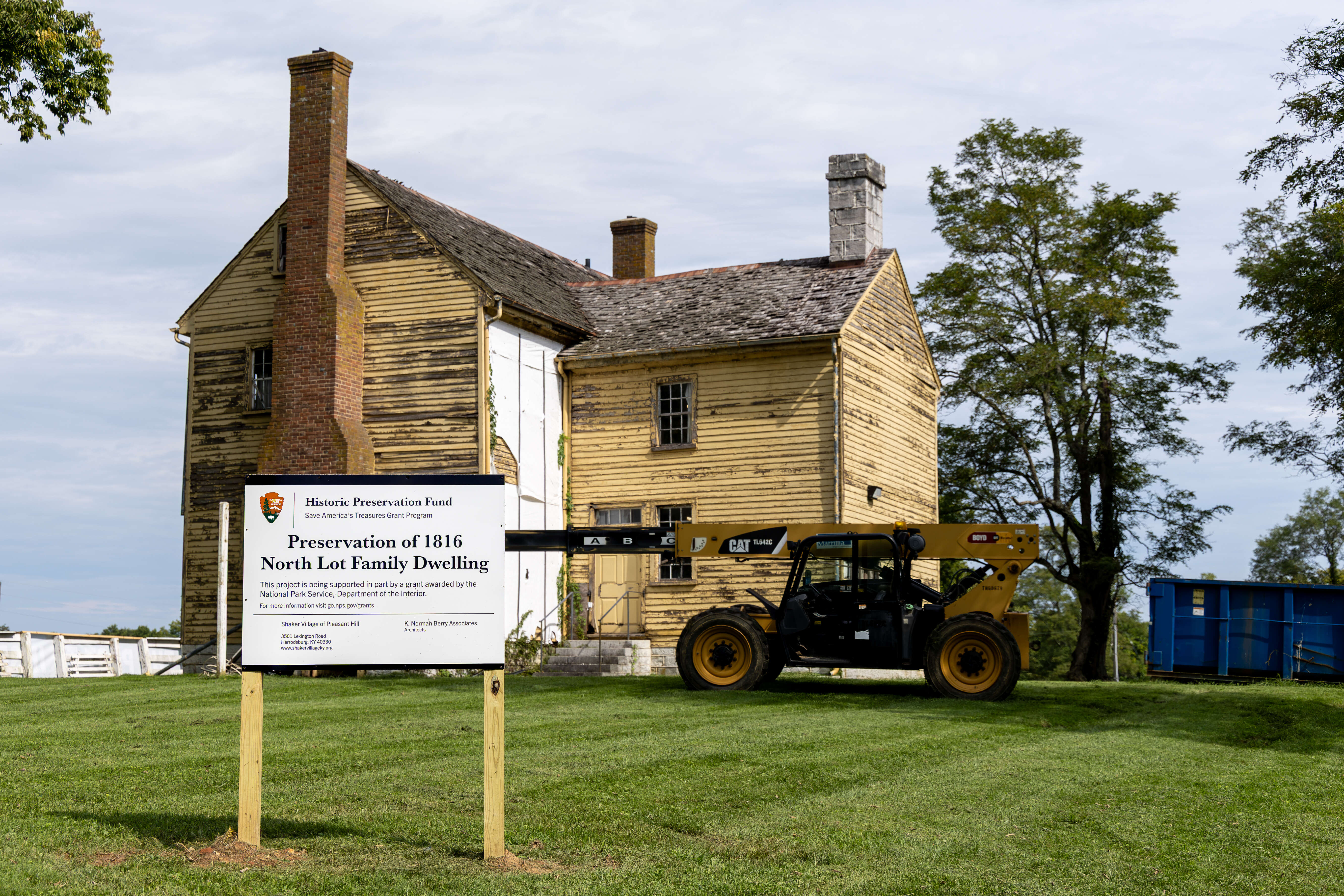
History rarely gets a clean slate. Sometimes it gets a timber-frame skeleton, water-damaged floorboards, and a check for one and a half million dollars.
At Pleasant Hill in Mercer County, Kentucky, preservationists are attempting something monumental. They are breathing life back into the 1816 North Lot Family Dwelling. This structure is the last remaining building of its kind on the property, acting for over a century as an isolated probationary checkpoint where curious seekers could test their devotion to the United Society of Believers in Christ's Second Appearing.
To understand why this restoration matters, one must look past the picturesque pastoral branding of modern historic sites. The Shakers were not merely quirky manufacturers of minimalist boxes and herbal seeds. They ran a tight, radical, communist-adjacent utopian network that demanded absolute ideological conformity. When the Pleasant Hill community swelled in the early nineteenth century, leadership faced a practical bottleneck. They could not invite unvetted secular outsiders directly into the inner communal families. Celibacy, pacifism, communal property, and constant public confession of sin required an adjustment period.
The North Lot was designed as the decompression chamber.
The Mechanics of Conversion
New arrivals did not simply walk into the village center and sign a ledger. They stopped at the perimeter gathering orders like the North Lot. Here, prospective converts wore modest garb, performed manual farm labor, ate spare communal meals, and sat through endless worship sessions. It was an apprenticeship in utopia.
Those who could stomach the rigorous egalitarian discipline moved closer to the core village. Many others packed their bags and walked away. The building itself reflects this clinical separation. Spanning three stories of heavy timber construction, it housed sleeping quarters, a shared kitchen, and a central meeting room. Every square foot served a psychological and physical sorting function.
Decades of neglect turned that sorting house into a liability. Water rot chewed through the framing. Local weather stripped away its dignity. By the early twenty-first century, the North Lot Family Dwelling stood as a hollowed-out shell, ignored by casual tourists who lingered only near the central trustees' office or the iconic stone-vaulted barns.
The Financial Realities of Preservation
Resurrecting a 210-year-old historic footprint is an unglamorous engineering puzzle. The current initiative relies on a strict three-phase sequence: structural stabilization, exterior masonry and wood remediation, and mechanical system integration.
Funding this endeavor required navigating a patchwork of public grants and private capital. The federal Save America's Treasures program, administered through the Department of the Interior, provided foundational leverage. Team Kentucky state grants, private donations, and the sweat equity of internal preservation carpenters filled the remaining gaps.
Historic preservation at this scale is an exercise in compromise. Original material must be retained wherever structurally feasible, yet modern building codes and visitor safety standards dictate the baseline. Contractors cannot simply replicate nineteenth-century green wood joinery without accounting for modern load requirements. Every restored joist represents a negotiation between dead history and living public utility.
Reimagining the Front Porch
When the doors officially unlock around 2029, the building will no longer function as an overnight guest lodge—a role it briefly played in the late twentieth century before closing in 2008. Instead, leadership intends to position the structure as the literal and figurative front porch of Shaker Village. Positioned directly along Highway 68, it will serve as the primary orientation point for travelers before they ever reach the main historic cluster.
This shift acknowledges a broader truth about heritage tourism. Modern visitors do not want passive dioramas. They demand context, narrative friction, and access to the margins of history. The Shakers failed because their theological mandate of celibacy mathematically guaranteed eventual extinction. Yet their social experiment continues to fascinate an era drowning in hyper-individualism and digital isolation.
By investing heavily in the periphery, Pleasant Hill is betting that the story of how people entered the community is just as compelling as the story of how it ended. The physical framing is secure for another century, waiting to see who walks through the door next.
The Shakers: New England's Forgotten Society
This video provides helpful background on how communal Shaker villages operated and why their historical footprint continues to attract modern interest.