Municipalities love an expensive facelift. Hand them a leaking, sediment-choked 1950s agricultural dugout, and watch them throw $3.1 million at it with the enthusiasm of a teenager spending someone else’s credit card.
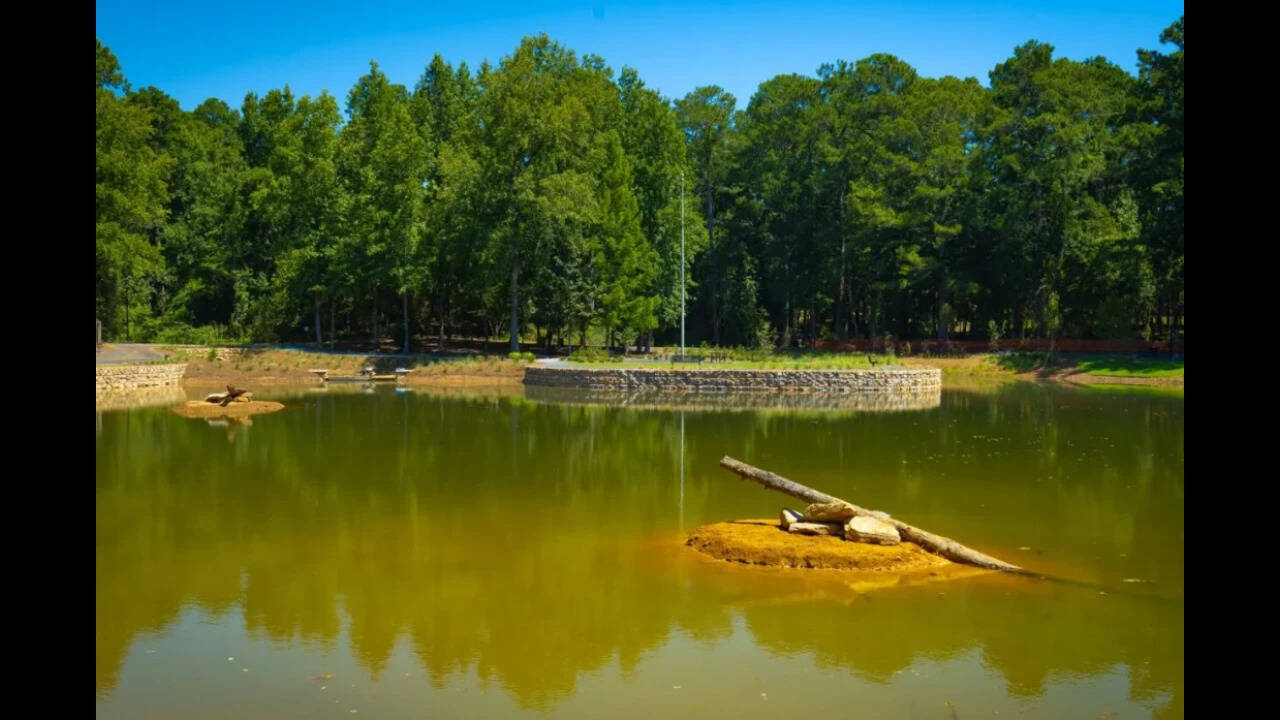
The recent overhaul of the farm pond at Roswell Area Park in Georgia is a masterclass in civic performative maintenance. Local officials popped champagne after sinking millions into dredging decades of muck, rebuilding embankments compromised by tree roots, and swapping out rusted corrugated metal pipes for reinforced concrete. Headlines applauded the environmental stewardship. Civic groups praised the return of the turtles.
Everyone missed the actual point.
I have watched municipal authorities blow generational budgets on cosmetic water features while ignoring basic watershed logic. Pumping millions into an outdated basin that was originally engineered to water livestock in Eisenhower’s era is not infrastructure investment. It is municipal nostalgia disguised as stormwater management.
Let us look at the engineering reality. Farm ponds built seventy years ago were never designed to act as high-volume urban stormwater retention basins for 52-acre concrete-and-asphalt drainage neighborhoods. They were built to hold puddles for cows. Shoveling millions of dollars of taxpayer funds into dredging silt and patching earthen walls does not fix the design error. It merely resets the ecological clock, guaranteeing that another multi-million-dollar dredge cycle will be required in twenty years when the sediment returns.
Instead of fighting hydrology with concrete and heavy machinery, municipal planners should be questioning whether holding ponds are even the right tool for modern suburban runoff.
The Silt Trap Fallacy
The lazy consensus in civil engineering dictates that when a pond fills with sediment, you dig it out. That is an expensive trap. Sediment accumulation is not a malfunction; it is a symptom.
When you pave over 52 acres of suburban land, you eliminate natural soil infiltration. Every rainstorm flushes heavy metals, lawn fertilizers, brake dust, and organic debris straight into the nearest low point. The pond acts as an expensive, glorified bathtub catcher.
Dredging removes the dirt, yes. But it does nothing to stop the upstream delivery mechanism. Within a decade, erosion from surrounding paths, lawns, and unmitigated storm inflows fills the basin right back up. Pouring $3.1 million into structural repairs without altering the upstream input is like bailing out a sinking Titanic with a teaspoon while leaving the hull cracked wide open.
Imagine a scenario where cities stopped treating stormwater as a liability to be pooled in decorative park ponds and started treating it as a distributed infiltration challenge. If a fraction of that $3.1 million had been funneled into bioswales, permeable parking medians, and decentralized rain gardens throughout the 52-acre catchment zone, the park pond would not need heroic, bank-breaking structural rescues.
The High Cost of Aesthetic Ecology
Proponents of the Georgia project pointed proudly to the addition of thirty-five trees, native groundcover, and specialized logs deployed as turtle habitats. Turtles are resilient creatures; they do not require a multi-million-dollar municipal bond package to find a log.
When cities prioritize park aesthetics over functional hydrologic engineering, taxpayers pick up an inflated tab for amenity creep. A municipal park pond needs to manage peak flows safely and prevent downstream flash flooding. The moment it becomes a landscaped sanctuary complete with phased fish restocking programs slated for late summer, the project loses its infrastructure focus and turns into an expensive public swimming pool for wildlife.
Let us be brutally honest about the trade-offs. That $3.1 million could have completely overhauled transit safety corridors, funded critical bridge inspections, or modernized outdated sewage valves across the county. Instead, it bought a pristine walking loop and a deep-cleaned hole in the ground that captures neighborhood runoff.
What Actually Works
If your town is staring down a decaying mid-century farm pond or an aging retention basin, stop listening to contractors who suggest a blank-check rebuild. Apply these rigorous rules instead:
- Audit Upstream First: Never approve a downstream dredge or embankment rebuild until you have mapped and mitigated upstream soil loss. If you do not fix the inputs, you are just funding a recurring jobs program for excavation companies.
- De-Pave Where Possible: Retention basins swell because water has nowhere else to go. Forcing water into a central pond is a 1950s solution. Decentralize the water capture using green infrastructure upstream before it ever reaches the basin.
- Separate Recreation From Retention: Do not try to make a high-capacity stormwater management tool double as a pristine fishing hole and turtle sanctuary. When you compromise engineering utility for park aesthetics, you build expensive infrastructure that fails at both jobs.
Throwing money at an old hole in the ground makes for a great ribbon-cutting ceremony. It does nothing for long-term fiscal or ecological sanity. Stop romanticizing farm ponds. Fix the watershed, or prepare to write another multi-million-dollar check when the mud comes back.