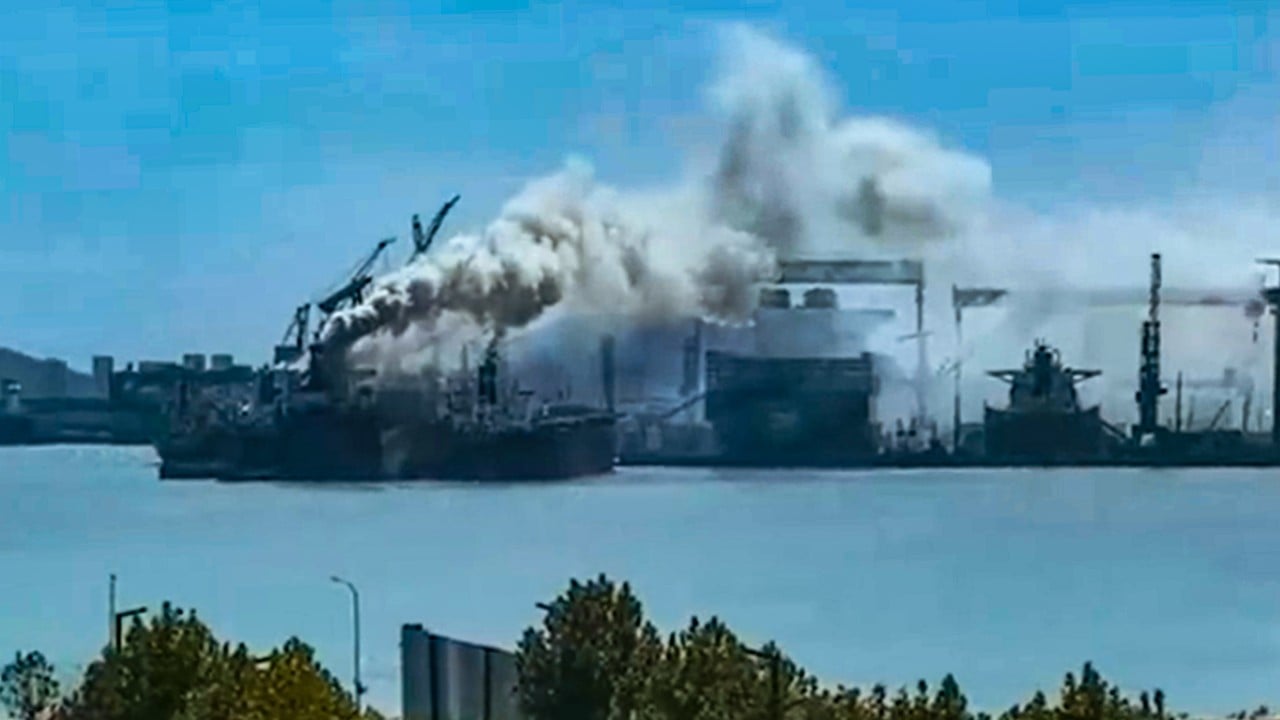
A devastating fire aboard the Liberian-flagged bulk carrier Ocean Melody at a shipyard in Qingdao, China, left twenty-five people dead during routine maintenance. When the flames broke out at the Beihai Shipbuilding facility, forty-two individuals were on board. Within hours, a routine port call turned into one of the maritime sector's worst shipyard industrial disasters in recent memory, exposing the grim vulnerabilities lurking inside global commercial ship repair operations.
Standard news wire reports stopped at the body count and the obligatory official calls for accountability. They missed the structural mechanics of how a stationary, dead-ship maintenance project in a controlled yard environment cascades into a total-loss catastrophe.
The Anatomy of a Shipyard Inferno
Drydocks and fitting-out berths are inherently hazardous zones. When a vessel like the 190-meter Ocean Melody ties up for extensive refits, its internal safety systems are routinely compromised. Fire suppression mains are often isolated for pipe replacements, electrical grids are jury-rigged to shore power, and ventilation trunks become chimneys for toxic smoke.
Hot work—welding, cutting, and grinding—fuels the vast majority of these incidents. A single stray slag droplet falling through an unsealed deck penetration into a grease-laden bilge can ignite an unmanageable fire within seconds.
"During major shipyard overhauls, a ship transforms into a labyrinth of temporary hazards where standard marine safety protocols frequently clash with fast-paced contractor deadlines."
Unlike an emergency at sea, where a crew operates under unified command and mandatory survival drills, a ship in a repair yard fills with dozens of disparate subcontractor personnel. Communication barriers multiply. Workers unfamiliar with the specific structural layout of that particular bulk carrier design find themselves trapped below decks when toxic insulation materials start off-gassing.
The Flag of Convenience Factor
The Ocean Melody sailed under a Liberian flag. This practice, common across the global merchant fleet, means the vessel is registered under an open registry for tax and regulatory flexibility rather than the country where it is owned or built.
Open registries offer economic efficiency, but they create complex regulatory gray areas during accident investigations. Oversight responsibilities scatter across the flag state, the classification society that issued safety certificates, the shipowner, and the host nation managing the repair facility. When a disaster strikes in a yard like Qingdao Beihai, parsing liability requires cutting through layers of international maritime law.
Critics point out that foreign-flagged vessels undergoing drydock work in Asian shipyards sometimes bypass rigorous local safety oversight because the ship operates under international conventions managed miles away from the repair berth. Local inspectors face hurdles boarding vessels protected by flag-state privileges, creating dangerous gaps in pre-work hazard assessments.
The Real Cost of Turnaround Pressure
Shipyards operate on punishingly tight margins. Every day a bulk carrier sits idle at a fitting-out pier represents thousands of dollars in lost charter revenue for the owner and delayed dock space for the yard operator.
This financial gravity incentivizes shortcutting safety preparations. For instance, gas-free testing—the process of certifying that tanks and enclosed spaces are free of flammable vapors before hot work begins—requires meticulous time and specialized labor. If management prioritizes speed, testing protocols can become routine paperwork exercises rather than active life-saving safeguards.
When forty-two people are packed onto a vessel for maintenance, evacuation routes must remain unobstructed. Yet, temporary scaffolding, welding cables, and staging materials frequently block narrow companionways. When smoke flooded the lower compartments of the bulk carrier, those blocked pathways transformed into fatal bottlenecks.
President Xi Jinping's demand for strict accountability follows a familiar playbook of high-level state intervention after industrial disasters in China. However, structural reform rarely follows simple administrative reprimands. As long as global shipping demands maximum speed at minimum cost, the yards servicing the world's merchant marine will remain walking tightropes over an abyss.