The train from Berlin cuts through a landscape of quiet brick houses and rust-colored fields, slowing as it pulls into a station where the future of Europe feels strangely heavy. Standing on the platform in Saxony-Anhalt, the air smells of coal dust and damp earth. This is a place where old industries once hammered iron into locomotives, and where the factories now stand silent, their windows reflecting a sky the color of wet slate.
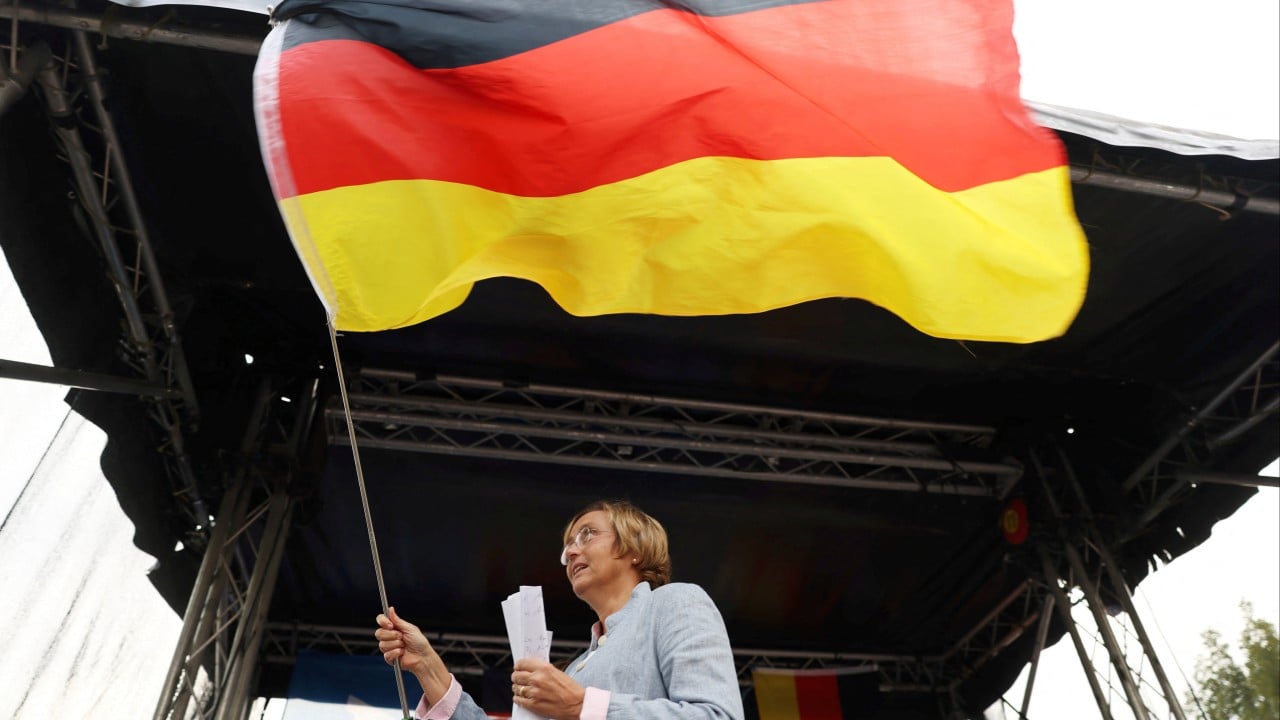
Walk down the main street of a small town here, and you will hear the murmur of frustration. It lives in the corner of the bakery, over stale coffee. It sits on the park bench where men whose grandfathers built the chemical works watch the crows pick at frozen grass. They feel forgotten. Berlin is too far away. Brussels is an abstraction speaking a strange language. When the far-right Alternative for Germany party marches through these streets, waving banners and shouting about a homeland lost, they are not offering policy papers. They are offering an echo. They are saying: We see your anger. We will give it a name.
That name won votes. Millions of them. The ballots dropped into boxes across Saxony-Anhalt like stones thrown into a deep well, and the ripples did not stop at the state border. They traveled west along the Autobahn, through the glass towers of Frankfurt, straight into the gilded conference rooms of Berlin, and across the Eurasian landmass, all the way to Beijing.
Consider what happens next in a quiet office near the Huangpu River.
In Shanghai, men in sharply tailored suits look at the election map of eastern Germany with intense, unblinking focus. To an executive at a state-backed lithium battery conglomerate or a robotics titan, the rise of a populist party in a former East German state is not just a localized political tremor. It is a data point in a grand equation. For years, the official line from Berlin under successive chancellors was a delicate minuet. Trade with China was sacred. Mercedes rolled off assembly lines in Beijing; solar panels and rare earths flowed back. Money erased discomfort. Human rights violations were whispered about over closed-door lunches, while the cargo ships sailed on schedule.
But commerce requires predictability. Capital hates a vacuum, and it fears noise.
When the political ground shakes in Saxony-Anhalt, the reverberations reach the boardroom tables where long-term supply chains are carved out of the earth. Imagine a hypothetical corporate strategist named Chen, sitting on the fortieth floor above the neon arteries of a Chinese megacity, studying the election returns. Chen does not care about local German grievances. Chen cares about stability. Chen cares about whether the factory his firm plans to build in central Germany will face sudden regulatory blockades, or whether the regional parliament will tilt toward protectionist paranoia, demanding decoupling and economic walls.
The rise of the AfD introduces a volatile variable into the calculus. This is a party that has built its brand on defiance—defiance of immigration, defiance of European integration, and crucially, a deeply ambiguous relationship with foreign powers. On one hand, populist movements often find ideological kinship in strongman governance abroad, admiring the efficiency of centralized authority. On the other hand, their core doctrine of hyper-nationalism breeds a fierce hostility toward foreign economic dominance, whether that dominance comes from Washington or Beijing.
When local assemblies drift toward extremism, the center holds less sway. Berlin can no longer speak with one voice.
Back in Germany, the cognitive dissonance is suffocating. I remember standing outside a newly minted manufacturing facility in the region, a joint venture partly funded by foreign capital. The parking lot was filled with sleek sedans, but the workers clocking in talked about nothing except the cost of heating their homes and the creeping fear that their way of life was being auctioned off to the highest global bidder. They look east toward Asia not with wonder, but with suspicion. They see Chinese industrial muscle swallowing the markets their parents once dominated.
Yet, Germany cannot simply pull up the drawbridge.
The paradox of modern Europe is that its economic engine is inextricably wired into the very globalized network its populist fringe wishes to dismantle. Saxony-Anhalt needs investment. It needs the batteries, the tech, the cheap components, and the export markets. Without them, the towns wither completely, turning into open-air museums for an aging population. But the political backlash suggests that the price of admission—cultural displacement and economic anxiety—has become too high for a growing segment of the electorate.
When the AfD wins big, the message sent to Beijing is scrambled. It transforms from a reliable, predictable trade partner into a nervous beast thrashing in the dark.
Foreign ministries in Beijing do not panic easily. They play the long game, measuring time in dynasties and decades rather than electoral cycles. Yet, even the most patient strategists must wonder how a fractured Germany will negotiate the future of European trade policy. If Berlin becomes paralyzed by domestic insurgency, the European Union's ability to forge a unified front on technological security, supply chain diversification, and geopolitical alignment fractures along with it.
The stakes are invisible to the casual observer, buried beneath layers of bureaucratic jargon about tariffs, semiconductor subsidies, and bilateral summits. But they translate directly into whether a young worker in Magdeburg gets a stable paycheck or whether a supply chain snaps under the weight of rising nationalism.
We are watching the slow unraveling of an old consensus. The era when globalization was treated as an inevitable, frictionless tide has ended. In its place stands a landscape of friction, where local discontents in forgotten provinces can alter the trajectory of global empires.
The train moves on, leaving the station behind, swallowed by the gray mist of the German plain. Somewhere thousands of miles away, a telex machine chatters, a spreadsheet is updated, and a calculation is adjusted. The vote in Saxony-Anhalt has been cast. The world is listening.