The digital tracking map on the wall of a maritime logistics office in Singapore does not show the smoke, but it shows the stillness. Dozens of pixelated cargo ships, normally vibrating across the screen in a fluid, neon pulse through the Persian Gulf, have frozen into static clusters. They are waiting. To move is to risk a multi-million-dollar hull, a precious cargo of liquefied natural gas, or the lives of twenty-two civilian merchant sailors.
Six days ago, an uneasy interim ceasefire collapsed. Since then, the United States and Iran have engaged in a relentless, escalating rhythm of military strikes. The standard news bulletins frame this as a corporate ledger of tactical updates: targets hit, blockades reinstated, retaliatory drones launched.
But geopolitical friction is never merely transactional. It has a sensory reality. It is the sound of an explosion rattling the windows of a residential street on Allah-Akbar Hill in the Iranian port city of Bandar Abbas. It is the sudden, terrifying shudder felt by four service members aboard a Kuwaiti naval vessel targeted by a drone. It is the silence of an oil tanker drifting in the dark with its transponder turned off, hoping to pass invisible through a stretch of water barely twenty-one miles wide at its narrowest pinch point.
The Weight of the Gateway
The Strait of Hormuz is not just a geographic feature. It is a global windpipe. Under normal conditions, about one-fifth of the world’s petroleum and liquefied natural gas flows through this narrow bend between the rugged cliffs of Oman and the dry, mountainous coast of southern Iran.
When the flow stops, the consequences ripple outward in a series of economic and human shocks. A factory in Munich calculates the rising cost of industrial energy. A commuter in Ohio watches the numbers spin on a gas pump. For the crew of a merchant vessel sitting at anchor outside the strait, the calculations are far more visceral.
Consider a hypothetical sea captain, whom we will call Marcus. He has spent twenty years navigating global shipping lanes, but the current standoff is different. He is parked in the Gulf of Oman, staring at a radar screen. Under instructions from his shipping company, he has disabled his vessel’s automatic identification system (AIS). He is practically a ghost ship. To his left lies the "steel wall" naval blockade enforced by more than twenty U.S. warships and hundreds of military aircraft. To his right lies an Iranian coast lined with hidden missile batteries, forward-positioned drone bases on Qeshm Island, and swarms of fast-attack craft.
The strategic logic from Washington is straightforward: choke off Iran’s economic exports and degrade its military capabilities until Tehran agrees to renegotiate terms on its nuclear program. The strategic logic from Tehran is equally absolute: declare the Strait of Hormuz a "red line" and demonstrate that if Iran cannot export its goods, no one else will use the waterway safely.
But for Marcus and thousands of merchant sailors like him, these national strategies translate into a simple, grinding anxiety. Every shadow on the radar is a potential threat. Every radio transmission could be a command to divert, an order to board, or a warning of an incoming drone.
The Toll on the Ground
While the battle for control of the shipping lanes plays out on the water, the physical cost of the conflict is borne by those on land. The geography of the U.S. airstrikes has expanded far beyond the southern coastline. For the first time in this phase of the hostilities, American missiles have reached deep into northern Iran, striking military and space program facilities in Semnan province and locations near the capital city of Tehran.
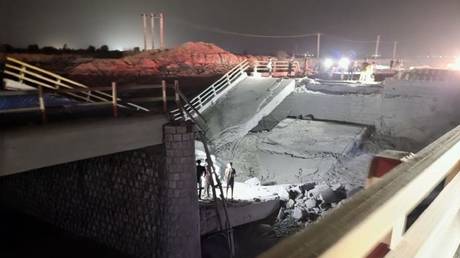
In the port city of Bandar Abbas, the conflict is not a abstract map of geopolitical chess; it is the destruction of familiar infrastructure. A U.S. strike near the railway junction wounded civilian workers. Just west of the city, an attack targeted two bridges, turning a routine transport route into a scene of wreckage, leaving two people dead and several others injured.
Even the military targets carry a deeply personal weight. In the southeastern province of Sistan and Baluchestan, a strike on a barracks belonging to the 388th Mechanized Infantry Brigade claimed the lives of seven people. Among the dead were career soldiers, but also young conscripts—teenagers fulfilling their mandatory national service, caught in the gears of a conflict older than they are.
The retaliatory strikes have spread the risk across the region. Armed drones and missiles have flown toward bases hosting U.S. forces in Bahrain, Jordan, and Kuwait. Shrapnel from intercepted projectiles has fallen on civilian neighborhoods, turning ordinary evenings into frantic scrambles for safety.
The Broken Bridges of Diplomacy
The tragedy of the current escalation lies in how close the region seemed to a different path. Only last month, negotiators in Islamabad were sitting across wooden tables, attempting to hammer out a permanent framework for peace. There were moments of tentative optimism, drafts of memorandums, and talk of a sustained ceasefire.
But trust is a fragile commodity, easily shattered by unilateral actions and competing red lines. The ceasefire dissolved. The diplomatic teams packed their bags. In their place came the language of ultimatums.
The economic and human machinery of the modern world is built on the assumption of stability. We expect the lights to turn on, the fuel to flow, and the ships to arrive on schedule. We treat the complex network of global trade as an invisible, self-sustaining utility.
It is only when the gears grind to a halt—when the strait is closed, the blockades are set, and the missiles fly—that we realize how thin the veneer of stability truly is. The standoff in the Gulf is a stark reminder of our shared vulnerability. Behind every political statement, every military briefing, and every economic statistic is a human story of waiting, watching, and hoping for the smoke to clear.