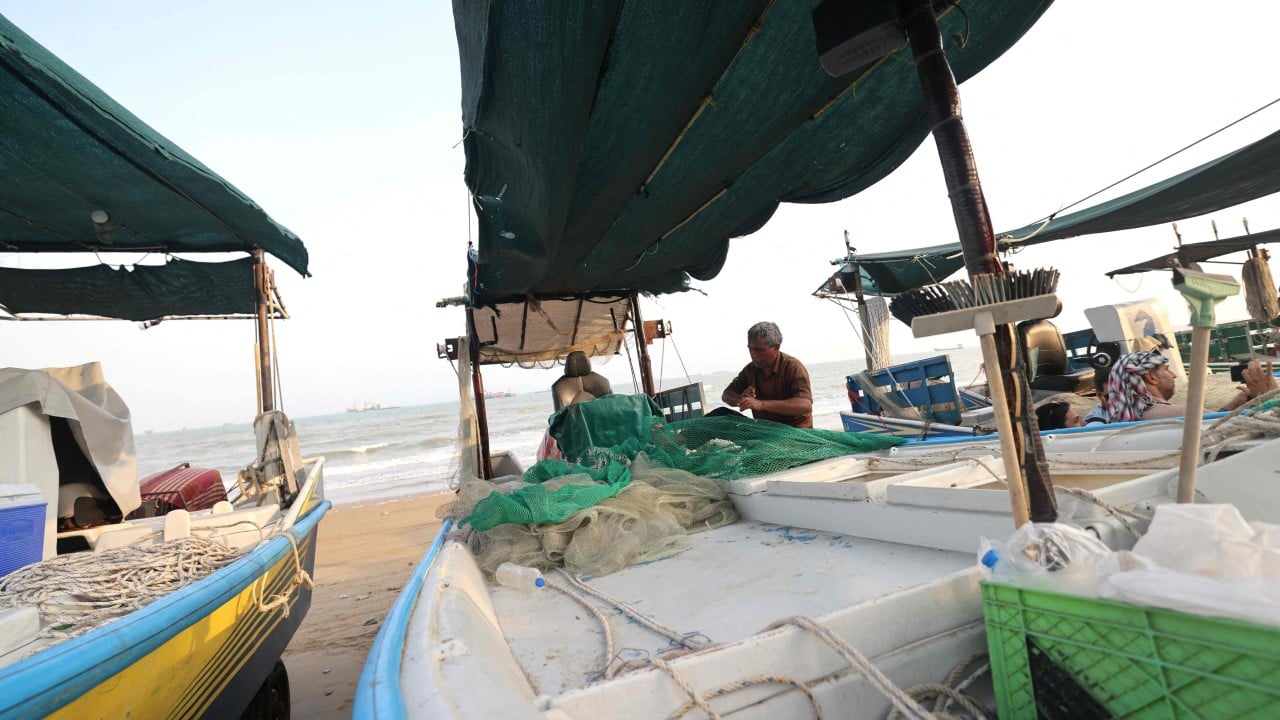
The Strait of Hormuz is one of the narrowest and most volatile waterways on Earth. Right now, it's a graveyard for local livelihoods.
When regional military escalations and United States naval strikes flared up across the Persian Gulf, global headlines focused entirely on oil tankers, missile interceptions, and stock market panic. Nobody talked about the small wooden dhows tied up at concrete docks in ports like Qeshm and Bandar Abbas. They can't fish. They can't afford to sit idle. And they're trapped right in the middle of a geopolitical standoff that doesn't care about their nets. Meanwhile, you can explore similar developments here: The Structural Anatomy of a State Meltdown Behind the Pakistan Fuel Price Protests.
If you look past the macro-level defense analysis, you find a humanitarian pinch that's breaking coastal communities. Fishermen who spent decades hauling mackerel and shrimp out of these warm waters are now burning through their life savings just to keep diesel in generators.
The Economics of a Blocked Chokepoint
Let's talk numbers. Operating an artisanal fishing boat in the Persian Gulf isn't cheap. Fuel prices fluctuate wildly under sanctions, engine parts are difficult to source, and ice isn't free. Under normal circumstances, a single multi-day trip out toward the median line of the Gulf could cover operating costs and leave enough profit to feed an extended family for a month. To see the full picture, we recommend the excellent report by Al Jazeera.
Those circumstances don't exist anymore.
When military authorities restrict maritime traffic, commercial fishing vessels bear the brunt of the kinetic fallout. Coast guards and naval patrols issue sweeping warnings, marine radar zones light up with restricted areas, and gunboats treat any unidentifiable wooden hull with extreme suspicion. Fishermen tell stories of being turned back at gunpoint, their holds empty and their fuel tanks half-burned.
You can't just sail around a naval blockade when your boat has a limited range and the nearest safe harbor is miles away under intense surveillance.
Why Sitting Idle Destroys Families
When boats stay docked, the financial bleeding starts immediately. Most of these men don't earn a fixed salary. They operate on a share system or rely entirely on daily catches to pay off boat loans and debts to local merchants.
When a week passes without a single box of fish hitting the auction floor, debt piles up.
- Fuel Loans: Fishermen buy diesel on credit from local traders, expecting to pay it back post-catch.
- Maintenance Costs: Saltwater corrodes everything. Wooden hulls need constant caulking, and outboard motors require spare parts that have doubled in price.
- Household Survival: Food, medicine, and utilities must be paid for in cash, which disappears the moment the maritime economy freezes.
Families are selling gold jewelry handed down through generations just to buy flour and cooking oil. Some younger crew members are abandoning the docks entirely, packing up their trucks to look for construction work inland, stripping the region of generational maritime knowledge that took centuries to build.
The Broader Impact on Local Food Security
It's easy to view this through a purely strategic lens, but ignoring local fishing has immediate consequences for regional food supply chains. The Persian Gulf supplies fresh protein to millions of inland residents across Iran.
When local catches plummet, prices for imported or farmed fish skyrocket. For households already battered by high inflation, fresh seafood becomes an impossible luxury. The irony is stark: an ocean brimming with marine life remains completely out of reach for the people whose ancestors fished these exact waters before modern borders were drawn.
What Happens Next for the Gulf’s Maritime Workers
Governments and relief agencies rarely account for artisanal fishers when drafting emergency response packages. Major shipping lines get insurance subsidies and rerouting protocols. Defense contractors secure massive budgets. The individual dhow captain holding a frayed nylon net gets a shrug and a warning to stay ashore.
Unless maritime corridors are managed with local economic survival in mind, entire coastal villages risk turning into ghost towns. The fishermen aren't asking for geopolitical handouts. They just want the safety and clearance to untie their ropes, head past the breakwater, and do the only job they've ever known.
Until that happens, staying idle means starvation by a thousand slow cuts.