The November 2026 clash between the US District Court for the Southern District of New York and New Delhi over service of summonses to National Security Advisor Ajit Doval and former Research and Analysis Wing (R&AW) chief Samant Goel is not a routine diplomatic dispute. It represents a structural collision between private civil tort law, international treaty mechanics, and executive sovereign immunity. Standard news coverage reduces this confrontation to rhetorical volleys—highlighting New Delhi’s characterization of Gurpatwant Singh Pannun’s lawsuit as a "fabricated and malicious attack". That framing obscures the actual legal and geopolitical architecture governing the dispute.
When a designated terrorist entity in one jurisdiction files a civil damages claim against sitting and former intelligence chiefs in another, the battle is won or lost on procedural friction long before evidentiary discovery begins. New Delhi’s strategy relies on strict procedural gatekeeping under the Hague Service Convention to neutralize a private litigant's attempt to weaponize US civil courts against foreign state security apparatus.
The Dual-Track Architecture of the Pannun Litigation
To understand New Delhi’s calibrated response, analysts must separate the two distinct legal tracks operating simultaneously in the Southern District of New York. Treating the US judicial response as a monolith leads to severe miscalculations regarding diplomatic risk.
- Track One: Sovereign Criminal Prosecution (
United States v. Nikhil Gupta)
This track is initiated by the US Department of Justice (DOJ). It involves state-to-state security equities, federal prosecutors, and grand jury indictments alleging a murder-for-hire plot involving Nikhil Gupta (who entered a guilty plea) and former Indian official Vikash Yadav. Neither Ajit Doval nor Samant Goel has been indicted in this criminal proceeding. Because this track directly impacts bilateral intelligence cooperation and strategic trust, New Delhi established a high-level inquiry committee and maintained active executive-level engagement with Washington. - Track Two: Private Civil Tort Litigation (
Pannun v. Doval et al.)
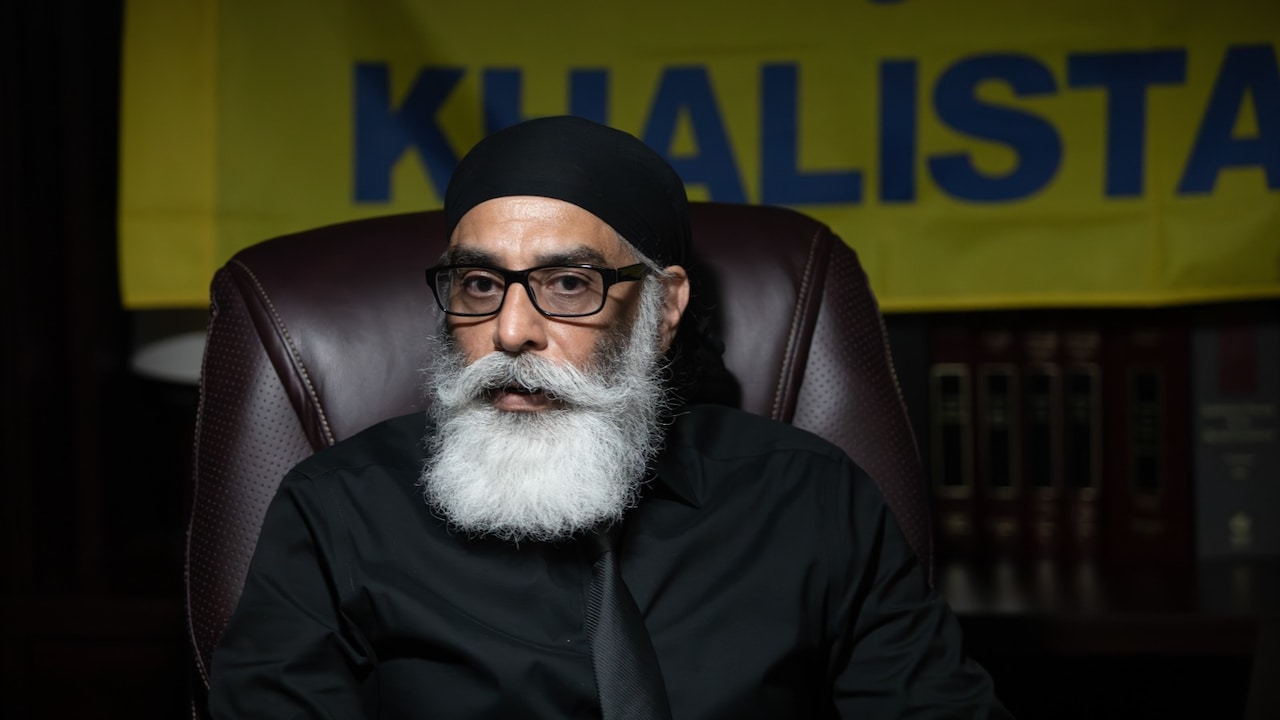
This track is initiated by Gurpatwant Singh Pannun, general counsel for the banned organization Sikhs for Justice (SFJ) and an individual designated as a terrorist by India’s Ministry of Home Affairs under the Unlawful Activities (Prevention) Act. Pannun seeks monetary damages under US civil statutes. Crucially, the US executive branch is not a plaintiff here. When the US State Department transmitted the court's summonses via a diplomatic note to the Indian Embassy in Washington, it explicitly noted that the US government is not a party to the case and cannot represent private litigants.
By isolating Track One from Track Two, New Delhi prevents a non-state actor from dictating the tempo of US-India bilateral relations. Engaging on Track Two would validate the standing of an individual wanted on terrorism charges in India and create a precedent where foreign intelligence leadership can be hauled into domestic civil courts via private lawsuits.
The Procedural Chokepoint: The Hague Service Convention
The core operational bottleneck in Track Two is the service of process—the formal delivery of legal documents establishing a court's jurisdiction over a defendant. Under US Federal Rules of Civil Procedure, a civil suit cannot advance to default judgment or discovery until the plaintiff proves valid service.
Because Doval and Goel reside in India, service is governed by the 1965 Hague Convention on the Service Abroad of Judicial and Extrajudicial Documents in Civil or Commercial Matters, to which both the United States and India are signatories.
The Three-Stage Procedural Deadlock
- Central Authority Gatekeeping (Article 5): Under the treaty, foreign judicial requests must be routed through a signatory's designated Central Authority. Ministry of External Affairs (MEA) spokesperson Randhir Jaiswal explicitly reinforced this boundary on November 10, 2026, stating that judicial document requests in India can only be routed through the Ministry of Law and Justice.
- The Sovereignty Exception (Article 13): The Hague Convention is not an unconditional delivery mechanism. Article 13 permits a signatory state to refuse compliance with a service request if it deems that execution would infringe upon its sovereignty or security. When Pannun's legal team attempted to serve summonses through India's designated Central Authority, the request was rejected. Targeting the sitting National Security Advisor and a former foreign intelligence chief over alleged state security operations falls squarely within the classic definition of an Article 13 sovereignty defense.
- The Alternative Service Workaround (Article 19 and Diplomatic Channels): Blocked at the Central Authority, the plaintiffs sought alternative routes. First, summonses were transmitted via a State Department diplomatic note to the Indian Embassy—a channel India rejects for private civil suits because diplomatic missions are inviolable under the Vienna Convention on Diplomatic Relations and cannot act as process servers for private plaintiffs. Second, on November 9, 2026, the US District Court issued an order invoking Article 19 of the Hague Convention alongside provisions of India's Code of Civil Procedure, requesting Indian courts directly to facilitate the service of summonses.
Article 19 allows transmission methods permitted by the internal law of the destination state. However, this creates an immediate structural paradox: Indian domestic courts operate under Indian statutory law and executive sovereignty doctrines. An Indian court is structurally disincentivized—and legally constrained under Section 86 of the Indian Code of Civil Procedure and sovereign immunity principles—from executing foreign civil process against its own highest-ranking national security officials on behalf of a fugitive designated under domestic anti-terror legislation.
The Cost Function of Engagement vs. Non-Appearance
When foreign state officials are named in US civil suits—frequently under the Alien Tort Statute (ATS) or the Torture Victim Protection Act (TVPA)—the defendant state faces a strict decision matrix. Every available legal move carries measurable political and financial costs.
Option A: Entering a Limited Appearance to Contest Jurisdiction
New Delhi could retain US counsel to enter a special appearance in the Southern District of New York solely to file a motion to dismiss based on Foreign Official Immunity (governed by US common law following the Supreme Court's ruling in Samantar v. Yousuf) and lack of personal jurisdiction.
- The Upside: US courts routinely dismiss civil suits against foreign intelligence and security officials when the conduct alleged was performed in an official capacity, particularly if the US State Department files a Suggestion of Immunity.
- The Cost: Retaining US litigation counsel and filing motions places Indian state officials on the docket of a foreign municipal court. Even a limited appearance exposes the state to prolonged procedural skirmishes, legal fees running into millions of dollars, and media cycles treating the allegations as standard civil disputes rather than sovereign security matters.
Option B: Total Procedural Non-Engagement
This is the path New Delhi has selected. By refusing service at the Central Authority, rejecting diplomatic note transmittals, and dismissing the filings publicly as "frivolous lawsuits," India denies the US court personal jurisdiction over the individual defendants.
- The Upside: Zero legitimizing of the plaintiff. The Indian state avoids spending public capital defending its intelligence leadership in a foreign forum brought by a proscribed separatist.
- The Cost (The Default Judgment Risk): If a US district judge eventually rules that alternative service methods (such as publication, email, or failed Central Authority attempts under Hague Convention Article 15) satisfy due process, the court could theoretically enter a default judgment against the non-appearing defendants. However, a default judgment against foreign intelligence chiefs carries near-zero enforceability: Doval and Goel do not hold personal commercial assets in the United States subject to attachment, and Indian courts will never enforce a US civil judgment issued against Indian security officials over sovereign acts.
Lawfare as an Asymmetric Weapon System
Mainstream reporting misses the strategic objective behind Pannun's filing. In modern asymmetric conflict, lawfare—the use of legal systems and institutions to achieve operational or political objectives—does not require a final courtroom victory to succeed.
For Sikhs for Justice, the return on investment occurs during the pre-trial procedural phase:
- Information Operations: Every procedural order—such as a US judge signing a routine administrative request to transmit summonses—is packaged into media headlines implying judicial validation of the underlying allegations.
- Diplomatic Friction: By forcing the US State Department to transmit diplomatic notes on behalf of a private plaintiff, the litigant creates recurring administrative friction between Washington and New Delhi.
- Deterrence Signaling: Naming the sitting National Security Advisor and former R&AW chief directly aims to impose reputational and travel friction on senior Indian security architects, attempting to raise the personal cost of counter-separatist operations abroad.
Limitations of the Current Legal Architecture
No defense strategy in transnational litigation is airtight. New Delhi’s procedural blockade operates within specific structural vulnerabilities:
- Hague Convention Article 15 Override: Under Article 15 of the Hague Service Convention, a US judge is empowered to give judgment even if no certificate of service has been received, provided the document was transmitted by a treaty-compliant method, a period of not less than six months has elapsed, and every reasonable effort has been made to obtain service through the competent authorities. While judges apply this cautiously against foreign officials, the treaty explicitly prevents a defendant state from indefinitely paralyzing a docket merely by ignoring Central Authority requests.
- Divergence Between Executive and Judicial Branches: The US government operates under a strict separation of powers. Even when the White House and State Department prioritize the US-India Comprehensive Global Strategic Partnership, they cannot unilaterally order a federal district judge in New York to dismiss a private plaintiff's docket without formally intervening via a Statement of Interest or Suggestion of Immunity.
Strategic Forecast and Operational Play
New Delhi must maintain absolute procedural discipline by refusing to enter an appearance in the Southern District of New York while shifting the battleground to executive-level diplomacy in Washington. Indian courts will inevitably decline or stall the US court's November 9 Article 19 request on grounds of domestic statutory immunity and public policy, effectively freezing the summons pipeline inside India.
To neutralize the downstream risk of a US judge invoking Article 15 to authorize alternative electronic service or default proceedings, India's diplomatic mission in Washington should bypass the courtroom entirely and press the US Department of State and Department of Justice to file a formal Suggestion of Immunity under Samantar v. Yousuf—establishing on the federal docket that sitting and former heads of foreign national security apparatus enjoy status- and conduct-based immunity from private civil suits, thereby forcing the court to dismiss the action sua sponte without India ever stepping foot in the litigation.