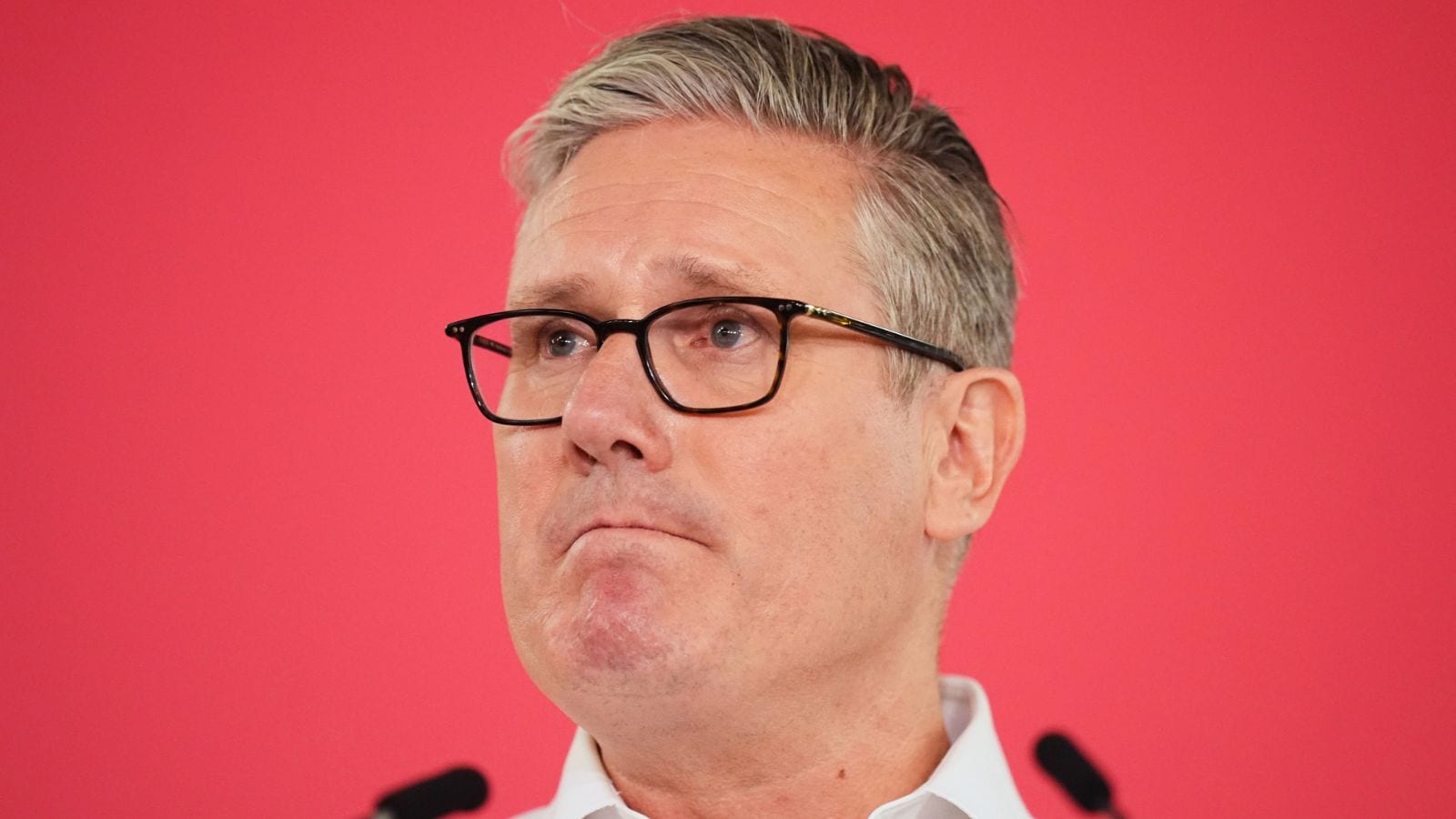
Keir Starmer isn't going anywhere. At least, that's what he's telling his Cabinet. Despite a brutal set of local election results and a mounting rebellion within his own party, the Prime Minister is digging in. He’s basically dared his rivals to try and force him out. If you're looking for a quick exit or a clean transition, you're not going to get it today.
The reality is that Starmer is betting on the complexity of Labour’s own rules to buy himself time. He told his Cabinet on Tuesday morning that the "threshold for a leadership challenge has not been met." It's a technical defense, but it's the only one he has left. He’s essentially saying, "If you want me out, come and get me." Meanwhile, you can find other developments here: Geopolitical Rent and the Strait of Hormuz Asset Devaluation.
The Rebellion Within the Ranks
This isn't just a few disgruntled backbenchers. We're looking at a serious, coordinated effort to end his premiership. Over 80 Labour MPs have now publicly called for him to set a resignation date. That’s a massive number. It’s no longer a fringe movement; it’s a full-blown mutiny.
The departure of Miatta Fahnbulleh, the communities minister, was a particularly heavy blow. She didn't just quit; she urged him to "do the right thing" and set a timetable for an orderly transition. When junior ministers start jumping ship and publicly telling the boss to resign, you know the water is rising. To understand the complete picture, check out the recent article by USA Today.
Why the Local Elections Were the Breaking Point
Voters sent a clear message in last week’s local elections. Labour didn't just lose; they were hammered. After less than two years in power, the party's honeymoon hasn't just ended—it’s been incinerated.
- Voter Apathy: People didn't just switch to other parties; many simply stayed home.
- The Left's Revenge: The left wing of the party, which Starmer has spent years trying to sideline, is now using these results as proof that his centrist "service" model isn't working.
- The Reform Factor: While Labour struggled, Reform UK and the Conservatives found ways to chip away at the 2024 coalition that brought Starmer to power.
Starmer’s response has been to promise "change" and "boldness," but we've heard that before. His speech on Monday was supposed to be a reboot. Instead, it felt like a rerun.
The Cabinet's Cold Comfort
Publicly, the big guns are still standing by him. Pat McFadden and Liz Kendall have been out in front of the cameras doing the usual "carry on governing" routine. But don't let the public unity fool you. Behind the scenes, the atmosphere is toxic.
Reports suggest that Home Secretary Shabana Mahmood and Foreign Secretary Yvette Cooper are among those who have expressed serious concerns. They haven't called for him to quit yet, but they aren't exactly rushing to the barricades to defend him either. They’re watching the numbers. They’re waiting to see if the momentum for a challenge becomes unstoppable.
The Technicality Trap
Starmer is relying on the Labour Party’s rulebook to stay in office. To trigger a formal leadership challenge, 20% of Labour MPs need to sign a letter of no confidence. With a parliamentary party of this size, that’s a high bar. He knows that as long as he has the Cabinet's nominal support, the backbenchers are stuck in a stalemate.
But governing isn't just about surviving votes. It's about authority. And Starmer’s authority is effectively gone. When the Treasury chief, Rachel Reeves, pulls out of major business events to attend "emergency" Cabinet meetings, the markets notice. This kind of instability has a real-world cost. It makes it impossible to pass controversial legislation or project strength on the international stage.
What Needs to Happen Now
If Starmer wants to survive more than a few weeks, he needs to do more than just "dig in." He needs a radical shift in strategy. Honestly, he’s running out of road.
If you’re watching this play out, here is what to look for in the next 48 hours:
- More Ministerial Resignations: If another two or three junior ministers quit, the "threshold" Starmer talks about won't matter anymore. The government will simply cease to function.
- The 1922 Equivalent: Watch the Parliamentary Labour Party (PLP) meetings. If the mood there turns from grumbling to open hostility, the Chief Whip won't be able to hold the line.
- A Challenger Emerges: Right now, everyone is waiting for someone else to move first. If Wes Streeting or Andy Burnham (provided he finds a way back to Parliament) makes a move, the dam will break.
The Prime Minister thinks he can govern his way out of this. He can’t. You can't lead a country when your own MPs are checking the clock on your exit. The next few days won't just decide Starmer’s career; they’ll decide the direction of the country for the next three years. Keep your eyes on the resignation letters. That’s where the real story is being written.