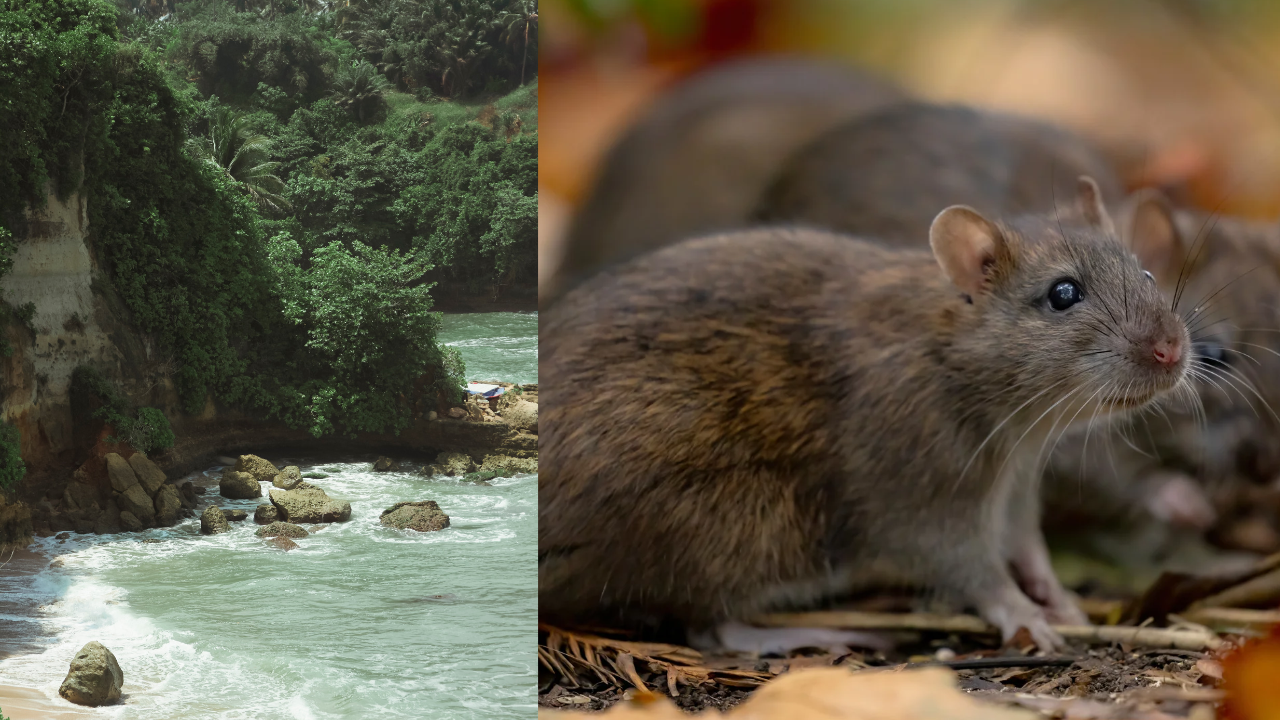
Wildlife agencies love a clean body count. Survey six offshore islands, find invasive rats on five and iguanas on one, draw up an eradication budget, and declare victory for nesting seabirds.
It makes for a great press release. It is also ecologically reckless. Meanwhile, you can read other events here: The Structural Realignment of Los Angeles Municipal Power.
The prevailing orthodoxy in island conservation treats invasive species removal like a simple math problem: subtract the predator, and the native prey bounces back. Spend five minutes looking at actual restoration outcomes across the Pacific and Caribbean, however, and that tidy equation falls apart. When federal and territorial wildlife teams survey remote cays and immediately gear up for total eradication without mapping the broader trophic web, they routinely trigger secondary ecological collapses that wipe out the very birds they set out to protect.
The Myth of the Pristine Baseline
Conservation biology has a nostalgia problem. Most eradication campaigns operate under the delusion that removing a few non-native vertebrates will magically rewind an island ecosystem to a pre-human Eden. To explore the complete picture, we recommend the detailed report by BBC News.
It will not. Ecosystems do not run in reverse.
Once an invasive species like the black rat (Rattus rattus) or the green iguana (Iguana iguana) occupies an island for decades, it stops being a mere intruder and becomes a structural load-bearing wall in the local food web. Rats do not just eat seabird eggs and chicks. They suppress invasive invertebrates, consume massive quantities of non-native plant seeds, and keep other, often worse, mesopredators in check.
I have watched conservation boards burn millions of dollars on aerial rodenticide drops, only to return three years later to find an island choked by invasive vines that the rats used to eat, leaving ground-nesting terns and shearwaters with zero bare earth to lay their eggs. You traded a mammal that ate 30 percent of the chicks for a botanical smothering that dropped breeding success to zero.
The Iguana Misdirection
Consider the survey finding of invasive iguanas on a single offshore island. To the average bureaucrat, a giant non-native lizard on a seabird cay is an obvious target. Green iguanas are predominantly herbivorous, yet they occasionally raid burrows, compete with native reptiles, and collapse fragile nesting tunnels with their weight.
Here is what the standard eradication blueprint misses: on many tropical and subtropical cays, large herbivorous reptiles act as the primary grazers keeping coastal scrub from turning into an impenetrable wall of woody brush.
Imagine a scenario where a wildlife crew systematically traps and removes every iguana from a 50-acre offshore cay to protect burrowing petrels. Within twenty-four months, without heavy browsing pressure, fast-growing coastal shrubs and invasive grasses explode across the sandy flats. The root systems bind the soil so tightly that the petrels can no longer excavate their burrows. The eradication succeeded on paper, and the colony vanished anyway.
Trophic Cascades and Mesopredator Release
The biggest blind spot in modern island surveys is single-taxon tunnel vision. Surveying for rats and iguanas tells you who is on the island. It tells you nothing about what happens the day after you poison them.
In ecology, this is known as mesopredator release and competitor release—the sudden population explosion of a secondary pest once the dominant invasive species is removed. Ecologist Franck Courchamp and his colleagues documented this exact phenomenon decades ago, yet field managers still act surprised when it happens on their watch.
When you remove rats from an island without simultaneously managing the rest of the food web, three predictable disasters tend to follow:
- Invertebrate Explosions: Rats are voracious consumers of land crabs, giant centipedes, and introduced ants. Remove the rats, and populations of aggressive invasive ants—like the yellow crazy ant (Anoplolepis gracilipes) or tropical fire ant (Solenopsis geminata)—can surge by orders of magnitude. Unlike rats, which usually take an egg or a single chick, swarming ants blind hatchlings, swarm nest cavities, and force adult seabirds to abandon entire colonies.
- Vegetation Choke-Out: Rats suppress both native and non-native fruiting plants by eating seeds and seedlings. When rodent grazing stops overnight, invasive weeds like buffelgrass or leucaena often dominate the canopy, eliminating the open ground required by boobies, noddies, and terns.
- Hyperpredation: If an island also harbors feral cats, barn owls, or native raptors that rely heavily on rats for 80 percent of their diet, wiping out the rodents forces those predators to switch 100 percent of their hunting effort onto the remaining seabirds. Unless every single predator is removed simultaneously, the birds get slaughtered during the transition.
The Collateral Damage Nobody Puts in the Press Release
Let us talk about how rats are actually removed from offshore islands. You do not catch ten thousand rats on a rugged, windswept rock using snap traps. You drop tons of cereal pellets laced with brodifacoum—a second-generation anticoagulant rodenticide—from helicopters.
Brodifacoum is brutally effective, and it does not discriminate.
While wildlife agencies routinely claim that non-target mortality is temporary and acceptable for the greater good, the field data is far messier. Gulls, rails, shorebirds, and land crabs eat the bait pellets directly, or scavenge the carcasses of poisoned rats. In documented eradications across the Pacific, non-target bird populations have suffered severe crashes alongside the rodents. Even worse, brodifacoum persists in the soil and marine intertidal zones far longer than standard models admit, bioaccumulating in coastal fish and reef invertebrates that seabirds feed on.
To be clear: doing nothing is not a silver bullet either. On islands where black rats have recently arrived, left unchecked, they can extirpate burrowing seabird colonies within a decade. Nobody with a functioning brain argues that rats belong on oceanic islands. The failure is not in wanting the rats gone; the failure is treating eradication as a standalone surgical strike rather than a multi-decade ecological engineering commitment.
Stop Asking How Many Rats Are on the Island
If you look at the questions the public and policymakers ask after these surveys, they are almost always focused on the wrong metrics:
- "How quickly can we wipe out the rats and iguanas?"
Speed is the enemy of durable restoration. Rushing into a poison drop before mapping invertebrate baselines and seed banks guarantees unpleasant surprises. - "Will the seabirds immediately return once the predators are gone?"
Rarely. Seabirds are intensely philopatric—they return to the exact islands where they hatched. If a colony has been wiped out, removing rats leaves you with an empty, predator-free rock. Without acoustic playback systems, decoys, and social attraction protocols, an island can sit empty for twenty years while surrounding invasive plants take over. - "How much does an eradication cost?"
The upfront helicopter drop is the cheap part. The real cost—the part agencies routinely underfund—is twenty years of biosecurity, quarantine enforcement, and habitat management.
One fishing boat tying up to an offshore cay to wait out a storm can drop two pregnant rats onto the beach, undoing a $3 million eradication in a single night. Without permanent biosecurity infrastructure and local enforcement, island eradication is just an expensive, repetitive hamster wheel.
What Actual Island Restoration Looks Like
If wildlife agencies want to stop wasting taxpayer money on half-baked eradications, they need to abandon the simple "survey and poison" playbook and adopt a whole-ecosystem triage model:
- Map the Plant and Invertebrate Web First: Before a single bait bucket is loaded onto a helicopter, spend at least two full breeding seasons monitoring invasive ant densities, land crab populations, and soil seed banks. If invasive weeds are sitting dormant in the dirt waiting for rat grazing to stop, you need a vegetation management plan funded and ready before the drop happens.
- Sequence the Removals: Never remove a dominant invasive species while leaving a subordinate invasive species intact. If an island has both rats and invasive ants, or rats and invasive iguanas, you model the competitive release first. Sometimes, suppressing a mesopredator before touching the rats is the only way to keep the seabirds alive.
- Invest in Suppression Over Eradication Where Appropriate: On islands near mainland ports or heavy recreational boat traffic, total eradication is a fantasy because reinvasion is guaranteed. In those zones, targeted, seasonal predator suppression around active nesting colonies during the breeding window yields higher chick survival at a fraction of the ecological risk.
- Pair Every Removal with Active Habitat Engineering: Clearing predators without restoring native coastal vegetation and deploying social attraction systems is like building a hospital with no doctors. You have to actively plant native groundcover and call the birds back.
Surveying six islands and counting the rats and iguanas is the easy part. Any field crew with a clipboard and some trail cameras can pull that off in a month. Until conservation agencies stop treating complex island food webs like simple pest-control jobs, they will keep winning the eradication battles while losing the birds.