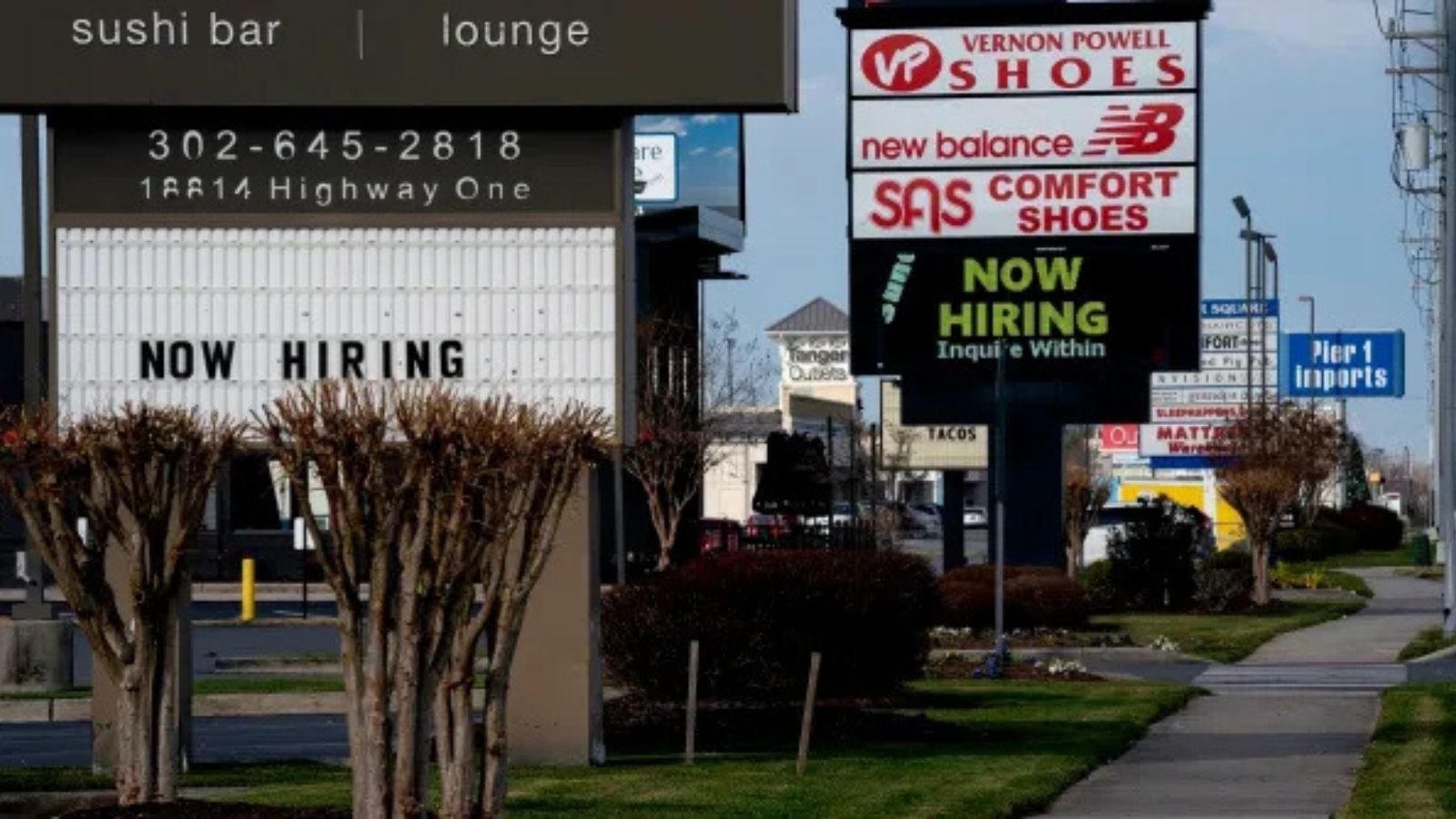
The addition of 115,000 jobs to US payrolls during an active conflict with Iran contradicts standard macroeconomic models that predict immediate contraction in the face of exogenous energy shocks. This figure does not merely represent a "surprise"; it serves as a data point confirming a structural decoupling between geopolitical risk and domestic service-sector demand. The traditional transmission mechanism—where conflict leads to oil price spikes, which drive inflation and erode consumer confidence—has been blunted by the United States’ transition to a net energy exporter and the extreme tightness of the current labor supply.
To understand why the labor market remains indifferent to a regional war, we must isolate three distinct drivers: the insulation of the domestic energy supply, the lag in corporate capital expenditure (CAPEX) retreats, and the "labor hoarding" phenomenon resulting from a decade of demographic shifts.
The Triad of Domestic Market Resilience
The stability of the 115,000 print rests on three structural pillars that neutralized the "shock" variables typically associated with Middle Eastern instability.
1. Energy Independence as a Macroeconomic Buffer
In previous decades, a war involving Iran would trigger a symmetrical contraction in US non-farm payrolls due to the high sensitivity of the Consumer Price Index (CPI) to global crude prices. Today, the US energy sector operates as a counter-cyclical hedge. As global Brent prices rise due to conflict risk, domestic extraction and refining activity increases. The labor demand in the Permian Basin and related midstream infrastructure partially offsets losses in energy-sensitive sectors like logistics and air travel.
2. The Persistence of Service Sector Demand
The 115,000 jobs were heavily concentrated in healthcare, social assistance, and government—sectors largely immune to the psychological impact of foreign wars. These industries are driven by domestic demographics rather than global trade sentiment. The healthcare sector alone contributes a baseline of growth that functions as a "floor" for the monthly jobs report, regardless of the geopolitical climate.
3. Asymmetric Information Processing in the Private Sector
Large-scale layoffs require a shift in long-term growth expectations. Corporate boards currently view the Iran conflict as a localized regional event rather than a precursor to a global depression. Consequently, hiring freezes have been selective rather than universal. The current hiring rate suggests that firms are prioritizing the "cost of vacancy" over the "risk of overcapacity."
Quantifying the Iran Conflict Transmission Mechanism
Standard economic theory suggests three primary channels through which a war impacts domestic hiring. By measuring these channels, we can see why the 115,000 figure is logically consistent with current data.
- The Inflation Channel: Conflict in the Strait of Hormuz threatens 20% of the world’s liquefied natural gas (LNG) and oil flow. While this causes a "headline" inflation spike, the Federal Reserve’s focus on "Core CPI" (which excludes food and energy) means that immediate interest rate hikes—the primary killers of job growth—are less likely unless the energy shock bleeds into secondary goods and services.
- The Uncertainty Channel: The VIX (Volatility Index) often spikes during the onset of war, leading to a "wait-and-see" approach in hiring. However, the duration of the current conflict has allowed markets to price in the risk, moving it from an "unknown unknown" to a "known risk." This transition allows HR departments to resume normalized hiring cycles.
- The Supply Chain Channel: Unlike the COVID-19 pandemic, which caused a global halt in manufacturing, the Iran conflict is geographically concentrated. US manufacturing, which added a modest but positive number of roles, has diversified its supply lines away from regions directly impacted by Middle Eastern maritime lanes.
The Labor Hoarding Paradox
A critical factor ignored by surface-level analysis is the difficulty firms face in re-hiring talent. The 115,000 growth rate exists because the "separation rate" (quits and layoffs) remains historically low.
The cost of recruiting, onboarding, and training a new employee has escalated to a point where firms are willing to maintain payrolls even during periods of reduced revenue. This "labor hoarding" acts as a shock absorber. Even if a manager expects a 5% dip in Q3 revenue due to war-related costs, they are unlikely to cut staff if they believe the conflict will resolve within six months, as the cost of losing skilled labor exceeds the short-term savings of a RIF (Reduction in Force).
Analyzing Sectoral Divergence
The "strong" 115,000 number is not a monolithic gain; it is a net result of significant internal churn. To assess the health of the economy, we must look at the delta between cyclical and non-cyclical industries.
High-Growth Non-Cyclical Sectors
- Healthcare and Education: These sectors added roughly 60,000 jobs. This is "structural growth" dictated by the aging US population. It is essentially decoupled from the Iran war.
- Professional and Technical Services: Growth here indicates that high-level consulting and digital transformation projects are continuing, signaling that the "knowledge economy" does not see the war as a threat to its operational model.
Vulnerable Cyclical Sectors
- Leisure and Hospitality: This sector showed the most significant deceleration. Higher fuel prices translate to higher airfares and lower discretionary spending. The fact that this sector did not go into the negative is the true "surprise" of the report.
- Retail Trade: Minimal gains here suggest that the "wealth effect"—where consumers feel poorer because of stock market volatility or high gas prices—is beginning to take hold, even if it hasn't yet triggered net layoffs.
The Limitation of the 115,000 Metric
While the headline number suggests strength, a deeper audit reveals cracks in the "quality" of the labor market. The 115,000 jobs are primarily part-time or low-wage service roles.
- The Household vs. Establishment Survey Gap: While the Establishment Survey (firms) showed a gain of 115,000, the Household Survey (individuals) often shows a rise in people taking on second or third jobs. This suggests that the "resilience" is driven by economic necessity rather than corporate expansion.
- Wage-Push Inflation Risks: Average hourly earnings grew by 0.4% in the same period. In a war environment, this is a double-edged sword. It keeps consumer spending alive, but it also forces the Federal Reserve to maintain high interest rates to prevent a wage-price spiral.
- The Manufacturing Ceiling: Manufacturing growth has plateaued. The high cost of capital, exacerbated by geopolitical risk premiums in the bond market, has made factory expansion prohibitively expensive.
Structural Bottlenecks in the Current Economy
The primary constraint on the US labor market is no longer a lack of demand, but a lack of available supply. This is why a war doesn't crush job numbers like it used to. With the unemployment rate hovering near historic lows, the 115,000 figure represents almost the entirety of the "available" pool of labor that firms could successfully recruit.
The bottleneck is composed of:
- Skills Mismatch: The jobs being created (AI, green energy, specialized nursing) do not match the skills of the workers being displaced by the war's impact on traditional retail or logistics.
- Geographic Immobility: High mortgage rates make it impossible for workers to move to where the 115,000 new jobs are located, creating localized labor shortages in "hot" zones like Texas and the Southeast while the Rust Belt stagnates.
Strategic Forecast for Q3 and Q4
The 115,000 print is a lagging indicator. It reflects hiring decisions made 30 to 60 days ago, often before the most recent escalation in the Iran conflict. Therefore, the strategic reality is more precarious than the headline suggests.
The "Shock Absorption" phase is now ending. Businesses have priced in the initial conflict, but they have not priced in a multi-year regional war. If energy prices sustain levels above $100 per barrel for more than two consecutive quarters, the "labor hoarding" strategy will fail. CFOs will shift from "talent preservation" to "capital preservation."
The Strategic Play for Market Participants
Investors and operators should ignore the "total jobs" figure and focus exclusively on the Quit Rate and Temporary Help Services.
- A decline in Temporary Help Services (which often leads the broader market by 3-6 months) would be the first signal that the Iran war has finally breached the defenses of the US domestic economy.
- Watch the Yield Curve. If the 10-year Treasury yield continues to bake in a "war premium," the cost of corporate debt will force a round of "efficiency-based" layoffs by Q4, regardless of how "strong" the current 115,000 number appears.
The current resilience is a testament to the sheer momentum of the post-pandemic recovery and the insulation of the US energy market. However, 115,000 is the "stall speed" of the US economy. Anything lower in the coming months will signal that the geopolitical friction has finally overcome the structural inertia of the domestic service sector. Focus on the durability of the service-sector "floor" rather than the volatility of the manufacturing "ceiling."