The air inside the stadium did not feel like oxygen. It felt like history, compressed and waiting to ignite.
You could smell it on the concourse—the heavy, sulfurous scent of pyrotechnics mingling with the damp wool of thousands of jackets. You could feel it in the hum of the concrete floor under your sneakers, vibrating with a collective, nervous pulse. Everyone in the building knew the coordinates of the evening. They knew they were watching a sunset.
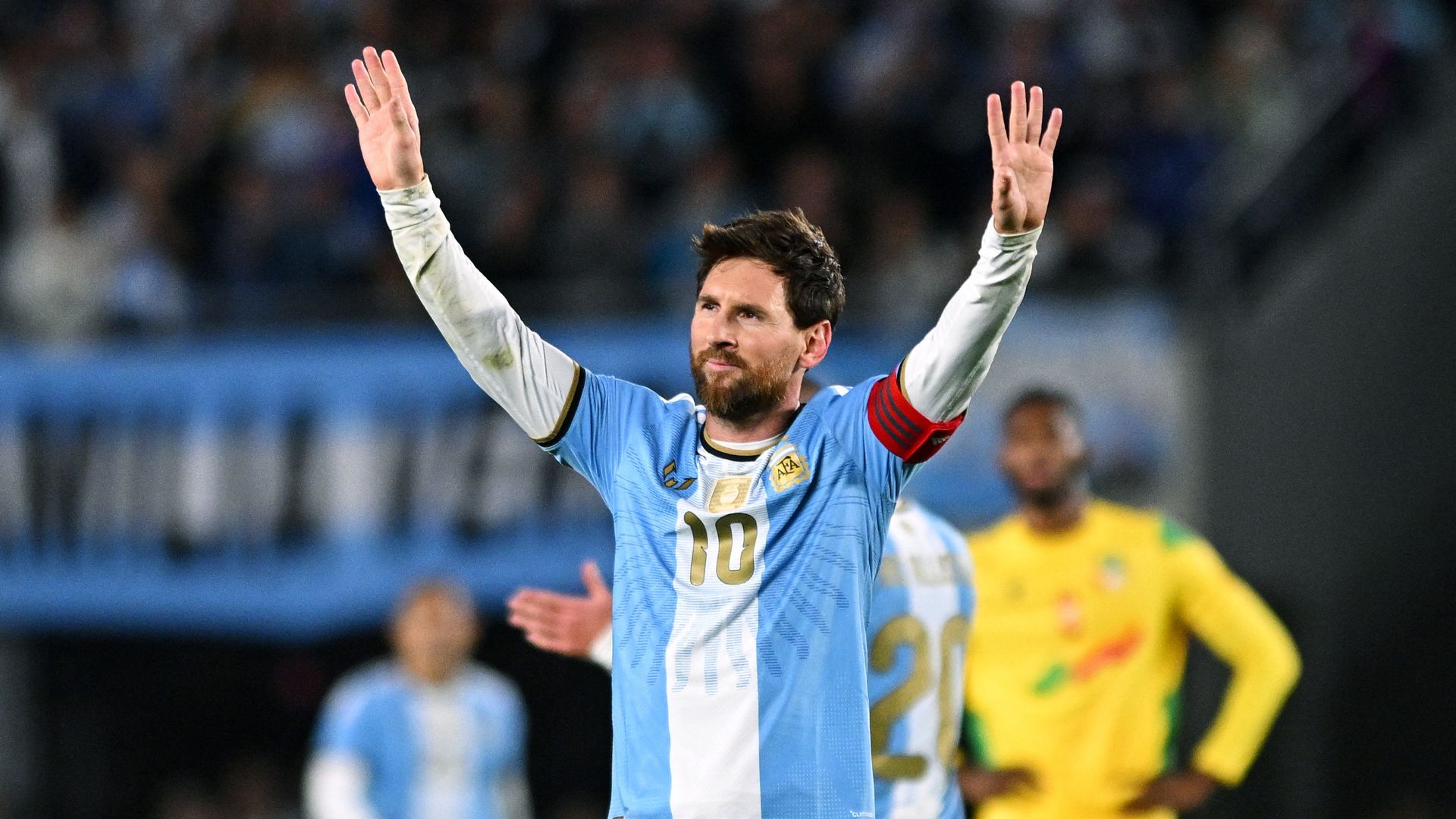
Lionel Messi walked out of the tunnel, and the sound hit you before you could process his face. It was not a cheer. It was a roar that sounded like a collective exhale of a nation that had spent decades holding its breath.
For two decades, the narrative of modern football had been written around his feet. Every touch was an editor's note; every goal was a sentence that changed the syntax of the sport. Yet, standing there under the brutal white glare of the floodlights, surrounded by the churning sea of sky-blue and white stripes, the numbers didn't matter. The Ballon d'Ors tucked away in some Barcelona trophy room didn't matter. The tactical setup didn't matter.
Only the silence mattered. The brief, terrifying pause before the whistle blew.
We forget how fragile greatness actually is. We treat icons like monuments, carved from marble and immune to weather. But look closely at the corners of a player's eyes when the national anthem swells for what everyone suspects is the final time. That isn't marble. That is skin. That is bone, tired from twenty years of carrying the ambitions of forty-five million people who viewed him not merely as an athlete, but as a secular savior.
When he scored, the net didn't just bulge; it sighed.
It was a quiet goal, relative to his catalog of miracles. No slaloming through six defenders like training cones, no impossible chip from an angle that defied Euclidean geometry. Just the familiar, economical geometry of a man who has calculated the physics of a football field so many times that his body does the math while his mind is somewhere else entirely. A short pass, a subtle shift of weight, a low left-footed drive tucked neatly inside the post.
The stadium detonated.
I watched an old man two rows down, his face buried in calloused hands, weeping with the abandon of a child who had just found a lost pet. Beside him, a teenager in a replica jersey from 2014—faded at the seams and stained with old beer—was screaming until his voice cracked into a jagged whistle. They didn't know each other. They didn't need to. They were bound by the same fragile, fleeting realization that they were witnessing the end of an era.
Everything in sports is designed to move forward. The calendar waits for no one. The next generation of prodigies is already lacing up their boots on dusty pitches in Rosario, in Madrid, in Manchester, running faster, jumping higher, sweating out the old guard. Time is an unmerciful auditor. It takes our heroes piece by piece until nothing is left but highlights on a screen and fading ink in a record book.
And yet, as Messi turned toward the roaring curve of the stand, kissing the badge over his heart not out of habit, but with the deliberate slowness of a man memorizing a view he will never see again, time seemed to stall.
This is what we miss when we reduce sport to spreadsheets and expected goals. We treat matches as transactions. Three points. Goal difference. Qualification secured. But football, at its deepest psychological level, is an emotional proxy war against our own mortality. We invest our hopes in these fleeting, brilliant bodies because they do what we never can: they cheat time, if only for ninety minutes. They make us feel weightless in a world heavy with bills, grief, and ordinary failures.
When Messi leaves the pitch for the final time in those colors, he won't just be walking off a rectangle of grass. He will be closing a chapter of collective memory that cannot be rewritten or replaced.
The stadium lights began to hum as the crowd slowly, reluctantly dispersed into the cool night air. The confetti drifted down like tired snow, settling on empty seats and turning them into blue-and-white mosaics. Out there in the dark, the city of Buenos Aires was already waking up, horns blaring, flags waving, refusing to let the night end.
They know what is coming. The quiet after the storm. The realization that the sun has finally set on the greatest show our generation will ever see. But for now, just for tonight, the air still tastes like magic.