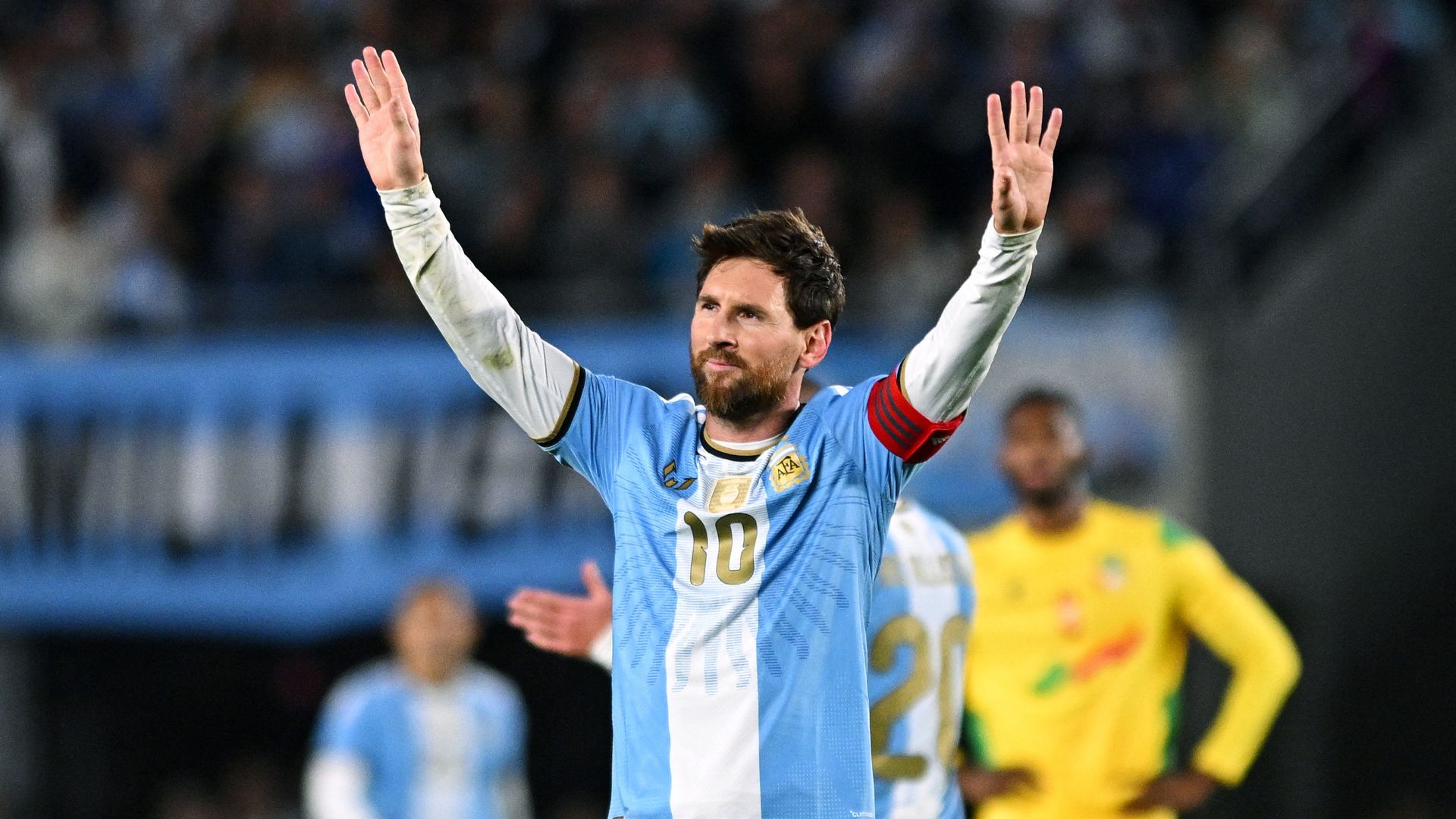
The emotional farewell tour is the laziest ritual in modern sports journalism. When the mainstream media covers a legend walking away from national team duty, they treat it like a royal funeral. We get endless montages of childhood photos, tear-eyed close-ups in the 89th minute, and breathless tributes about carrying the weight of a nation. It is pure, unfiltered sentimentality designed to bypass your critical faculties.
The lazy consensus surrounding Lionel Messi and his Argentina national team career is that his final international matches represent a tragic parting of ways, a painful severing of a sacred bond between a genius and his people. The narrative goes that Argentina without Messi is a hollowed-out shell, an existential crisis waiting to happen.
That perspective is fundamentally wrong.
The truth is that Messi staying past his physical expiration date on the international stage risked crippling the very system that finally learned how to win with him. International football is not a charity for emotional closure. It is an elite, ruthless competition where sentimentality is a fatal vulnerability. Argentina needed to move past the obsession with a single savior years ago, and his permanent exit is not a tragedy. It is the best thing that could happen to the Albiceleste.
Let us look at the mechanics of how modern national teams operate. For over a decade, Argentina suffered from a tactical disease known as Messi-centrism. Every manager, from Diego Maradona to Jorge Sampaoli, suffered from the same mental paralysis. They built tactics around a simple premise: give the ball to Messi and pray. When that failed, they blamed everyone else for failing to match his standard.
This approach treated ten world-class professional footballers as auxiliary support staff. It created a psychological crutch. When the pressure mounted in major tournaments, the entire squad froze because they waited for one man to pull off a miracle. That is not a functional sporting ecosystem. That is a dependency culture.
The shift under Lionel Scaloni only succeeded because Scaloni understood a brutal truth that the media refuses to accept. Scaloni stopped treating Messi like a deity and started treating him like an extraordinarily lethal tactical weapon who needed a defensive shield. Scaloni built a functioning, ferocious collective machine of runners, tacklers, and distributors—Rodrigo De Paul, Enzo Fernandez, Alexis Mac Allister—who could survive without Messi carrying every single possession.
When commentators wax poetic about how Argentina cannot possibly exist without their captain, they ignore the physical reality of elite athletics. Messi at thirty-eight cannot press for ninety minutes. In modern tactical setups, a player who opts out of defensive transition requires every other outfield player to cover an extra twenty percent of the pitch. During the qualifiers and the latter stages of major tournaments, opposing teams actively exploited that defensive vacuum.
If Scaloni or his successors had continued to bend the entire tactical architecture around an aging legend out of emotional obligation, Argentina would have regressed. The team would have turned into a nostalgia act, reliant on late-game individual brilliance while getting overrun in midfield by younger, faster, athletically superior European blocks.
The media loves to ask: How can Argentina ever replace Messi?
The question itself is flawed. You do not replace a once-in-a-century anomaly with a clone. You change the math entirely. You replace a singular individual focal point with structural discipline, tactical versatility, and distributed responsibility.
Look at what happened to Brazil after Pele, or Germany after Franz Beckenbauer, or even Barcelona after Messi left Camp Nou. The initial panic gives way to tactical diversification. Without a vacuum-sucking gravitational pull in the final third, young attackers stop looking for one primary passing outlet and start making unpredictable runs. Systems evolve because they have to.
Admitting the downside of my own contrarian view requires intellectual honesty. Yes, Argentina loses an unmatched psychological aura. Opponents used to step onto the pitch defeated before kickoff simply because number ten was wearing the armband. That fear factor has real monetary and psychological value. Without it, qualification matches in the brutal South American CONMEBOL gauntlet will feature fewer easy nights, and tight knockout games will lack that instant cheat code to break a low block.
Yet, that loss of aura is a necessary trade-off for long-term health. An aura breeds complacency. It allows a federation to ignore structural youth development issues because a genius keeps bailing out corrupt or incompetent management. When the crutch is kicked away, the federation is forced to rely on systems rather than saviors.
The emotional farewell narrative also ignores the player himself. Messi spent his entire career under an unyielding microscope where every missed penalty in Buenos Aires triggered national mourning. The media framed his international career as a romantic epic, but for large stretches, it was a psychological prison. Relieving him of the burden of national expectation is a mercy. He gave Argentina a Copa America and a World Cup. He broke the decades-long curse. Demanding more out of a sense of perpetual emotional drama is selfish.
Sporting history is littered with legends who stayed too long because the public demanded one more chapter, turning their final acts into sad parodies of their prime. By stepping away on his own terms as a reigning world champion, Messi executed the rarest feat in sports: he beat the narrative.
The emotional industrial complex of sports media wants you to weep into your coffee cup and lament the end of an era. Do not fall for it.
The era of relying on a single savior is dead, and Argentina is infinitely better off for it. Stop mourning the past. The future of the game belongs to teams with systems, not statues.