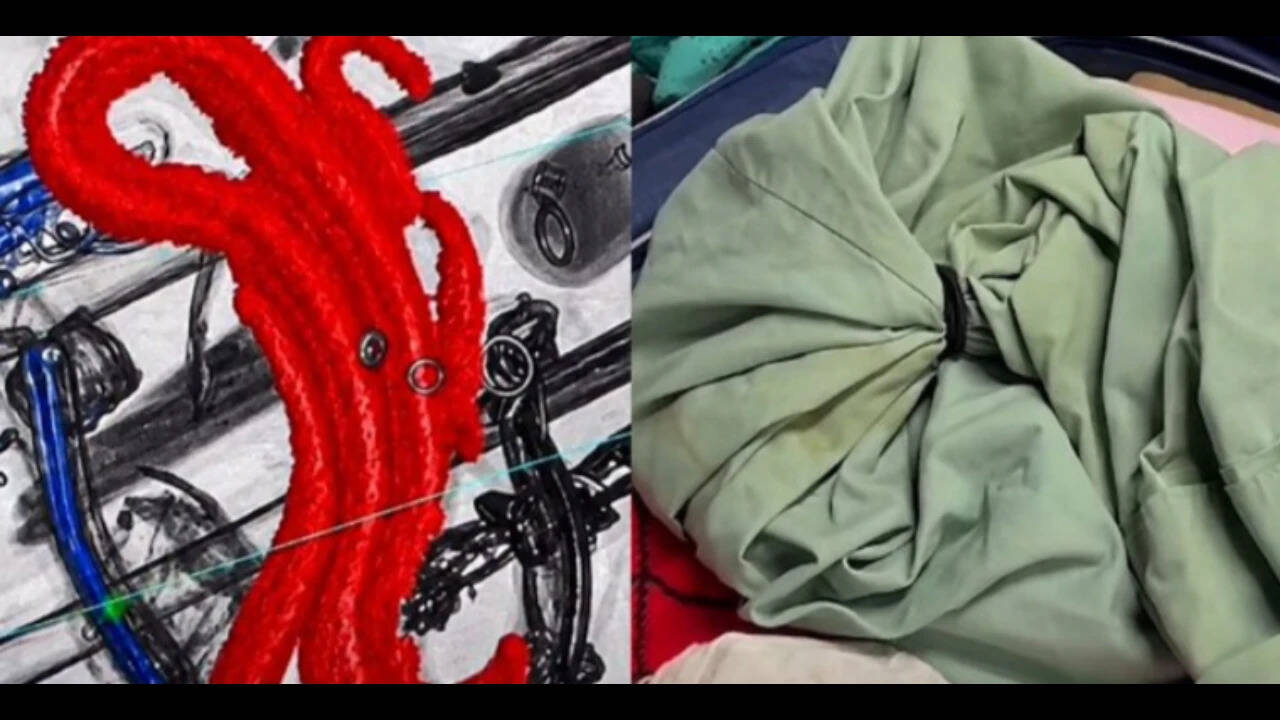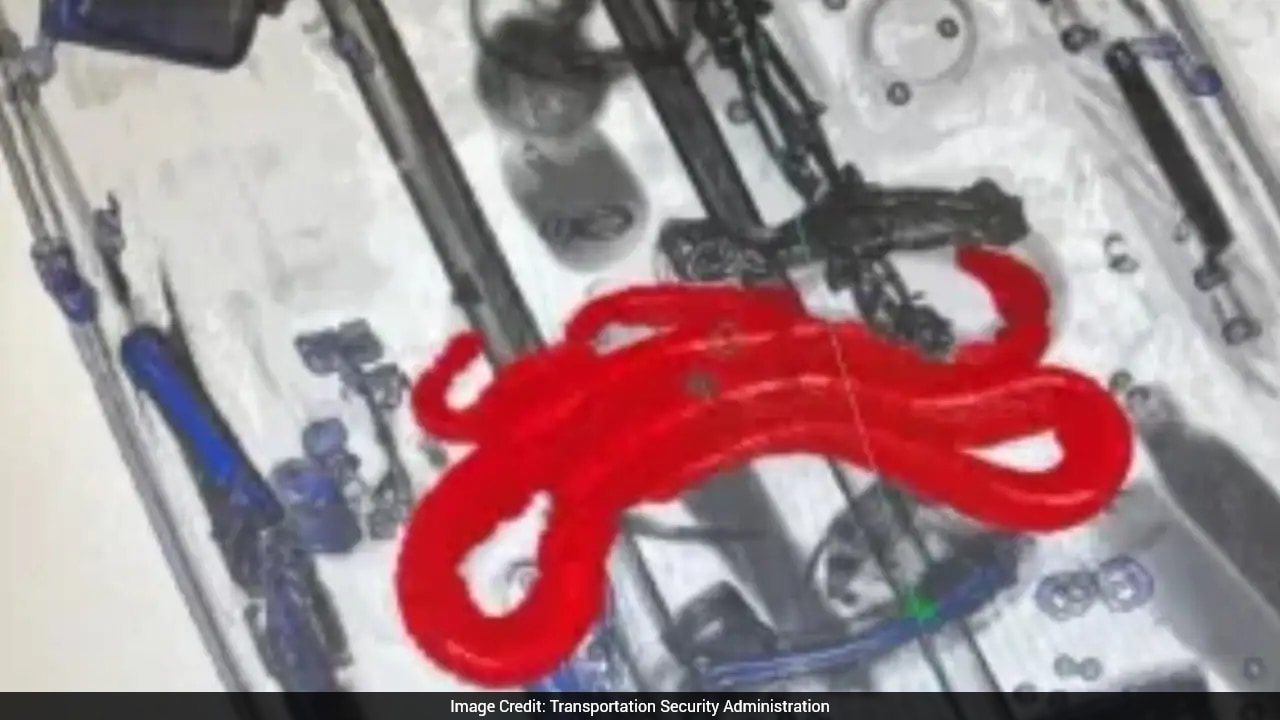
When federal officers at a major US airport recently halted checkpoint operations after spotting a tangle of live snakes coiled inside a passenger's suitcase, the incident quickly made viral headlines as another bizarre travel story. That surface-level framing misses the real danger. Security screening had to be paused not because Transportation Security Administration (TSA) agents were startled by reptiles, but because an undeclared biological payload bypassed initial baggage protocols and triggered an immediate containment emergency. The incident exposes a critical vulnerability in modern aviation security where automated threat detection struggles to distinguish between harmless organic clutter, exotic wildlife trafficking, and genuine biological hazards.
Airports are built to move millions of people and bags at relentless speed. Every single bottleneck costs airlines money and triggers cascading delays across the national airspace system. Because of that operational pressure, screening technology is overwhelmingly calibrated to detect metallic weapons, dense plastics, and chemical signatures associated with explosives. Live animals—especially cold-blooded reptiles lacking dense bone structures or metallic components—look remarkably similar to tangled charging cables, rolled clothing, or dense food items on a standard X-ray monitor. When an anomaly finally forces an operator to hit the emergency stop button, the resulting shutdown reveals just how fragile the balance between rapid transit and thorough inspection actually is.
How Cold-Blooded Contraband Slips Past Standard Scanners
Modern airport checkpoints rely heavily on Computed Tomography (CT) scanners and Advanced Imaging Technology. These machines represent a massive upgrade over the two-dimensional X-ray belts of the past, generating rotatable 3D volumetric images that allow officers to inspect the contents of a carry-on or checked bag from multiple angles. Algorithms highlight suspicious densities in bright oranges, blues, and greens, flagging potential threats automatically so human operators can keep the line moving.
Reptiles break that algorithmic model.
Snakes possess no internal thermoregulation, meaning they register no heat signature if a checkpoint happens to utilize thermal imaging. Their skeletons consist of hundreds of tiny, low-density vertebrae and ribs that scatter X-rays differently than a solid metal pipe or a firearm frame. Packed tightly inside breathable cloth bags, plastic containers, or hollowed-out electronics, a cluster of live snakes mimics the visual density of organic food products like cheese, dense pastries, or tightly wound extension cords.
To understand how this happens in practice, consider a hypothetical example of a passenger attempting to smuggle juvenile pythons inside a standard hard-shell carry-on. If the traveler wraps the reptiles in damp cloth and places them alongside a bundle of laptop chargers and toiletries, the CT scanner's automated threat recognition software will likely clear the bag's chemical profile immediately. No explosive residue exists. The metallic wires of the chargers draw the operator's eye away from the organic mass beside them. Only a sharp-eyed human screener noticing an unnatural symmetry—or actual movement inside the bag during the scan—will trigger a secondary bag check. And once that bag is opened on an active screening table, the operational math changes instantly.
The Anatomy of a Checkpoint Shutdown
You cannot simply zip a bag back up when live animals are discovered on the belt. The moment a TSA officer opens a suitcase and finds loose or poorly contained snakes, standard screening protocols collide with workplace safety laws, wildlife regulations, and biosecurity rules.
A single escaped reptile disappearing into the undercarriage of a conveyor belt or an airport terminal wall creates a nightmare scenario. Beyond the obvious panic it causes among travelers, an uncontained animal can chew through wiring, trigger false alarms in restricted zones, or pose a direct venomous threat to staff. Federal officers are trained to spot bombs and blades, not to identify whether a striped colubrid is a harmless corn snake or a lethal venomous species native to another continent.
Consequently, the supervisor on duty has only one responsible choice. They must freeze the lane.
Pausing screening at a busy hub creates an immediate ripple effect. Passengers already inside the sterile area must be held back, while hundreds of travelers queuing behind the stopped belt are diverted to adjacent lanes that are already operating at capacity. Meanwhile, TSA must summon local law enforcement, airport operations personnel, and often specialized animal control or U.S. Fish and Wildlife Service (USFWS) inspectors to safely secure the biological cargo. Depending on the layout of the terminal, a localized containment issue can easily stall throughput for thirty to sixty minutes—plenty of time for dozens of travelers to miss connecting flights and for airlines to hold departing aircraft at the gate.
The Regulatory Gray Zone Between Agencies
Part of the friction stems from divided jurisdiction. The TSA's statutory mandate is strictly transportation security—preventing catastrophic attacks against aircraft and passengers. Technically, transporting certain non-venomous reptiles in checked baggage is not always an automatic federal aviation crime, provided the passenger follows specific airline rules and declares the animal properly.
However, smuggling undeclared wildlife through a passenger checkpoint violates a completely different web of federal and state laws, including the Lacey Act and international CITES (Convention on International Trade in Endangered Species) treaties. Because TSA officers are not wildlife enforcement agents, they must hand the investigation over to partner agencies. That handoff takes time, paperwork, and physical space right in the middle of the busiest real estate in the airport.
Why Passengers Risk Smuggling Live Reptiles
Nobody packs live snakes into a suitcase by accident. While occasional incidents involve eccentric pet owners trying to avoid airline cargo fees, the vast majority of airport wildlife interceptions are tied to the lucrative underground exotic pet trade.
Rare morphs of ball pythons, tree boas, and venomous vipers can command thousands of dollars on the black market. Legitimate international transport of live reptiles requires export permits, veterinary health certificates, specialized insulated shipping crates, and expensive air freight fees through approved ports of entry. For a small-time smuggler or an illicit breeder, stuffing a dozen high-value juveniles into a carry-on suitcase eliminates overhead costs and bypasses customs declarations entirely—if they make it onto the plane.
The economics heavily favor the smuggler until the exact moment they get caught. Even when intercepted at a domestic checkpoint, penalties can vary wildly depending on whether the species is endangered, invasive, or venomous. If a traveler is caught attempting to board a domestic flight with common, non-protected snakes, they might face a civil fine from the TSA for interfering with screening, surrender the animals to local wildlife authorities, and miss their flight. The deterrent simply does not match the financial upside of the illicit trade.
The Overlooked Biosecurity and Aviation Risks
Treating these incidents as amusing social media fodder ignores two severe risks that aviation analysts take very seriously.
First is the direct aviation safety hazard. In the cargo hold or the passenger cabin, an improperly secured reptile is a mechanical threat. Snakes are notorious escape artists capable of squeezing through gaps a fraction of their body width. An escaped snake inside an aircraft cabin causes immediate passenger panic, which can force an emergency diversion—an event costing an airline tens of thousands of dollars in fuel, crew overtime, and logistical disruption. Worse still, a snake that slithers into the avionics bay or behind cabin wall panels seeks warmth, gravitating directly toward active electrical wiring and hydraulic lines.
Second is the biosecurity blind spot. Wildlife smuggling is one of the primary vectors for introducing invasive species and zoonotic pathogens across borders. Reptiles frequently carry Salmonella bacteria, exotic ticks, and fungal diseases like Ophidiomyces ophiodiicola (snake fungal disease) that can decimate native wildlife populations if released into a new ecosystem. When a smuggler bypasses agricultural and wildlife inspections by hiding animals inside standard passenger luggage, they completely circumvent the biosecurity firewalls designed to protect domestic agriculture and public health.
Fixing the Detection Gap Without Grinding Travel to a Halt
Aviation security officials face an unenviable dilemma. If they lower the threshold on automated scanner algorithms to flag every organic mass that looks vaguely like a coiled animal, false-alarm rates will skyrocket. Baggage handlers and checkpoint officers would spend half their shifts opening suitcases full of bundled winter socks, extension cords, and vacuum-sealed snacks. Security lines would stretch out onto the terminal curbs nationwide.
The solution does not lie in slowing down every passenger, nor does it lie in pretending the problem is isolated.
Airports and federal agencies need tighter integration between threat-detection AI and wildlife intelligence. Modern CT scanners already gather immense amounts of data on material density and atomic number. Training machine-learning models specifically on the volumetric signatures of concealed biological contraband—paired with targeted behavioral screening and stronger civil penalties for undeclared live animals—offers a path forward without crippling airport throughput. Until those detection models catch up to reality, however, a single suitcase full of hidden reptiles will remain all it takes to bring a modern airport checkpoint to a dead stop.