The Cartography of Ambition
Maps lie. They have always lied, of course, twisting spheres onto flat rectangles, exaggerating the size of empires, shrinking oceans to fit schoolroom walls. But usually, the lie is geometric. Mercator stretched Greenland until it rivaled Africa in visual weight, a harmless distortion of latitude and longitude designed to help sailors find their way through the dark.
What happens, though, when the lie is not about geography, but about ownership?
Picture a fisherman standing on the black volcanic sands of Vik, salt stiff in his woolen beard, watching the North Atlantic heave against the shore. To him, the island beneath his boots is not a polygon on a smartphone screen, nor a bargaining chip in a transatlantic game of high-stakes poker. It is ancestral ground. It is wind, cod, geothermal steam, and a language that has remained stubborn and unchanged for a thousand years.
Now, imagine scrolling through a digital feed on a Tuesday afternoon and seeing that very island painted in the colors of a foreign superpower. Not as a trading partner. Not as a strategic ally. As a possession.
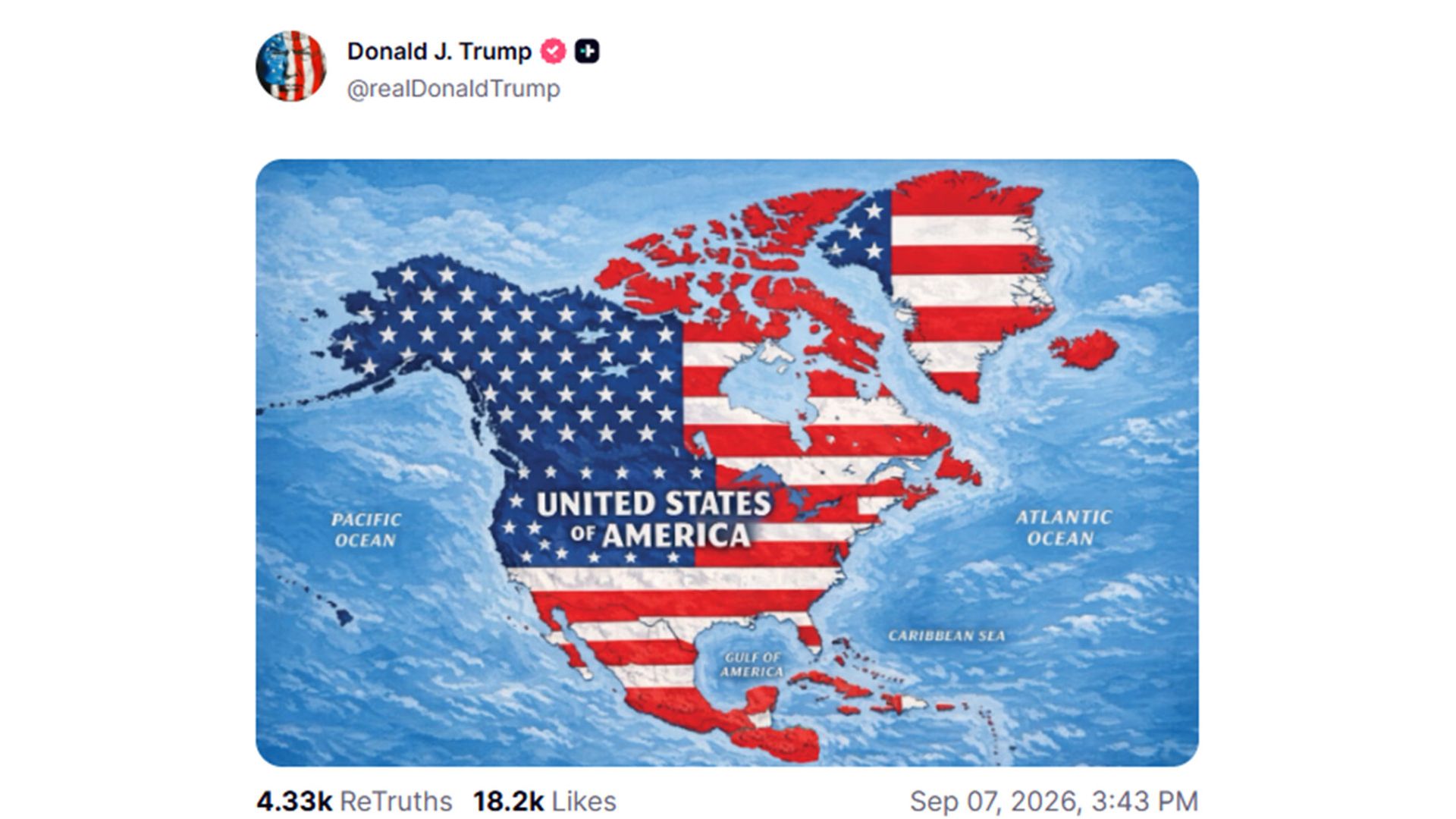
That was the reality delivered by a digital broadcast originating from a familiar American political figure, a map graphic splashing across millions of screens that nonchalantly colored Iceland and Greenland as territories of the United States. Across the water, diplomats stiffened. Citizens blinked in disbelief. And a quiet, icy fury rippled through the North.
When Old Echoes Return
To understand why a simple map graphic caused a diplomatic tremor, we have to look past the immediate outrage and into the memory of nations. Small countries do not have the luxury of ignoring the ambitions of giants. They live in the shadow of weather systems they cannot control.
In the summer of 2019, a similar shockwave hit when reports surfaced that an American administration had casually floated the idea of purchasing Greenland. At the time, the proposal was largely dismissed by outsiders as political theater, a bizarre headline to cycle through the news cycle before fading into digital obscurity. Prime Minister Mette Frederiksen of Denmark called it absurd. The response was polite, firm, and bewildered.
Yet, ideas in modern politics rarely die. They morph. They become memes, then graphics, then policy aspirations.
When a former president posts an image absorbing two sovereign territories into a domestic rubric, it is rarely just a joke. In the lexicon of modern influence, testing the boundary is the point. You draw the line in pixels first, waiting to see who screams, who laughs, and who stays silent. Silence is treated as consent.
To an Icelander, whose country spent centuries under foreign rule before finally reclaiming full sovereignty in 1944, the casual annexation depicted on a screen cuts deep. Independence is not a default state of the universe; it is a hard-won, fragile trophy. You do not redraw it for engagement metrics.
The Strategic Icebox
Why these two particular places? Why the frozen expanses of Greenland and the volcanic isolation of Iceland?
The answer lies beneath the ice and across the warming waters of the Arctic circle. As global temperatures tick upward, the polar ice cap is thinning. Ancient shipping lanes that were once locked in impenetrable pack ice are opening up, promising to slash transit times between Asia and North America by weeks. Beneath the seabed lie untapped reserves of rare earth minerals, oil, and natural gas, coveted by industrial superpowers transitioning into green technologies and digital economies.
Grabbing control of the Arctic is the quiet, desperate race of the twenty-first century.
Greenland holds critical mineral deposits essential for electric vehicle batteries and microchips. Iceland sits astride the Mid-Atlantic Ridge, a vital chokepoint for naval surveillance, submarine detection cables, and transatlantic communications. They are not sleepy snow globes at the top of the world. They are the high ground of the future.
And that is why the rhetoric matters. When a powerful state actor treats sovereign neighbors as real estate waiting for a deed transfer, it signals a return to a very old, very dangerous geopolitical philosophy. Might makes right. Possession is nine-tenths of the law.
The Cost of Casual Imperialism
Words have gravity. When projected from the most amplified megaphones on earth, they carry the weight of policy, even when wrapped in the deniable plausible deniability of social media provocation.
European officials were quick to respond, calling the post completely inappropriate. Diplomats used polite language, as they always do, speaking of international norms, mutual respect, and the sovereignty of nations. But behind closed doors, the anxiety was palpable. If the rules-based international order begins to fray at the edges, what happens to the countries that rely on those rules to exist safely?
A superpower does not need to drop an army onto a shore to conquer it. Sometimes, normalization does the work for them. You repeat a narrative often enough until it stops sounding like an invasion and starts sounding like a foregone conclusion. You color the map once, then twice, until the eye gets used to the new shape.
This is the invisible stakes of our current era. We are living through a slow creep where boundaries are treated as suggestions and independent peoples are treated as demographics to be absorbed.
The Horizon at the Edge of the World
Back in Reykjavik, the sun dips below the horizon, painting the snow-capped peaks in shades of bruised violet and burning gold. The city hums with its usual quiet rhythm. People walk their dogs along the harbor. Children kick soccer balls against concrete walls.
They are acutely aware of how small they are. They know their population wouldn't fill a single borough of a major American city. They know their military defense relies on treaties and alliances, not aircraft carriers and nuclear arsenals.
Yet, sovereignty is not measured solely in megatons or GDP. It is measured in the unyielding right of a people to decide their own name, their own laws, and their own future, free from the casual daydreams of distant potentates.
The map on the screen was deleted, scrolled past, buried beneath the relentless avalanche of the next news cycle. But the line was drawn. And the ice at the top of the world continues to melt, revealing not just new shipping lanes, but the ancient, ugly truth about how the powerful look at the rest of us.