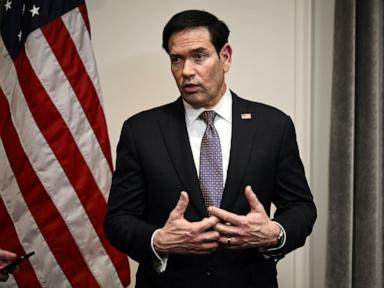
Hacking a grocery store freezer sounds like a prank until you realize it sparked at least 15 fires and destroyed tens of millions of euros in food across more than 700 French retail stores. That is the reality behind U.S. Secretary of State Marco Rubio's blistering reaction in Paris in November 2026. Speaking to reporters during a Group of Seven meeting, Rubio didn't mince words when asked about the October 2026 sabotage campaign attributed to Iran's Islamic Revolutionary Guard Corps (IRGC). He called the perpetrators "sickos" and a "deranged group of revolutionaries" for targeting commercial refrigeration systems in a country not even directly fighting in the U.S.-Iran conflict.
Most coverage stops at the soundbite. If you actually look at how these industrial refrigeration systems were breached—and why an elite military cyber unit would bother sabotaging milk coolers in France—the picture becomes much clearer and far more concerning for European businesses. Recently making headlines in this space: The Girl in the White Coat and the Throne of Ghosts.
What Actually Happened in the October 2026 French Supermarket Cyberattack
In October 2026, retail chains across France watched their cold-chain infrastructure fail over a single weekend. Temperatures inside refrigerators and freezers spiked rapidly. Store managers had no choice but to dump massive quantities of spoiled fresh and frozen inventory. Worse, the manipulation of the cooling hardware triggered physical equipment malfunctions, resulting in at least 15 separate fires at retail locations.
On November 9, 2026, the French Foreign Ministry formally pointed the finger at Tehran. French intelligence and investigators traced the operation to Shahid Kaveh, an offensive cyber unit operating under the IRGC's Electronic and Cyber Centre. Rather than claiming credit openly, the operators hid behind fake hacktivist personas—specifically groups calling themselves CyberAveng3rs and Cyber Isnaad Front. Additional information on this are covered by Al Jazeera.
French authorities didn't treat this as a minor nuisance. Here is how Paris responded immediately following the attribution:
- Diplomatic escalation: French Foreign Minister Jean-Noël Barrot confirmed that Paris summoned the Iranian ambassador to condemn what he called a direct threat to national interests and public security.
- Criminal prosecution: Paris prosecutor Laure Beccuau announced that France requested international arrest warrants for the suspects accused of directing the campaign.
- European sanctions push: France moved to place the findings before European Union partners to trigger coordinated punitive sanctions against Tehran.
Tehran followed its standard playbook. On November 10, Iran's Foreign Ministry dismissed the French accusations as "baseless and prejudiced," flatly denying any state involvement.
Breaking Down Marco Rubio's Comments in Paris
Rubio's remarks stood out because they stripped away typical diplomatic phrasing. Standing before reporters in Paris on November 9, 2026, he framed the attack as both erratic and cowardly.
"What kind of sickos are these people?" Rubio asked. "They attack refrigerators. France is not even involved in this really."
His point hits on a major geopolitical reality. Following the joint U.S. and Israeli military strikes against Iran in February 2026, American intelligence agencies warned domestic businesses and government networks to brace for retaliatory Iranian cyber operations. France, however, had stayed out of direct military action. Going after French grocery stores looked less like strategic warfare and more like lashing out at soft civilian targets.
Rubio also made a deliberate effort to separate everyday Iranians from the ruling apparatus in Tehran. "You are dealing with a deranged group of revolutionaries," he told the press. "The Iranian people are great." By drawing that line, Washington reinforced its long-standing justification for designating and sanctioning the IRGC as a terrorist organization while avoiding broad cultural alienation.
Why Cyber Units Target Commercial Refrigerators
If you haven't worked around industrial control systems or operational technology (OT), targeting a supermarket cooler seems bizarre. Why wouldn't state-backed hackers go after banks, power grids, or defense contractors instead?
It comes down to basic economics and exposed attack surfaces. Defense contractors and major banks spend millions on endpoint detection, network segmentation, and 24/7 security operations centers. Grocery chains operate on razor-thin margins across hundreds of decentralized locations.
The Operational Technology Vulnerability Gap
Supermarket refrigeration isn't run by simple wall thermostats anymore. Modern retail chains rely on networked Programmable Logic Controllers (PLCs) and internet-connected building management systems so technicians can monitor temperatures remotely and comply with food safety laws.
According to cybersecurity specialists cited by Reuters during the French investigation, two major flaws left these systems wide open:
- Obsolete hardware and outdated firmware: Many stores run legacy industrial controllers designed 10 or 15 years ago, long before cybersecurity was a design requirement.
- Direct internet exposure: Installers frequently connect cooling controllers directly to the internet—often using default passwords or unencrypted protocols—just to make remote maintenance convenient.
When attackers gain access to an industrial controller, they don't need sophisticated zero-day exploits. They simply send legitimate-looking commands to disable compressor safety cutoffs, override temperature thresholds, or force hardware to cycle rapidly until components overheat and catch fire.
Psychological Impact Over Military Value
You don't win a war by spoiling yogurt in Lyon. You do, however, create immediate public anxiety and supply chain friction.
Front groups like CyberAveng3rs have a documented history of targeting accessible operational technology—including water treatment facilities, transit systems, and shipping infrastructure—specifically because these attacks make headlines without crossing the threshold into mass-casualty warfare. By November 2, 2026, supermarkets across at least nine European countries, including Belgium and Luxembourg, reported similar suspected cyber intrusions that sent freezer temperatures soaring. Even though French authorities stopped short of confirming whether Shahid Kaveh executed all nine cross-border incidents, the pattern is unmistakable. Disrupting daily civilian life reminds European governments that their domestic infrastructure is reachable.
What Most People Get Wrong About State-Sponsored Cyberattacks
When news breaks about an elite military intelligence unit hacking retail stores, two common misconceptions almost always dominate the conversation.
First, people assume state-backed hackers only use hyper-advanced, invisible malware. In reality, groups like Shahid Kaveh routinely rely on opportunistic scanning. They sweep the internet for exposed industrial ports, use known credentials, and exploit unpatched firmware. If your equipment is sitting on the public internet without authentication, a state-sponsored team will happily walk through the unlocked front door.
Second, business owners often believe that staying out of politics keeps them off the target list. As Rubio pointed out in Paris, France wasn't a combatant in the February 2026 strikes, yet over 700 French locations still took direct hits. In asymmetric cyber campaigns, attackers target whoever is vulnerable within an allied bloc to apply indirect political pressure on governments.
Practical Steps to Lock Down Connected Building Systems
If you manage facilities, retail operations, or commercial IT networks, the French supermarket incident is a loud warning. Any internet-connected physical system—HVAC units, commercial freezers, lighting grids, or access badges—is a potential entry point and a physical fire hazard if compromised.
Take these four concrete actions immediately to audit and isolate your operational technology:
- Pull OT devices off the public internet. Run an external port scan against your organization's IP ranges using tools like Shodan or Censys. If any building management controller, PLC, or refrigeration gateway shows up publicly, cut external access immediately and place it behind a hardened VPN with multi-factor authentication.
- Enforce strict network segmentation. Your store's point-of-sale terminals, corporate Wi-Fi, and refrigeration controllers should never share a flat network. Put industrial and facility systems on an isolated VLAN with strict firewall rules blocking unnecessary outbound and inbound traffic.
- Audit default vendor credentials. Third-party HVAC and refrigeration contractors notoriously leave default admin passwords active so their technicians can log in easily. Require unique, complex credentials for every site and revoke shared vendor accounts.
- Verify hardware safety fail-safes. Software commands should never be able to override physical thermal limits to the point of starting a fire. Confirm with your equipment vendors that physical thermal cutoff switches and mechanical pressure reliefs operate independently of networked software controls.
The attacks across France and neighboring European countries prove that operational technology is now squarely on the front lines of geopolitical friction. Organizations that treat building controls like harmless appliances instead of critical network endpoints are leaving themselves wide open to physical damage and massive financial loss.