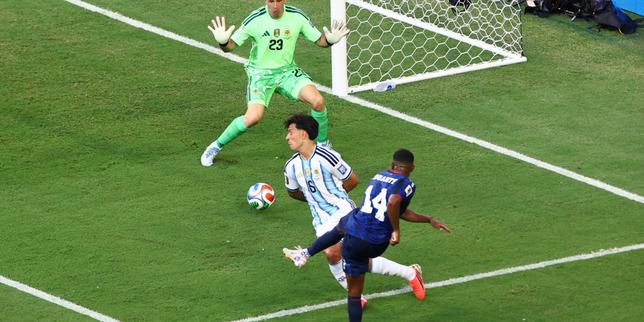
Winning a World Cup requires a lot more than just tactical genius and raw talent. Sometimes, your biggest opponent isn't even the team lining up across from you on the pitch. It's the clock, the thermometer, and the thick, suffocating air of a midsummer evening in Florida. As Argentina gears up for its high-stakes knockout match against Cape Verde in Miami, legendary striker Gabriel Batistuta pointed out a reality that many casual fans are completely overlooking. The actual time and climate of the match will give Lionel Scaloni squad more headaches than any opposing tactical setup.
People love to focus on formations, starting lineups, and whether Lionel Messi will log another magical assist. But the physical reality of playing elite football in brutal conditions is where tournaments are won or lost. Batistuta knows this better than anyone. He lived through the grueling US summer of 1994, sprinting under the baking sun of Foxborough and Dallas. When a man who scored ten World Cup goals tells you that match timing is Argentina's greatest obstacle, you listen.
The Hidden Hurdle Facing Scaloni Squad in Miami
Playing a crucial knockout game at 7 PM in Miami sounds reasonable on paper. The sun is setting, the glaring afternoon heat is technically fading, and the stadium lights take over. But anyone who has spent a July evening on the coast of Southern Florida knows the truth. The sunset doesn't bring relief. It brings a swamp-like humidity that traps heat right on the grass.
When the humidity levels hover around 80 percent, the human body can't cool itself down through sweat evaporation. Players feel like they're breathing through a wet blanket. For a team like Argentina, which relies on high-intensity pressing, rapid ball recovery, and explosive transitions, this climate acts as a massive speed bump. You can't press for 90 minutes when your lungs are burning after a ten-yard sprint.
This match marks Scaloni's 100th game in charge of the national team. It's an incredible milestone, but his tactical notebook has to adapt to the environment. If Argentina tries to play their usual high-tempo, suffocating style from the opening whistle, they risk running out of gas by the 60th minute. We saw glimpses of this physical drop-off during the group stage, where late-game fatigue led to uncharacteristic defensive lapses. Against a highly disciplined and physically imposing side like Cape Verde, those lapses will be lethal.
Why Gabriel Batistuta Warnings About Match Conditions Matter
Batistuta's insights don't come from a place of pessimism. They come from pure, unadulterated experience. The legendary number nine understands that modern football asks players to cover more ground than ever before. In his era, a forward could occasionally rest during a match, waiting for the midfield to deliver the ball. Today, every single player on the pitch is expected to defend, press, and track back.
When you factor in the relentless club calendar that these players just endured in Europe, the physical tank is already near empty. Most of Argentina's starting XI played over 50 intense matches for their clubs before even arriving at this tournament. Expecting them to maintain tactical perfection in an environment that drains your hydration levels within twenty minutes is a massive ask.
The timing of the match also messes with the psychological rhythm of the players. Spending an entire day waiting in a hotel room for a late evening kickoff builds immense mental tension. Players eat their pre-match meals at odd hours, their sleep cycles are disrupted, and the anxiety of a single-elimination match simmers for hours. Batistuta noted that managing those empty hours before heading to the stadium is an art form in itself. If a squad burns through their nervous energy before the whistle blows, they'll step onto the pitch already feeling fatigued.
The Physics of Midsummer Soccer in the United States
Let's look at the actual numbers that dictate how this match will unfold. When temperatures hit the mid-80s Fahrenheit with high humidity, a player's core body temperature rises significantly faster than normal. This triggers an elevated heart rate just to keep up with basic movement.
- Fluid Loss: An elite midfielder can lose up to three liters of sweat during a 90-minute match in these specific conditions.
- Cognitive Decline: Dehydration directly impacts decision-making. Passing accuracy drops, spatial awareness blurs, and tempers flare.
- Muscle Cramps: The risk of muscular injuries skyrockets during the final third of the game, making substitutions a strategic survival tool rather than a tactical luxury.
Argentina's style relies heavily on short, crisp passing sequences that require absolute technical precision. If the ball feels heavy because the grass is sticky from the evening moisture, or if a player's feet are burning inside their boots, those precise triangles start to break down. A misplaced five-yard pass in midfield is exactly what an underdog waits for to launch a lethal counterattack.
How Cape Verde Capitalizes on Extreme Conditions
We need to stop treating underdog teams like they're just happy to be here. Cape Verde earned their spot in this knockout round through tactical discipline, immense physical resilience, and a clear understanding of their own strengths. Their squad features athletes who are incredibly comfortable playing in high-temperature environments. Many of their players possess the physiological capacity to sustain long, powerful recovery runs even when the air is thick.
Cape Verde doesn't need to dominate possession to win this match. Their game plan will likely involve sitting deep, compacting the spaces between their defensive lines, and forcing Argentina to pass the ball side-to-side under the humid night sky. They want Argentina to tire themselves out. Every minute that ticks away at 0-0 is a victory for them.
As the Argentine players grow frustrated and physically drained, the spaces will inevitably open up. Cape Verde excels at exploiting wide areas on the counterattack, utilizing rapid wingers who can punish a tired defensive line. If Argentina's counter-pressing isn't instantaneous due to fatigue, the center-backs will find themselves isolated in dangerous one-on-one situations.
What Argentina Must Adjust to Survive the Knockout Stages
If Argentina wants to advance and keep the dream alive, they have to play a smarter, more conservative brand of football than fans are used to seeing. This isn't the stage for reckless, emotional attacking display. It's a game of chess where energy conservation is the ultimate prize.
First, the team must prioritize ball possession not just as an attacking tool, but as a defensive mechanism. When Argentina controls the tempo and forces Cape Verde to chase the ball, they're effectively resting while in possession. Making the opponent run in the humidity is the easiest way to flip the physical advantage back in their favor.
Second, Rodrigo De Paul and Alexis Mac Allister will have to be incredibly disciplined in their positioning. The temptation to sprint forward and join the attack will be strong, but holding the central spine of the pitch is vital to prevent quick transitions.
Finally, Scaloni needs to utilize his bench much earlier than usual. Waiting until the 75th minute to make changes in this climate is a recipe for disaster. Bringing on fresh, energetic legs in the midfield at the hour mark could be the exact spark needed to break down a tiring Cape Verde defense. The squad depth is one of Argentina's greatest weapons, and this is the exact scenario where it must be utilized aggressively. Forget about individual egos or player status. Survival in the tournament means managing the physical toll of the match down to the exact minute.