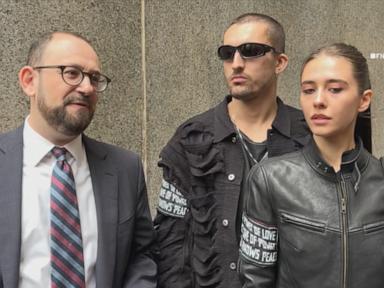
Senator Chris Van Hollen’s November 12, 2026 challenge to incumbent Senate Democratic Leader Chuck Schumer represents the first contested leadership election within the Senate Democratic Caucus since 1994 and the first direct challenge to a sitting Democratic leader since 1984. Conventional political coverage frames this contest as a binary clash between progressive insurgency and institutional establishment. That framing obscures the structural mechanics governing internal legislative elections. In a closed-door, secret-ballot election among 55 or 56 senators—where a simple majority of 28 or 29 votes decides the outcome—external voter sentiment, celebrity endorsements, and public polling exert zero direct voting weight. The race is instead a mathematical exercise in whip-count retention, procedural leverage, and the principal-agent divergence between a senator’s national party base and their internal caucus incentives.
The Structural Divergence Between Public Sentiment and Caucus Math
To understand why a challenger can command substantial external momentum while facing steep internal odds, analysts must separate the external electorate from the internal selectorate. In the 2026 Senate Democratic leadership race, these two constituencies operate on entirely different incentive structures.
Data from November 2026 polling illustrates the scale of this divergence:
- General and Partisan Electorate: An Economist/YouGov poll conducted November 20–23, 2026 showed Van Hollen leading Schumer 28% to 14% among U.S. citizens (with 59% undecided) and 40% to 19% among Democrats (with 41% undecided). Earlier Indivisible/YouGov polling from November 7–9 indicated only 10% of registered voters favored Schumer remaining leader, while 57% preferred an alternative.
- Caucus Whip Count: Inside the 120th Congress's incoming 55-member Democratic caucus, the threshold for victory is 28 votes. By November 22, Van Hollen stated he held commitments from "north of 15" senators—leaving him roughly a dozen votes short of the majority—while only a handful of members, including Bernie Sanders and Jeff Merkley, had publicly declared for him. Conversely, Schumer secured early public backing from at least 16 colleagues, including incoming whip Brian Schatz, alongside private commitments that he asserts surpass the 28-vote threshold.
This gap exists because of the Secret-Ballot Insulation Effect. Unlike floor votes on legislation, leadership elections in the Senate Democratic Caucus are conducted by secret ballot. Secret ballots sever the direct accountability link between a senator's vote and external pressure campaigns—such as phone banking organized by MoveOn and Indivisible or open letters from Hollywood donors. When external pressure cannot verify individual compliance, senators default to internal institutional currency: committee assignments, floor time, campaign fundraising redistribution, and legislative gatekeeping.
Three Pillars of the Insurgency Thesis
Van Hollen’s campaign rests on a structured critique of how the Democratic leadership allocates political capital, legislative priority, and campaign resources. Rather than attacking Schumer’s personal competence, the challenge targets three operational bottlenecks within the caucus's current operating model.
1. The Attribution Asymmetry of the 2026 Midterms
Following the November 2026 midterm elections, in which Democrats flipped control of the Senate to secure a 55-seat majority (pending final certification in Alaska), both factions claimed the result validated their strategic thesis:
- The Incumbent Attribution Model: Schumer and allies such as Senators Tammy Baldwin and Ruben Gallego treat the midterm sweep as a direct return on leadership’s candidate recruitment and resource deployment. For example, Schumer recruited former Senator Sherrod Brown to reclaim his Ohio seat—a victory that directly reinforced Schumer's internal whip count. In institutional politics, a leader who delivers a governing majority rarely forfeits executive control immediately after winning it.
- The Organic Wave Model: Van Hollen contends that the 2026 gains were driven by voter backlash against the Trump administration rather than centralized Washington strategy. Under this framework, crediting incumbent leadership for a macro-level wave creates a false sense of security and leaves structural vulnerabilities unaddressed ahead of the 2028 cycle.
2. Primary Gatekeeping and Campaign Capital Allocation
A central operational grievance in the race involves how party-aligned political action committees and leadership networks intervene in Democratic primaries. Critics of the current leadership structure point to two specific mechanisms of resource distortion:
- Selective Primary Intervention: Leadership-aligned networks and the Senate Majority PAC have historically concentrated financial backing on establishment-favored primary candidates while withholding general-election capital from progressive nominees who defeat preferred candidates. Critics cite the lack of Senate Majority PAC investment in competitive races like Florida, alongside leadership’s reluctance to endorse insurgent primary winners in municipal and state contests, as evidence that institutional control is prioritized over maximizing general-election seat share.
- Donor-Class Liability: Van Hollen has explicitly targeted the influence of major lobbying groups and corporate donors on caucus positioning. By refusing PAC contributions from groups such as AIPAC and advocating restrictions on offensive weapons transfers to Israel, Van Hollen has positioned foreign policy and campaign finance as litmus tests for caucus alignment.
3. Legislative Velocity and Procedural Confrontation
In a unified Republican executive environment under President Donald Trump, a 55-seat Democratic Senate majority functions primarily as an institutional counterweight and oversight engine rather than a bill-signing factory. Van Hollen’s platform argues that Schumer’s preference for incremental, bipartisan negotiation blunts the Senate’s constitutional leverage.
This divergence is clearest on artificial intelligence regulation and executive oversight. While both senators warn of technological disruptions from unregulated AI, Schumer has pursued bipartisan working groups and consensus frameworks—a strategy complicated in the eyes of critics by his daughters' public policy roles at OpenAI, Amazon, and Meta. Van Hollen has elevated AI governance to a core pillar of his challenge, advocating binding statutory guardrails and procedural rule changes to force floor action without waiting for bipartisan consensus.
The Cost Function of Defection for Rank-and-File Senators
To predict how undecided senators—including incoming members like Roy Cooper, Mary Peltola, and Chris Pappas, as well as institutionalists like Chris Coons and Andy Kim—calculate their secret-ballot choice, one must evaluate the asymmetric payoff matrix of voting against an incumbent leader.
For any individual senator, casting a vote for an insurgent carries a distinct expected value calculation:
- Downside Risk of a Failed Insurgency: If a senator backs Van Hollen and Schumer wins, the senator risks diminished priority in committee gavel assignments, slower floor scheduling for state-specific amendments, and reduced institutional fundraising support from leadership-aligned PACs. Even under a secret ballot, whip operations track public statements, hesitation, and caucus debate interventions.
- Upside Reward of a Successful Insurgency: If Van Hollen wins, the benefits—a more confrontational posture toward the White House, revised primary neutrality rules, and decentralized decision-making—are non-excludable public goods shared across the entire caucus. Because Van Hollen’s platform emphasizes diffusing power rather than hoarding patronage, an individual senator captures the systemic benefits of a Van Hollen victory whether or not they took the risk of voting for him.
- The Collective Action Bottleneck: This creates a classic free-rider dynamic. Unless a challenger can demonstrably prove they have already cleared 24 to 26 hard commitments—making the 27th and 28th votes decisive rather than speculative—rational risk-averse senators will default to the incumbent to protect their institutional standing.
Limitations of the Insurgent Strategy
Analyzing this contest objectively requires acknowledging the structural limitations of Van Hollen’s approach. Neither leadership model is a panacea for a 55-seat majority operating opposite a Republican president.
- The Executive Veto Constraint: A more confrontational Senate majority leader can maximize floor votes, subpoena power, and judicial confirmation scrutiny, but procedural aggression cannot override a presidential veto without 67 votes. Passing sweeping affordability or AI legislation still requires either bipartisan compromise or strategic leverage over must-pass appropriations and debt-ceiling vehicles.
- Caucus Heterogeneity: A 55-member Democratic caucus spans ideological ground from democratic socialist Bernie Sanders to swing-state and red-state moderates in states like Ohio, North Carolina, and Alaska. A leadership style optimized for progressive base mobilization risks exposing frontline senators in competitive 2028 battlegrounds to unwanted floor votes on divisive amendments.
- Transition Friction: Replacing a leader who has managed the caucus since 2017—and who maintains deep operational relationships with institutional donors and committee chairs—introduces short-term coordination costs at the exact moment the caucus must organize committees for the 120th Congress.
Strategic Forecast and Optimal Caucus Play
Given the secret-ballot mechanics and the current public and private whip counts, Chuck Schumer enters the December 2026 leadership election with a decisive structural advantage. Van Hollen’s admission that his support sits just above 15 votes confirms that the insurgency has not yet overcome the collective action threshold required to trigger a cascade of late defections from undecided institutionalists.
However, an incumbent victory does not mean the challenger’s campaign has zero operational yield. In legislative leadership contests, a credible 15-to-20-vote minority bloc functions as a binding constraint on the incumbent’s future governance. To maximize leverage before the December vote, Van Hollen’s faction—and undecided senators like Chris Coons and Andy Kim who have called for a formal caucus debate—should execute a conditional concession strategy rather than an all-or-nothing floor gamble:
- Codify Primary Neutrality: Extract an explicit, enforceable commitment from leadership and aligned PACs to remain neutral in contested Democratic primaries and to fund all legitimate Democratic nominees in competitive general elections regardless of ideological faction.
- Decentralize Policy Working Groups: Replace top-down leadership task forces on high-stakes domains like artificial intelligence with open committee-driven markups, removing any appearance of donor or industry insulation.
- Establish Term and Accountability Benchmarks: Secure structured quarterly caucus strategy reviews tied to 2028 defensive map preparation, ensuring that the 15-to-20-member reform bloc retains formal agenda-setting power throughout the 120th Congress.
For further analysis of the caucus dynamics and timeline, see coverage of Van Hollen's challenge to Schumer, which details his arguments against rushing the leadership vote.