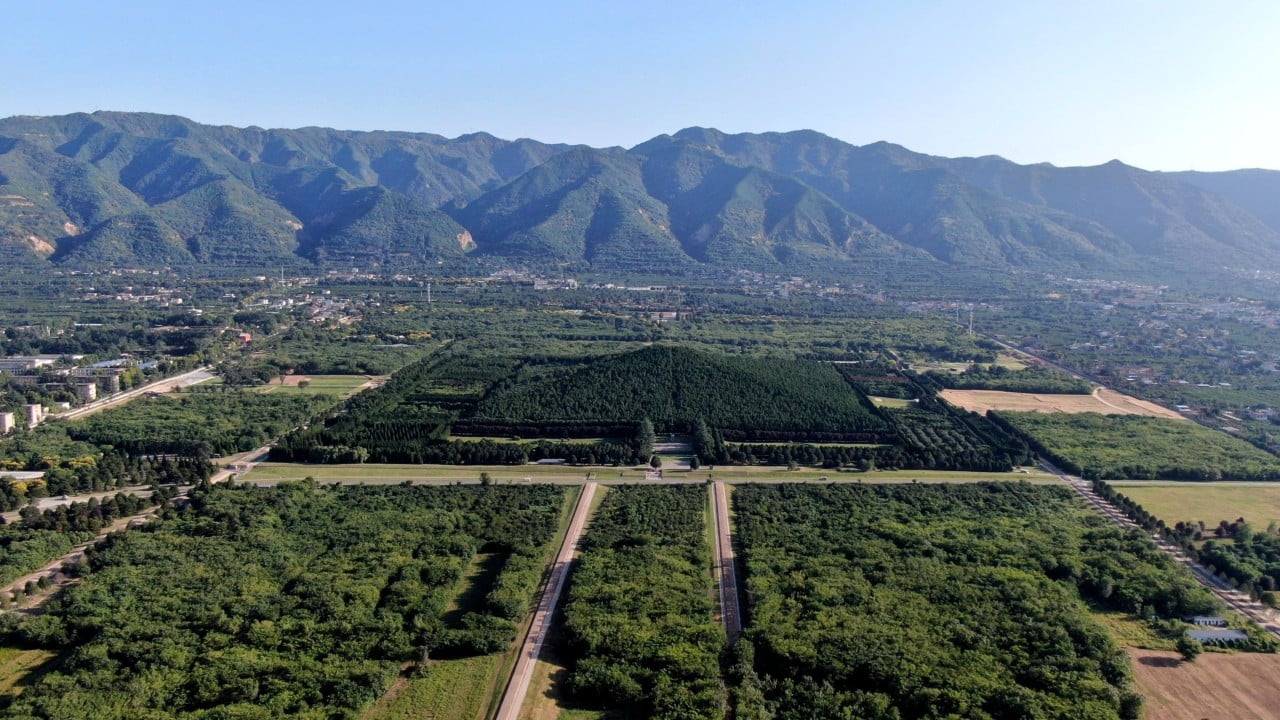
Deep beneath a quiet, tree-covered mound outside Xi'an, China's first emperor rests in a chamber that modern hands have never touched. For over two thousand years, the tomb of Qin Shi Huang has fueled wild speculation. Recent online claims and fresh scientific discussions have dragged this ancient puzzle back into the public eye, focusing once again on the legendary rivers of liquid metal said to map his subterranean kingdom.
You've probably heard the stories. But how much of that underground myth actually holds up against modern science? Let's look at what we actually know.
What Ancient Historians Claimed About the Tomb
The primary source for almost everything we think we know about the mausoleum is Sima Qian, a Grand Historian of the Han dynasty who wrote roughly a century after the emperor's death. According to his records, artisans constructed miniature models of palaces, official towers, and rare artifacts inside the burial enclosure.
Most famously, Sima Qian wrote that craftsmen poured vast quantities of flowing mercury to mimic the great rivers and seas of the empire, all driven by mechanical contrivances. He also noted that celestial bodies made of precious gems adorned the ceiling to replicate the night sky. For centuries, historians dismissed these accounts as dramatic exaggerations meant to magnify the tyrant's legacy.
What Modern Science Actually Found
Science has a funny way of making old historians look less crazy. Soil and air testing around the sealed burial mound have consistently revealed abnormally high concentrations of mercury.
Soil samples taken directly above the tomb show mercury levels dozens of times higher than the surrounding regional baseline. Advanced remote sensing and laser radar studies have also detected active mercury vapor escaping through tiny fissures in the sealed structure.
The data doesn't automatically prove that roaring rivers of liquid metal are currently sloshing around a subterranean palace. It does, however, confirm that an immense quantity of the toxic element is trapped down there. Sima Qian wasn't just making things up for effect.
Why the Tomb Remains Sealed Today
People always ask why archaeologists don't just dig the place up and settle the debate once and for all. It comes down to basic preservation and raw physics.
When the Terracotta Army was unearthed nearby in the 1970s, researchers watched helplessly as the vibrant lacquer and paint coatings on the clay soldiers peeled and faded within minutes of meeting dry air. Opening Qin Shi Huang's primary burial chamber would expose fragile organic artifacts to immediate oxidation and decay.
Then there is the obvious hazard of the mercury itself. Breaking into a sealed vault with massive concentrations of toxic vapor presents a severe safety nightmare for any excavation crew. Until technology reaches a point where we can explore the interior non-destructively, the inner sanctum stays locked.
The mercury mystery persists because it sits right at the intersection of myth, imperial obsession, and hard scientific proof. The emperor wanted to live forever, and he surrounded himself with a toxic monument that ensured his final resting place remains untouchable to this day.
A tomb no one has ever opened — and inside it, rivers of mercury still flow
This short video highlights the historical accounts and modern soil data that keep the mystery of the emperor's sealed tomb alive.