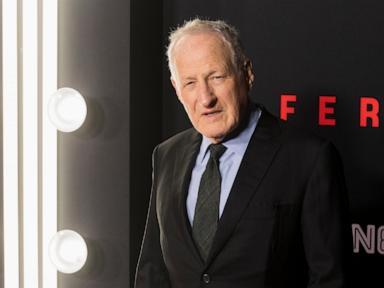
Filmmaker Michael Mann sustained a minor, superficial injury during a firearms training session at a shooting range in Los Angeles, a routine preparation ritual for a director famous for treating gunfire like fine percussion. According to statements released by his representatives following the incident, the 80-plus-year-old auteur suffered a minor graze—commonly caused by hot brass casings ejecting from a semi-automatic weapon or tiny fragments of lead splashing back from a steel target—and required no hospitalization. While the wound itself was negligible, the incident immediately reignited an uncomfortable industry-wide conversation about live-fire training, on-set firearms protocols, and the extreme lengths legacy directors go to achieve visceral authenticity.
For decades, Mann has set the gold standard for cinematic ballistics. When audiences watch the downtown Los Angeles bank heist in his 1995 crime epic Heat, they are not hearing stock sound effects layered over actors awkwardly waving plastic props. They are hearing the deafening, echoing roar of blank-firing Colt 733 carbines bouncing off concrete skyscrapers, wielded by performers who spent months drilling tactical reloads until muscle memory took over. That level of realism does not happen by accident. It is forged on live firing ranges long before a camera ever rolls.
The Anatomy of a Range Incident
To understand what actually happened to Mann, you have to understand the physics of a modern shooting range. The word "superficial" gets thrown around casually in Hollywood press releases, often to calm nervous studio executives and completion bond insurers. In the context of live-fire training, however, a superficial injury is an occupational hazard that even seasoned firearms instructors experience regularly.
When a semi-automatic handgun or rifle fires, the slide or bolt cycles backward with violent speed, expelling a spent brass casing at temperatures exceeding 300 degrees Fahrenheit. If that casing bounces off a lane divider and lands inside a collar or behind safety glasses, it causes an immediate, blistering burn. Alternatively, shooting at steel targets—a staple of tactical movement drills—carries the risk of bullet spalling. When a lead or copper-jacketed round strikes steel, it disintegrates upon impact, sending microscopic, razor-sharp fragments flying outward parallel to the target face. Occasionally, a stray fragment deflects backward toward the firing line, drawing a drop of blood without penetrating deep tissue.
Neither scenario indicates negligence. Both are inherent realities of handling real steel and live ammunition. Yet, when the person holding the weapon is an octogenarian filmmaker preparing for a high-profile production—widely understood to be his long-gestating follow-up to Heat—a routine range scrape transforms into international entertainment news within minutes.
Why Michael Mann Insists on Live Fire
Most directors treat weapons as visual shorthand. A character points a barrel, a muzzle flash gets added in post-production, and the sound designer drops in a generic thunderclap. Mann operates from an entirely different philosophy. He views firearms as mechanical extensions of a character's psychology, discipline, and professional competence.
In Thief, Collateral, and Miami Vice, you can tell a character's backstory simply by watching how they index their trigger finger or clear a malfunction. That visual language cannot be faked with rubber replicas or non-firing airsoft guns. Replicas lack weight, recoil, and the violent mechanical feedback that forces an actor's body to react naturally.
To get that reaction, Mann puts his cast—and himself—through rigorous tactical boot camps. Before filming Collateral, Tom Cruise and Jamie Foxx spent weeks training with former British SAS operative Mick Gould, firing thousands of live rounds in dark environments so they could draw and engage targets without looking at their sights. Mann famously participates in these sessions alongside his actors. He refuses to ask a performer to execute a physical movement or handle a piece of heavy machinery that he has not personally tested and understood.
The Post-Rust Reality of Hollywood Weapons Training
Thirty years ago, a story about a director getting nicked at a gun range would have been buried in a trade gossip column as a badge of gritty machismo. Today, it lands in a radically altered legal and cultural environment.
The fatal 2021 shooting on the New Mexico set of Rust, which claimed the life of cinematographer Halyna Hutchins, permanently shattered the film industry’s casual relationship with firearms. In the wake of that tragedy, productions across North America faced unprecedented scrutiny from labor unions, state regulators, and insurance underwriters.
The industry responded by drawing a thick, uncompromising line between two distinct phases of production:
- Off-Set Live-Fire Training: Conducted at licensed, insured commercial or private shooting ranges under the supervision of certified range safety officers. Live ammunition is used exclusively here to teach actors and directors recoil management, stance, and weapon manipulation.
- On-Set Filming: Conducted on closed soundstages or controlled locations under the authority of an accredited prop master and armorer. Live ammunition is strictly forbidden, and productions increasingly rely on blank-firing adaptations, non-firing replicas, or completely digital muzzle flashes.
Even with that strict separation, insurance companies have grown deeply skeptical of any activity involving real guns. Securing a completion bond for an action thriller now requires exhaustive safety audits, triple-checked chain-of-custody logs for every weapon, and exorbitant premiums. When a key creative figure like Mann suffers even a minor injury during off-set prep, risk assessors take immediate notice. If a director is incapacitated—even temporarily—a multi-million-dollar production schedule can grind to a halt, costing studios hundreds of thousands of dollars per day.
The Counter-Argument Against Practical Ballistics
A growing faction of modern filmmakers and visual effects supervisors argues that Mann’s insistence on live-fire conditioning is a dangerous relic of an earlier era. Their logic is straightforward. Digital technology has advanced to the point where computer-generated muzzle flashes, shell ejections, and smoke plumes are virtually indistinguishable from practical blanks when handled by skilled artists.
Directors like Chad Stahelski, who helmed the John Wick franchise, have frequently utilized non-firing weapons or airsoft guns modified with gas blowback systems on set. These tools mimic the weight and slide movement of real firearms without introducing explosive propellants or chambered blanks near cast and crew. Proponents of this approach point out that you can still achieve rigorous tactical choreography—the crisp reloads, the low-ready stances, the fluid transitions—without ever exposing talent to live ammunition on a firing range.
This perspective misses a critical psychological component that Mann understands better than almost anyone working in cinema. Firing a real weapon is terrifying. The concussive blast rattles your teeth, the smell of cordite fills your sinuses, and the violent kick demands absolute physical control. When an actor has never felt that real-world detonation, their body language betrays them on camera. They flinch before the shot breaks, or they hold the weapon with the stiff, tentative grip of someone holding a fragile prop. Live-fire training strips away that hesitation. It teaches the nervous system to remain calm inside a loud, violent environment.
How Studio Risk Management Responds to Off-Set Incidents
When news of an injury leaks to the press, the public sees a brief, sanitized statement. Behind closed doors, a complex bureaucratic machine kicks into high gear.
First, the production’s legal and risk management teams must verify that the incident occurred entirely outside the scope of active principal photography. Because Mann was training at a third-party facility rather than working on an active film set, the incident generally falls outside the jurisdiction of workplace safety agencies like Cal/OSHA, unless the director was acting as an official employee on the clock for a specific corporate entity at that exact moment.
Second, the production's medical examiners must clear the individual for work. Insurance policies for key personnel—known in the industry as cast insurance—cover the financial losses a studio incurs if a director or lead star is injured, falls ill, or dies before filming wraps. A superficial graze requires nothing more than a documented medical sign-off confirming no infection, nerve damage, or impairment to vision or hearing.
Third, the armorers and tactical advisors attached to the upcoming project will quietly review their protocols. Even if the injury was a freak bounce of hot brass, advisors will tighten eye-protection mandates, adjust target distances, and restrict who is permitted on the firing line simultaneously. Nobody wants to be the person who allowed a legendary filmmaker to walk onto a set with a bandage on his face.
The Unforgiving Math of Aging and Action Cinema
There is another factor hovering over this story that Hollywood executives rarely discuss publicly: age. Michael Mann was born in 1943. Watching a filmmaker in his eighties maintain the physical stamina required to direct sprawling, nocturnal action thrillers is remarkable, yet it introduces undeniable physical vulnerabilities.
Directing a Mann film is an endurance sport. He is notorious for grueling night shoots, relentless perfectionism, and demanding forty or fifty takes of a complex sequence until the lighting, camera movement, and actor micro-expressions align. Adding live-fire tactical drills to that physical workload carries higher stakes for an octogenarian than it does for a thirty-year-old stunt performer. Skin is thinner and bruises or tears more easily. Reflexes, no matter how well-practiced, are fractionally slower when dodging a rogue piece of hot brass.
Yet Mann shows zero inclination to slow down or sanitize his methods. Over the past few years, he has dedicated immense energy to expanding the universe of Heat, co-writing the bestselling novel Heat 2 and developing it into his next major theatrical feature. That story spans decades, tracking Vincent Hanna, Neil McCauley, and Chris Shiherlis through brutal gunfights across Chicago, Los Angeles, and South America. For Mann, preparing to direct that material means stepping back onto the range, smelling the gunpowder, and verifying every tactical detail firsthand.
What This Means for the Future of Action Filmmaking
The public reaction to Mann’s range injury reveals a fascinating contradiction in how audiences consume entertainment. Viewers demand absolute realism. They dissect movie gunfights frame by frame on social media, mocking films where characters fire thirty rounds from a fifteen-round magazine or hold a rifle with terrible posture. They praise Heat specifically because its street shootout feels terrifyingly authentic, right down to the way Al Pacino and Val Kilmer reload under fire.
At the exact same time, the industry is under immense pressure to eliminate every conceivable physical risk from the filmmaking process. Studios want the gritty, tactile realism of 1990s cinema delivered with the zero-liability safety profile of an animated feature.
You cannot fully have both. Digital effects can paint a convincing muzzle flash onto a dark frame, and sound designers can mix thunderous gunfire in Dolby Atmos, but authenticity begins with human preparation. When a filmmaker refuses to compromise on how a weapon is held, moved, and fired, they inevitably step closer to the real-world friction that makes those tools dangerous in the first place. A tiny scratch from a day at the range is not a sign of a broken system—it is the minor, predictable cost of a craftsman refusing to fake his work.