The Dual-Constraint Model of Military Leadership Decisions
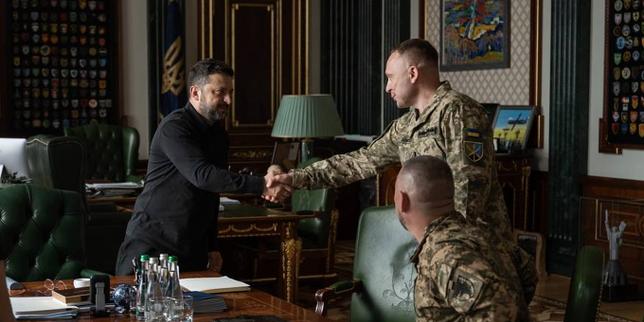
Command adjustments during prolonged high-intensity conflict operate at the intersection of operational necessity and political stability. When executive leadership initiates senior command changes amid civilian dissatisfaction, the decision reflects a specific structural tension: balancing the attrition rates of frontline engagements against the internal cohesion required to maintain war mobilization.
A political executive during total war manages three distinct capital pools: military effectiveness, domestic political consensus, and international backstop confidence. A disruption in domestic sentiment—manifested through public demonstrations or political friction—directly degrades the domestic capital pool. Executive intervention in the military hierarchy represents a calculated reallocation of leadership resources to restore equilibrium across these three variables.
+-----------------------------------------------------------------+
|                       EXECUTIVE BALANCE                         |
+---------------------------------+-------------------------------+
|                                 |                               |
|   1. Operational Strategy       |   2. Political Stability      |
|   - Force Preservation          |   - Civilian Consensus        |
|   - Tactical Execution          |   - Institutional Cohesion    |
|                                 |                               |
+---------------------------------+-------------------------------+
                                  |
                                  v
+-----------------------------------------------------------------+
|               COMMAND RESTRUCTURE DECISION POINT                 |
+-----------------------------------------------------------------+
Structural Drivers of Command Replacement
Senior command transitions under external friction are rarely driven by isolated tactical failures. Instead, they indicate systemic misalignments within the military-political feedback loop.
Institutional Friction and Resource Allocation
Strategic doctrine often diverges from tactical realities when resource constraints tighten. When a high-command architecture prioritizes territorial defense over active force preservation, high-attrition dynamic environments expose operational friction points. Executive leadership faces structural pressure when the following conditions converge:
- Doctrine Misalignment: Disconnect between top-level strategic objectives and localized front-line capacity.
- Mobilization Bottlenecks: Inefficiencies in personnel replacement rates relative to casualty metrics.
- Communication Breakdown: Latency between front-line telemetry and strategic decision-making centers.
When public pressure mounts during strategic stalemates, the political executive utilizes structural reorganization to reset strategic direction without compromising institutional legitimacy.
The Mechanics of Internal Reorganization
Leadership substitution within defense structures follows a predictable administrative process designed to preserve continuity while signaling tactical shifts.
- Auditing Strategic Efficiency: Executive assessment evaluates senior commanders against key performance indicators, including position holding efficiency, logistics distribution speed, and personnel casualty-to-territorial-retention ratios.
- Managing Political Shock Distributers: Replacing high-profile commanders absorbs accumulated public and internal criticism, acting as a structural firewall for the central executive.
- Realignment of Command Philosophy: Installing new leadership alters operational priorities—shifting focus between defense-in-depth, localized counter-offensives, or consolidated attrition warfare.
Strategic Trade-Offs in Mid-Conflict Restructuring
Reorganizing military leadership while actively engaged in large-scale combat carries operational risk. The immediate cost function includes transitional friction, temporary disruption of logistical command lines, and potential variance in troop morale.
| Risk Dimension | Primary Vulnerability Mechanism | Mitigation Strategy |
|---|---|---|
| Command Continuity | Latency in operational order dissemination during staff integration. | Retaining middle-tier staff structures while swapping top-tier command elements. |
| Institutional Unity | Division of loyalty within officer corps toward outgoing leadership. | Sequential phased transfers accompanied by clear administrative rationales. |
| External Perception | Signaling internal instability to opposing forces and international allies. | Framing restructures as strategic modernization rather than defensive reaction. |
The primary risk of high-level command replacement is the temporary loss of institutional memory. Senior commanders possess implicit knowledge regarding operational capabilities, subordinate strengths, and theater-specific variables that cannot be fully codified in staff reports.
Operational Realignment Protocols
To mitigate the systemic shocks of executive command interventions, defense management structures must execute specific operational stabilization protocols.
First, staff integration must remain decoupled from command-level swaps. By insulating functional branches—intel, logistics, communications—from personnel changes at the top, the fundamental architecture of military operations remains operational.
Second, strategic objectives must be restated immediately following command handovers. Clarity regarding localized operational parameters prevents tactical hesitation among field-level officers during administrative transitions.
The strategic imperative of any wartime leadership change is not merely personnel substitution; it is the recalibration of the nation's total warfare capability against both external threats and internal constraints. Success depends on whether the restructured command architecture can increase operational throughput while preserving internal political stability.