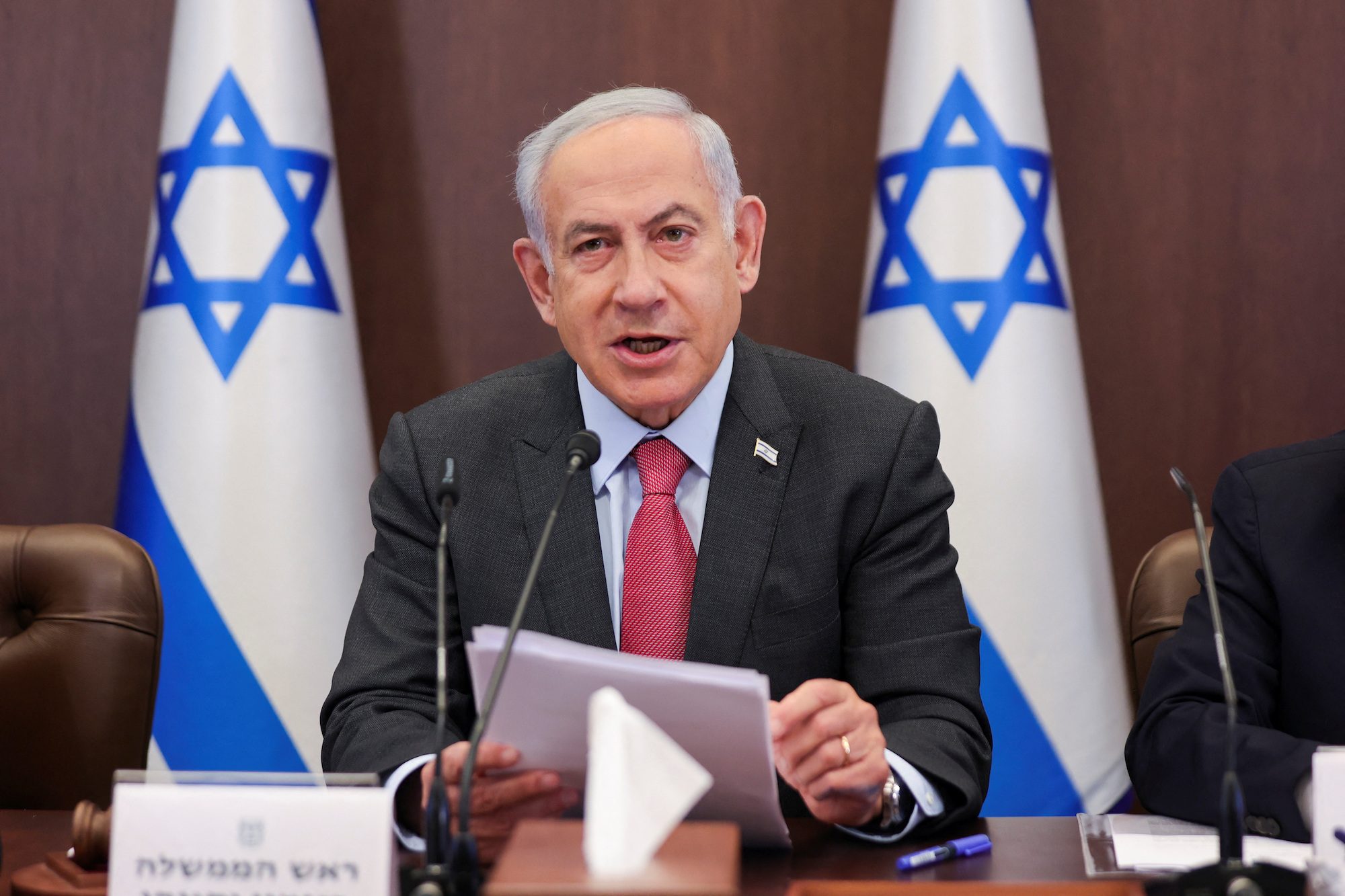
Political ultimatums in Jerusalem usually arrive right before the Knesset dissolves or a budget deadline hits. Benjamin Netanyahu knows how to frame an election as an existential fork in the road, and his latest pitch to Israeli voters leans straight into that playbook.
You've probably seen the headlines screaming about a dramatic choice between stability and chaos. Strip away the campaign theatrics, though, and the core message is straightforward. Netanyahu is telling the Israeli public that they have to choose between a right-wing government led by Likud or a fractured coalition reliant on left-wing factions and Arab parties. It's a binary framing he's used for over a decade, yet the political ground beneath Israel in late 2026 looks very different from the campaigns of 2015 or 2022. For a different view, check out: this related article.
Why This Ultimatum Sounds Familiar
If you follow Israeli politics closely, you know Netanyahu rarely campaigns on incremental policy tweaks. He campaigns on survival—his own, his party's, and what he presents as the nation's security margin.
Back in the 2015 election, his infamous Election Day warning about Arab voters heading to the polls in droves shifted late-deciding right-wing voters back to Likud. In 2019 and 2020, the message morphed into a warning against a minority government propped up by the Joint List. Now, facing intense scrutiny over security failures, judicial overhaul fallout, and economic strain from prolonged multi-front conflicts, he's returning to the well. Similar coverage regarding this has been shared by USA Today.
The ultimatum boils down to a single premise. Either voters hand the right-wing bloc a clear, decisive majority of at least 61 seats, or Israel gets stuck in another round of political paralysis and security compromises.
Honestly, it's a smart tactical move when your poll numbers are bruised. When an incumbent can't run purely on their recent record, they make the election a referendum on the alternative.
The Math Behind the Knesset Seat Threshold
Israel's parliamentary system doesn't reward subtlety. The Knesset has 120 seats, and the electoral threshold sits at 3.25 percent—roughly four seats. That single rule dictates almost every move Netanyahu makes during an election cycle.
When smaller right-wing parties fail to cross that threshold, their votes vanish into thin air. Netanyahu learned that lesson the hard way in April 2019, when Naftali Bennett and Ayelet Shaked's New Right party missed the threshold by barely 1,400 votes, costing the right-wing bloc its majority. On the flip side, in November 2022, it was the opposition's turn to waste votes when Meretz and Balad both fell short, handing Netanyahu a comfortable 64-seat coalition despite the two blocs winning almost identical total vote shares.
So when Netanyahu issues an ultimatum to voters, he isn't really talking to centrist swing voters in Tel Aviv. He's talking to right-wing voters in Beersheba, Ashdod, and the West Bank settlements who might be tempted to stay home or vote for a smaller ideological splinter party.
- Consolidating the Likud base: Voters angry about the cost of living or security lapses often threaten to bolt for smaller right-wing factions.
- Preventing wasted votes: By framing any vote outside the core bloc as a gift to the opposition, Likud tries to squeeze smaller rivals out of the race.
- Forcing coalition discipline: Ultra-Orthodox parties like Shas and United Torah Judaism, alongside far-right factions like Otzma Yehudit and Religious Zionism, depend on Netanyahu's ability to deliver that 61-seat magic number.
What the Competitor Coverage Misses About Voter Fatigue
Most quick-hit news reports treat Netanyahu's speeches as pure drama. They quote the sharpest lines, mention the opposition's immediate pushback, and call it a day. That misses the biggest factor shaping Israeli public opinion right now.
Voter fatigue is real. Between 2019 and 2022, Israelis went to the polls five times in less than four years. Since then, the country has endured massive street protests over judicial reform, devastating war, reserve duty burnout, and sharp cost-of-living hikes. People are tired of permanent crisis mode.
When a politician delivers an ultimatum to an exhausted electorate, it cuts both ways. For loyalists, it triggers urgency. For everyone else, it can sound like the same alarm bell ringing for the sixth time.
Opposition leaders like Yair Lapid, Benny Gantz, and Avigdor Liberman have spent months trying to flip that script. Instead of letting Netanyahu define the choice as "me or chaos," they argue that Netanyahu himself is the source of the instability. Liberman, in particular, competes directly for secular right-wing voters who feel alienated by Likud's tight alliance with ultra-Orthodox parties over military conscription exemptions.
The Haredi Draft Issue Complicates the Pitch
You can't understand Netanyahu's current bind without looking at the ultra-Orthodox military draft debate. For decades, Haredi yeshiva students received blanket exemptions from mandatory IDF service. That arrangement collapsed under the weight of Israel's massive manpower needs after October 7 and the subsequent High Court rulings striking down the legal basis for those exemptions.
Here's the problem for Netanyahu. His coalition survival depends entirely on Shas and United Torah Judaism. If he passes a real conscription law with teeth, those parties bolt and the government falls. If he passes a watered-down law that shields yeshiva students from the draft, he alienates traditional Likud voters whose sons and daughters have served hundreds of days in reserve duty.
That tension makes an ultimatum much harder to sell. Telling voters "it's my bloc or disaster" rings hollow to a reservist family watching coalition partners fight to preserve draft exemptions during wartime.
How Centrist and Right-Wing Challengers Are Responding
The opposition isn't sitting still while Netanyahu frames the ballot. They know how his playbook works, and they're adjusting their own messaging to counter it.
First, opposition figures are avoiding talk of relying on Arab parties to form a government. That was the Achilles' heel of the 2021 Bennett-Lapid coalition, which depended on Mansour Abbas's Ra'am party and collapsed after just one year. By promising a "Zionist unity government" or a broad center-right coalition, challengers try to neutralize Netanyahu's primary talking point before it gains traction.
Second, they're hammering economic and governance metrics. Food prices, housing costs, and international diplomatic isolation hit voters directly in their daily lives. Abstract warnings about a hypothetical left-wing government struggle to compete with the reality of a grocery bill in Haifa or Jerusalem.
What to Watch as the Campaign Heats Up
If you want to know whether Netanyahu's ultimatum is actually working, ignore the loudest rally clips and watch three concrete indicators instead.
- Polling on the 3.25 percent threshold: Watch how many small parties hover near four seats. If three or four parties sit right on the edge, the final outcome will come down to luck and turnout mechanics rather than broad ideological shifts.
- Likud's internal primary dynamics: Watch whether prominent Likud ministers toe the party line unconditionally or start positioning themselves for a post-Netanyahu era. Subtle shifts in tone from figures like Nir Barkat, Yoav Gallant's former allies, or Israel Katz usually signal internal anxiety.
- Turnout in Likud strongholds: Netanyahu doesn't need to win over Tel Aviv. He needs high turnout in peripheral towns and development cities. If enthusiasm drops in traditional Likud bastions, no amount of rhetorical ultimatums will get him to 61 seats.
Netanyahu has defied political obituaries more times than any modern Israeli leader. Counting him out early is usually a mistake. Still, an ultimatum only works when voters believe the person issuing it still holds the keys to the solution, and this time around, a large chunk of the Israeli public isn't convinced anyone in the current Knesset has the answer.