Darkness on the open sea is not empty. It has weight. It presses against the glass of the ferry cabin, thick with the smell of salt and diesel, humming with the steady, reassuring vibration of the engine below.
To travel among the thousands of islands of the Philippines is to understand that water is a highway. It is a bus stop. It is the connective tissue of daily life. You board a vessel with a ticket stub, a plastic bag of dried mangoes, and a quiet trust in the steel hull beneath your feet. You do not think about fire. Fire belongs on land. Fire belongs in kitchens and hearths, safely contained behind brick and iron.
Then comes the smell of hot copper.
The Fracture
Smoke does not announce itself with a trumpet. It creeps. A thin, grey tendril snakes lazily out of an air vent, smelling faintly of scorched wire and melting plastic. At first, you think it is just a cigarette where it shouldn't be, or an overtaxed generator straining against the tropical humidity.
Seconds matter. They vanish.
By the time the alarm shatters the quiet hum of the night, the hallway is already a blinding wall of grey. Panic is not cinematic. It is not a graceful dash toward safety. Panic is a sudden, sharp intake of breath, a dropped phone clattering against the metal deck, a child crying for a mother who has been separated by the sudden human tide rushing toward the stern.
We look at headlines later—cold numbers typed into a digital ledger. At least five dead. More than eighty missing.
Eighty.
Try holding that number in your head. It is not a statistic. It is eighty empty chairs at breakfast tables tomorrow morning. It is eighty pairs of shoes left by doorways. It is eighty whispered conversations cut short by the roar of an advancing inferno on the water.
The Architecture of Tragedy
How does a ship burn in the middle of the night?
We search for a villain. We point fingers at manifest logs, at safety inspections signed too quickly, at overcrowded decks where life jackets are buried beneath cargo. These administrative failures are real. They are documented in reports that gather dust after every maritime disaster in these waters.
Yet the deeper fault line runs through the way we accept risk as the price of motion.
When you live an archipelago existence, mobility is a tax paid in vulnerability. Island communities rely on aging ferries because the alternatives are financially out of reach or physically nonexistent. Passengers board vessels knowing that safety regulations are sometimes treated as suggestions rather than anchors. They board anyway because life demands movement. They have jobs to catch, families to visit, futures to build across the strait.
Consider what happens when flames meet open ocean. There is nowhere to retreat. On land, you can run sideways. You can find an alley, an open field, a brick wall to shelter behind. On a ferry consumed by fire, your choices narrow with every passing minute until you are left with only two options: the smoke behind you or the dark, indifferent sea below.
Water is supposed to save you. But on a night like this, the sea is terrifyingly cold, vast, and indifferent.
The Weight of the Missing
The fire is eventually beaten back by foam and water, leaving behind a scarred, skeletal hulk listing gently in the dawn light. The smoke clears to reveal the true devastation. Not the burned metal, but the absence.
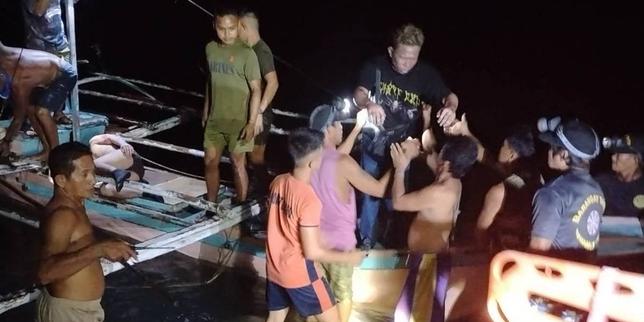
Search and rescue boats circle the charred hull like anxious gulls. Divers slip beneath the surface into water clouded with soot and oil, feeling their way through submerged corridors with gloved hands. Every recovery is a grief made public. Every name added to the missing list is a small earthquake in a family somewhere inland.
We tell ourselves that safety standards will change now. We demand accountability. We look for new policies to bandage an old wound. But the sorrow remains, heavy and unyielding, anchored to the seabed alongside the wreckage.
The ferry docks are quiet today. In the distance, another white hull pulls away from the pier, cutting a clean, white line through the blue. Passengers stand along the railing, looking out toward the horizon, clutching their bags, breathing in the salt air. The engine hums. The water stretches out endlessly ahead. And somewhere beneath the surface of our collective memory, the smoke still lingers.