Darkness does not merely surround you when a mountain collapses; it enters you. It presses against your eyelids. It fills your throat with the taste of dry grit and ancient stone.
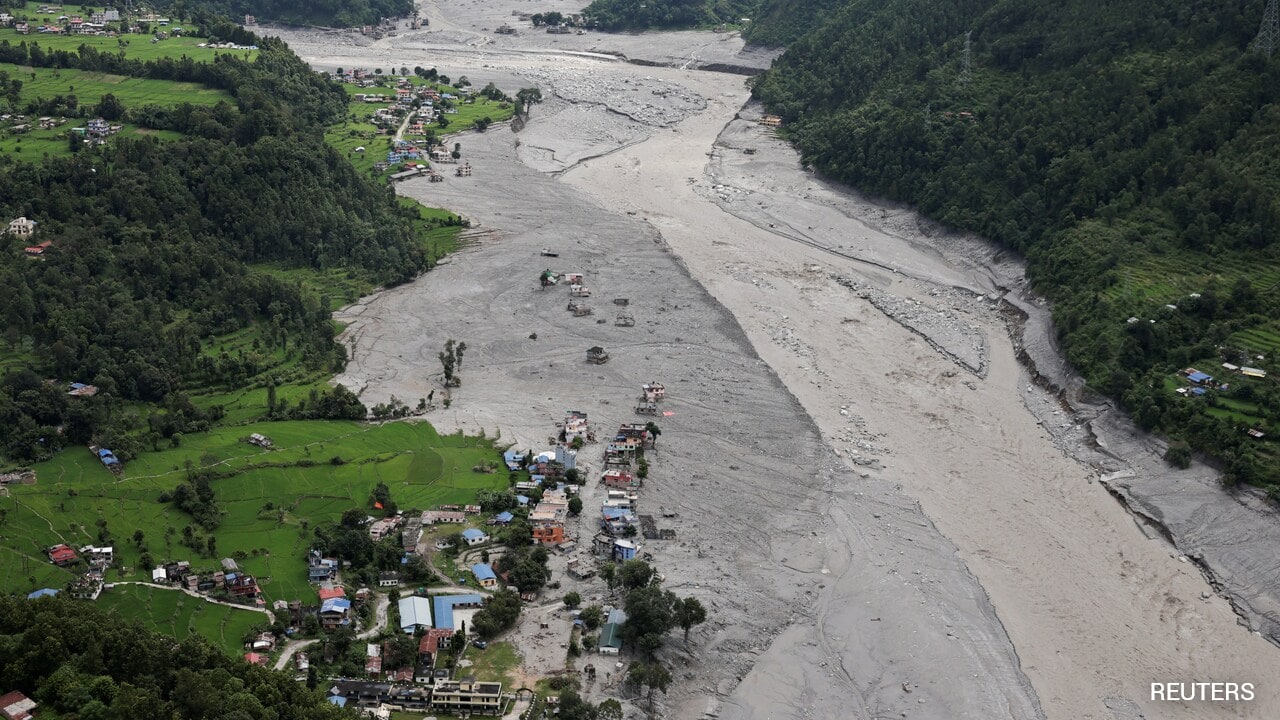
Imagine, if human biology could bear it, the sound of thousands of tons of earth shifting overhead. A groan of granite. A sudden, violent truncation of the sun. For the tunnel workers trapped deep beneath the Himalayan terrain in Nepal, the world did not end with a bang. It ended with a snap, followed by a heavy, suffocating silence that lasted for over two hundred hours.
Time fractures in the pitch black. Minutes stretch into hours, and hours curdle into an indistinguishable sludge of fear. When the exits vanish and the air grows thin, what is left of a person?
For nine days, beneath a mountain that had suddenly turned hostile, one worker found his anchor in the rhythm of a sacred chant.
The Anatomy of a Collapse
Construction sites hidden deep inside mountain ranges exist in a fragile truce with nature. Engineers calculate load vectors, shore up walls with reinforced steel ribs, and monitor seismic shifts. Yet, geology operates on a timeline of millennia, while human ambition works in months.
When a section of the tunnel gave way, sealing the crew away from the light, the immediate enemy wasn't just physical entrapment. It was panic. Panic burns oxygen faster than physical exertion. Panic tells the lungs they are suffocating before they actually are.
We forget how fragile our footing is on this earth. We walk over concrete and asphalt, trusting the crust beneath our feet. But beneath the surface, pressure builds invisibly.
The rescue operation began almost instantly, a desperate race against the fading clock of human endurance. Heavy machinery churned outside, chewing through rock face while engineers mapped the void below, praying for pockets of breathable air. Every vibration from the surface equipment carried a double-edged sword. It meant help was coming, but it also risked triggering a secondary collapse that could bury the survivors permanently.
Inside the trapped pocket, communication was reduced to zero. No radios. No flickering screens. Just the sound of dripping water and ragged breathing.
The Sound That Refused to Die
In extreme isolation, the human mind plays tricks. It manufactures whispers in the hum of machinery or constructs vivid memories of open fields to escape the confines of a cage.
To combat the encroaching delirium, one of the trapped workers turned to something older than engineering, older than the tunnel itself. He began to chant the Mahamantra.
Om Tryambakam Yajamahe Sugandhim Pushtivardhanam...
The ancient prayer for protection and liberation became a metronome against the ticking clock. He kept chanting. Through the freezing cold. Through the hunger pangs that gnawed at his stomach. Through the creeping exhaustion that whispered that it would be easier to just close his eyes and let go.
Language is a strange tool. When spoken aloud in a cavernous tomb of rock, words acquire physical weight. They bounce off damp walls and vibrate through the sternum. For a man buried alive, the mantra was a lifeline spun out of sound. It gave his lungs a rhythmic purpose. Inhale. Exhale. Chant.
His companions listened. In the dark, the repetition forged an invisible bond. It reminded them that they were still individuals, still breathing, still human. They were not just statistics in a pending disaster report. They were fathers, sons, brothers, waiting for the sky to open back up.
The Breach
Nine days.
Think of what happens in nine days of normal life. Seasons shift, weeks turn, coffee cups are emptied, arguments are had and forgotten. Down in the dark, nine days measured the slow, agonizing depletion of hope.
Then came the sound.
Not the rumble of the mountain this time, but a sharp, localized metallic ping. A drill bit breaking through the final barrier of stone. A pinprick of light—pale, yellow, and impossibly bright—punched through the ceiling of their makeshift tomb.
Dust motes danced in that single beam like microscopic angels.
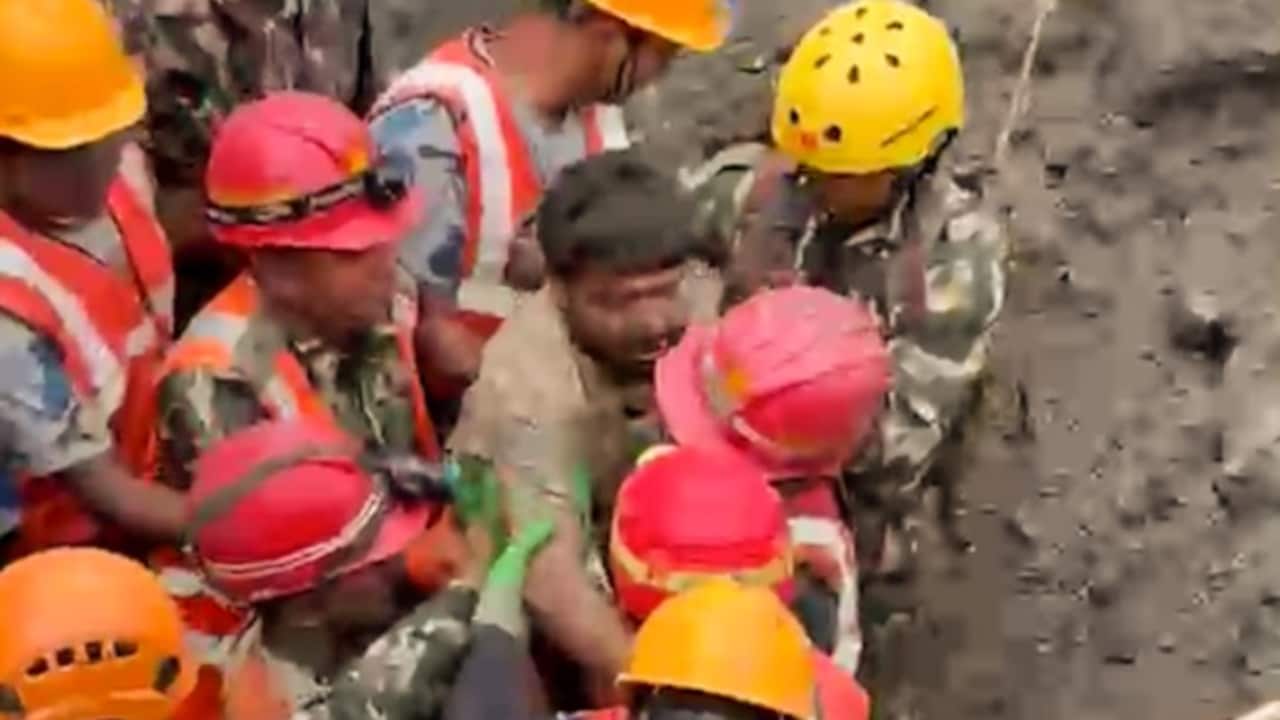
The rescue teams did not just pull bodies from the earth; they pulled living, breathing souls who had stared into the abyss and refused to blink. Cameras flashed, blankets were wrapped around shivering frames, and medical personnel checked pulses that beat with a fierce, stubborn vitality.
When the rescued worker emerged into the sharp daylight, blinking against a world he had nearly lost, his voice was raspy, worn down to a gravelly whisper. But the faith that had sustained him remained entirely intact.
The mountain is still there, ancient and indifferent, its peaks scraping the clouds. But deep inside its stone belly, something extraordinary happened. A man proved that when all external supports are stripped away, the human spirit can construct its own sanctuary out of rhythm, memory, and belief.